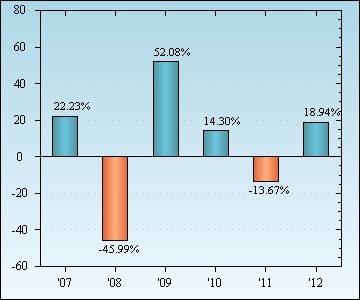
0000950123-13-001120.txt : 20130219 0000950123-13-001120.hdr.sgml : 20130219 20130219170720 ACCESSION NUMBER: 0000950123-13-001120 CONFORMED SUBMISSION TYPE: 485BPOS PUBLIC DOCUMENT COUNT: 7 FILED AS OF DATE: 20130219 DATE AS OF CHANGE: 20130219 EFFECTIVENESS DATE: 20130219 FILER: COMPANY DATA: COMPANY CONFORMED NAME: JANUS INVESTMENT FUND CENTRAL INDEX KEY: 0000277751 IRS NUMBER: 840592523 STATE OF INCORPORATION: MA FISCAL YEAR END: 1031 FILING VALUES: FORM TYPE: 485BPOS SEC ACT: 1933 Act SEC FILE NUMBER: 002-34393 FILM NUMBER: 13624200 BUSINESS ADDRESS: STREET 1: 151 DETROIT STREET CITY: DENVER STATE: CO ZIP: 80206 BUSINESS PHONE: 303-333-3863 MAIL ADDRESS: STREET 1: 151 DETROIT STREET CITY: DENVER STATE: CO ZIP: 80206 FORMER COMPANY: FORMER CONFORMED NAME: JANUS FUND /MD/ DATE OF NAME CHANGE: 19870701 FILER: COMPANY DATA: COMPANY CONFORMED NAME: JANUS INVESTMENT FUND CENTRAL INDEX KEY: 0000277751 IRS NUMBER: 840592523 STATE OF INCORPORATION: MA FISCAL YEAR END: 1031 FILING VALUES: FORM TYPE: 485BPOS SEC ACT: 1940 Act SEC FILE NUMBER: 811-01879 FILM NUMBER: 13624201 BUSINESS ADDRESS: STREET 1: 151 DETROIT STREET CITY: DENVER STATE: CO ZIP: 80206 BUSINESS PHONE: 303-333-3863 MAIL ADDRESS: STREET 1: 151 DETROIT STREET CITY: DENVER STATE: CO ZIP: 80206 FORMER COMPANY: FORMER CONFORMED NAME: JANUS FUND /MD/ DATE OF NAME CHANGE: 19870701 0000277751 S000010464 Janus Balanced Fund C000028918 Class T JABAX C000077650 Class A C000077651 Class C C000077652 Class I C000077653 Class R C000077654 Class S C000083512 Class D C000114869 Class N 0000277751 S000010465 Janus Global Technology Fund C000028919 Class T JAGTX C000077655 Class A C000077656 Class C C000077657 Class I C000077658 Class S C000083513 Class D 0000277751 S000010467 Janus Growth and Income Fund C000028923 Class T JAGIX C000077659 Class A C000077660 Class C C000077661 Class I C000077662 Class R C000077663 Class S C000083515 Class D C000114870 Class N 0000277751 S000010470 Janus Research Fund C000028926 Class T JAMRX C000077669 Class A C000077670 Class C C000077671 Class I C000077672 Class S C000083517 Class D C000114872 Class N 0000277751 S000010474 Janus Global Select Fund C000028933 Class T JORNX C000077678 Class A C000077679 Class C C000077680 Class I C000077681 Class R C000077682 Class S C000083520 Class D C000114874 Class N 0000277751 S000010475 Janus Contrarian Fund C000028934 Class T JSVAX C000077683 Class A C000077684 Class C C000077685 Class I C000077686 Class R C000077687 Class S C000083521 Class D C000114875 Class N 0000277751 S000010476 Janus Overseas Fund C000028935 Class T JAOSX C000077688 Class A C000077689 Class C C000077690 Class I C000077691 Class R C000077692 Class S C000083522 Class D C000114876 Class N 0000277751 S000010477 Janus Global Research Fund C000028936 Class T JARFX C000077693 Class A C000077694 Class C C000077695 Class I C000077696 Class S C000083523 Class D C000114877 Class N 0000277751 S000010485 Janus Triton Fund C000028947 Class T JATTX C000077722 Class A C000077723 Class C C000077724 Class I C000077725 Class R C000077726 Class S C000083530 Class D C000114880 Class N 0000277751 S000010487 Janus Twenty Fund C000028949 Class T JAVLX C000083532 Class D 0000277751 S000010488 Janus Venture Fund C000028950 Class T JAVTX C000083533 Class D C000100475 Class A C000100476 Class C C000100477 Class I C000100478 Class S C000114881 Class N 0000277751 S000010489 Janus Worldwide Fund C000028951 Class T JAWWX C000077732 Class A C000077733 Class C C000077734 Class I C000077735 Class R C000077736 Class S C000083534 Class D C000114882 Class N 0000277751 S000010490 Janus Enterprise Fund C000028952 Class T JAENX C000077737 Class A C000077738 Class C C000077739 Class I C000077740 Class R C000077741 Class S C000083535 Class D C000114883 Class N 0000277751 S000010493 Janus Fund C000028955 Class T JANSX C000077747 Class A C000077748 Class C C000077749 Class I C000077750 Class R C000077751 Class S C000083537 Class D C000114885 Class N 0000277751 S000010494 Janus Global Life Sciences Fund C000028956 Class T JAGLX C000077752 Class A C000077753 Class C C000077754 Class I C000077755 Class S C000083538 Class D 0000277751 S000010495 Perkins Global Value Fund C000028957 Class T JGVAX C000077756 Class A C000077757 Class C C000077758 Class I C000077759 Class S C000083539 Class D C000114886 Class N 0000277751 S000025889 Janus Global Real Estate Fund C000077597 Class A C000077598 Class C C000077599 Class I C000077600 Class S C000077601 Class T C000083540 Class D 0000277751 S000025893 Janus Forty Fund C000077618 Class A C000077619 Class C C000077620 Class I C000077621 Class R C000077622 Class S C000077623 Class T C000114888 Class N 0000277751 S000025894 Janus International Equity Fund C000077624 Class A C000077625 Class C C000077626 Class I C000077627 Class R C000077628 Class S C000077629 Class T C000083542 Class D C000114889 Class N 0000277751 S000030900 Janus Emerging Markets Fund C000095868 Class A C000095869 Class C C000095870 Class D C000095871 Class I C000095872 Class S C000095873 Class T C000114891 Class N 0000277751 S000031892 Janus Protected Series - Growth C000099318 Class A C000099319 Class C C000099320 Class D C000099321 Class I C000099322 Class S C000099323 Class T 0000277751 S000033204 Janus Asia Equity Fund C000102172 Class A C000102173 Class C C000102174 Class D C000102175 Class I C000102176 Class S C000102177 Class T 0000277751 S000035098 Janus Protected Series - Global C000107979 Class A C000107980 Class C C000107981 Class D C000107982 Class I C000107983 Class S C000107984 Class T 485BPOS 1 d31033e485bpos.htm 485BPOS e485bpos


OMB APPROVAL
 
 
OMB Number: ...... 3235-0307
Expires: ............. April 30, 2013
Estimated average burden
hours per response: ......... 645.3


UNITED STATES
SECURITIES AND EXCHANGE COMMISSION
Washington, D.C. 20549
FORM N-1A
         
REGISTRATION STATEMENT UNDER THE SECURITIES ACT OF 1933    
 
  (No. 002-34393)   þ


  Pre- Effective Amendment No.       o


  Post-Effective Amendment No. 186   þ
and/or
         
REGISTRATION STATEMENT UNDER THE INVESTMENT COMPANY ACT OF 1940    
 
  (No. 811-01879)   þ


  Amendment No. 169   þ
(Check appropriate box or boxes.)
JANUS INVESTMENT FUND
 
(Exact Name of Registrant as Specified in Charter)
151 Detroit Street, Denver, Colorado 80206-4805
 
(Address of Principal Executive Offices)     (Zip Code)
     
Registrant’s Telephone Number, including Area Code:
  303-333-3863 
 
   
Stephanie Grauerholz-Lofton – 151 Detroit Street, Denver, Colorado 80206-4805
 
(Name and Address of Agent for Service)
Approximate Date of Proposed Public Offering:
         
It is proposed that this filing will become effective (check appropriate box):
 
  þ   immediately upon filing pursuant to paragraph (b)
 
  o   on (date) pursuant to paragraph (b)
 
  o   60 days after filing pursuant to paragraph (a)(1)
 
  o   on (date) pursuant to paragraph (a)(1)
 
  o   75 days after filing pursuant to paragraph (a)(2)
 
  o   on (date) pursuant to paragraph (a)(2) of rule 485.
 
       
If appropriate, check the following box:
 
  o   This post-effective amendment designates a new effective date for a previously filed post-effective amendment.


SIGNATURES
     Pursuant to the requirements of the Securities Act of 1933, as amended, and the Investment Company Act of 1940, as amended, the Registrant certifies that it meets all of the requirements for effectiveness of this Amendment to its Registration Statement pursuant to Rule 485(b) under the Securities Act of 1933, as amended, and has duly caused this Amendment to its Registration Statement to be signed on its behalf by the undersigned, thereto duly authorized, in the City of Denver, and State of Colorado, on the 19th day of February, 2013.
         
  JANUS INVESTMENT FUND
 
 
  By:   /s/ Robin C. Beery    
    Robin C. Beery, President and   
    Chief Executive Officer   
 
     Janus Investment Fund is organized under an Amended and Restated Agreement and Declaration of Trust dated March 18, 2003 (“Declaration of Trust”), a copy of which is on file with the Secretary of State of The Commonwealth of Massachusetts. The obligations of the Registrant hereunder are not binding upon any of the Trustees, shareholders, nominees, officers, agents or employees of the Registrant personally, but bind only the trust property of the Registrant, as provided in the Declaration of Trust of the Registrant. The execution of this Amendment to the Registration Statement has been authorized by the Trustees of the Registrant and this Amendment to the Registration Statement has been signed by an authorized officer of the Registrant, acting as such, and neither such authorization by such Trustees nor such execution by such officer shall be deemed to have been made by any of them personally, but shall bind only the trust property of the Registrant as provided in its Declaration of Trust.
     Pursuant to the requirements of the Securities Act of 1933, as amended, this Amendment to the Registration Statement has been signed below by the following persons in the capacities and on the dates indicated.
         
Signature   Title   Date
 
       
/s/ Robin C. Beery
 
Robin C. Beery
  President and Chief Executive Officer
(Principal Executive Officer)
  February 19, 2013
 
       
/s/ Jesper Nergaard
 
Jesper Nergaard
  Vice President, Chief Financial Officer, Treasurer and Principal Accounting Officer (Principal Financial Officer and Principal Accounting Officer)   February 19, 2013

C-1


Signature   Title   Date
 
       
William F. McCalpin*
 
William F. McCalpin
  Chairman and Trustee   February 19, 2013
 
       
Alan A. Brown*
 
Alan A. Brown
  Trustee   February 19, 2013
 
       
William D. Cvengros*
 
William D. Cvengros
  Trustee   February 19, 2013
 
       
James T. Rothe*
 
James T. Rothe
  Trustee   February 19, 2013
 
       
William D. Stewart*
 
William D. Stewart
  Trustee   February 19, 2013
 
       
Linda S. Wolf*
 
Linda S. Wolf
  Trustee   February 19, 2013
         
/s/ Stephanie Grauerholz-Lofton    
     
*By:
  Stephanie Grauerholz-Lofton    
 
  Attorney-in-Fact    
    Pursuant to Powers of Attorney, dated April 11, 2008, incorporated by reference to Exhibit 15(c) to Post-Effective Amendment No. 123, filed on February 27, 2009; Power of Attorney, dated January 5, 2011, incorporated by reference to Exhibit (q)(5) to Post-Effective Amendment No. 138, filed on January 28, 2011; and Power of Attorney, dated January 14, 2013, incorporated by reference to Exhibit (q)(6) to Post-Effective Amendment No. 185, filed on January 28, 2013

C-2


INDEX OF EXHIBITS
     
Exhibit Number   Exhibit Title
 
EX-101.INS
  XBRL Instance Document
EX-101.SCH
  XBRL Taxonomy Extension Schema Document
EX-101.CAL
  XBRL Taxonomy Extension Calculation Linkbase
EX-101.LAB
  XBRL Taxonomy Extension Labels Linkbase
EX-101.PRE
  XBRL Taxonomy Extension Presentation Linkbase
EX-101.DEF
  XBRL Taxonomy Extension Definition Linkbase

C-3

EX-101.INS 3 jif6-20130128.xml EX-101 INSTANCE DOCUMENT 0000277751 2012-01-29 2013-01-28 0000277751 jif6:S000010475Member jif6:ClassDsharesMember jif6:C000083521Member 2012-01-29 2013-01-28 0000277751 jif6:S000010475Member jif6:ClassAcsinrtSharesMember 2012-01-29 2013-01-28 0000277751 jif6:S000025893Member jif6:ClassAcsinrtSharesMember 2012-01-29 2013-01-28 0000277751 jif6:S000010467Member jif6:ClassDsharesMember 2012-01-29 2013-01-28 0000277751 jif6:S000010487Member jif6:ClassTSharesMember 2012-01-29 2013-01-28 0000277751 jif6:S000010490Member jif6:ClassDsharesMember 2012-01-29 2013-01-28 0000277751 jif6:S000010475Member jif6:ClassAcsinrtSharesMember jif6:C000077683Member 2012-01-29 2013-01-28 0000277751 jif6:S000010475Member jif6:ClassAcsinrtSharesMember jif6:C000077684Member 2012-01-29 2013-01-28 0000277751 jif6:S000010475Member jif6:ClassAcsinrtSharesMember jif6:C000077687Member 2012-01-29 2013-01-28 0000277751 jif6:S000010475Member jif6:ClassAcsinrtSharesMember jif6:C000077685Member 2012-01-29 2013-01-28 0000277751 jif6:S000010475Member jif6:ClassAcsinrtSharesMember jif6:C000114875Member 2012-01-29 2013-01-28 0000277751 jif6:S000010475Member jif6:ClassAcsinrtSharesMember jif6:C000077686Member 2012-01-29 2013-01-28 0000277751 jif6:S000010475Member jif6:ClassAcsinrtSharesMember jif6:C000028934Member 2012-01-29 2013-01-28 0000277751 jif6:S000010467Member jif6:ClassDsharesMember jif6:C000083515Member 2012-01-29 2013-01-28 0000277751 jif6:S000010470Member jif6:ClassAcsinrtSharesMember 2012-01-29 2013-01-28 0000277751 jif6:S000010490Member jif6:ClassDsharesMember jif6:C000083535Member 2012-01-29 2013-01-28 0000277751 jif6:S000025889Member jif6:ClassAcsitMember 2012-01-29 2013-01-28 0000277751 jif6:S000025893Member jif6:ClassAcsinrtSharesMember jif6:C000077618Member 2012-01-29 2013-01-28 0000277751 jif6:S000025893Member jif6:ClassAcsinrtSharesMember jif6:C000077619Member 2012-01-29 2013-01-28 0000277751 jif6:S000025893Member jif6:ClassAcsinrtSharesMember jif6:C000077622Member 2012-01-29 2013-01-28 0000277751 jif6:S000025893Member jif6:ClassAcsinrtSharesMember jif6:C000077620Member 2012-01-29 2013-01-28 0000277751 jif6:S000025893Member jif6:ClassAcsinrtSharesMember jif6:C000114888Member 2012-01-29 2013-01-28 0000277751 jif6:S000025893Member jif6:ClassAcsinrtSharesMember jif6:C000077621Member 2012-01-29 2013-01-28 0000277751 jif6:S000025893Member jif6:ClassAcsinrtSharesMember jif6:C000077623Member 2012-01-29 2013-01-28 0000277751 jif6:S000010467Member jif6:ClassAcsinrtSharesMember 2012-01-29 2013-01-28 0000277751 jif6:S000010475Member jif6:ClassDsharesMember 2012-01-29 2013-01-28 0000277751 jif6:S000010467Member jif6:ClassAcsinrtSharesMember jif6:C000077659Member 2012-01-29 2013-01-28 0000277751 jif6:S000010467Member jif6:ClassAcsinrtSharesMember jif6:C000077660Member 2012-01-29 2013-01-28 0000277751 jif6:S000010467Member jif6:ClassAcsinrtSharesMember jif6:C000077663Member 2012-01-29 2013-01-28 0000277751 jif6:S000010467Member jif6:ClassAcsinrtSharesMember jif6:C000077661Member 2012-01-29 2013-01-28 0000277751 jif6:S000010467Member jif6:ClassAcsinrtSharesMember jif6:C000114870Member 2012-01-29 2013-01-28 0000277751 jif6:S000010467Member jif6:ClassAcsinrtSharesMember jif6:C000077662Member 2012-01-29 2013-01-28 0000277751 jif6:S000010467Member jif6:ClassAcsinrtSharesMember jif6:C000028923Member 2012-01-29 2013-01-28 0000277751 jif6:S000010493Member jif6:ClassDsharesMember 2012-01-29 2013-01-28 0000277751 jif6:S000010470Member jif6:ClassAcsinrtSharesMember jif6:C000077669Member 2012-01-29 2013-01-28 0000277751 jif6:S000010470Member jif6:ClassAcsinrtSharesMember jif6:C000077670Member 2012-01-29 2013-01-28 0000277751 jif6:S000010470Member jif6:ClassAcsinrtSharesMember jif6:C000077672Member 2012-01-29 2013-01-28 0000277751 jif6:S000010470Member jif6:ClassAcsinrtSharesMember jif6:C000077671Member 2012-01-29 2013-01-28 0000277751 jif6:S000010470Member jif6:ClassAcsinrtSharesMember jif6:C000114872Member 2012-01-29 2013-01-28 0000277751 jif6:S000010470Member jif6:ClassAcsinrtSharesMember jif6:C000028926Member 2012-01-29 2013-01-28 0000277751 jif6:S000025889Member jif6:ClassAcsitMember jif6:C000077597Member 2012-01-29 2013-01-28 0000277751 jif6:S000025889Member jif6:ClassAcsitMember jif6:C000077598Member 2012-01-29 2013-01-28 0000277751 jif6:S000025889Member jif6:ClassAcsitMember jif6:C000077600Member 2012-01-29 2013-01-28 0000277751 jif6:S000025889Member jif6:ClassAcsitMember jif6:C000077599Member 2012-01-29 2013-01-28 0000277751 jif6:S000025889Member jif6:ClassAcsitMember jif6:C000077601Member 2012-01-29 2013-01-28 0000277751 jif6:S000010493Member jif6:ClassDsharesMember jif6:C000083537Member 2012-01-29 2013-01-28 0000277751 jif6:S000010470Member jif6:ClassDsharesMember jif6:C000083517Member 2012-01-29 2013-01-28 0000277751 jif6:S000010490Member jif6:ClassAcsinrtSharesMember 2012-01-29 2013-01-28 0000277751 jif6:S000010487Member jif6:ClassTSharesMember jif6:C000028949Member 2012-01-29 2013-01-28 0000277751 jif6:S000010470Member jif6:ClassDsharesMember 2012-01-29 2013-01-28 0000277751 jif6:S000010485Member jif6:ClassAcsinrtSharesMember 2012-01-29 2013-01-28 0000277751 jif6:S000010464Member jif6:ClassDsharesMember jif6:C000083512Member 2012-01-29 2013-01-28 0000277751 jif6:S000010493Member jif6:ClassAcsinrtSharesMember 2012-01-29 2013-01-28 0000277751 jif6:S000010464Member jif6:ClassAcsinrtSharesMember 2012-01-29 2013-01-28 0000277751 jif6:S000010488Member jif6:ClassDsharesMember 2012-01-29 2013-01-28 0000277751 jif6:S000010490Member jif6:ClassAcsinrtSharesMember jif6:C000077737Member 2012-01-29 2013-01-28 0000277751 jif6:S000010490Member jif6:ClassAcsinrtSharesMember jif6:C000077738Member 2012-01-29 2013-01-28 0000277751 jif6:S000010490Member jif6:ClassAcsinrtSharesMember jif6:C000077741Member 2012-01-29 2013-01-28 0000277751 jif6:S000010490Member jif6:ClassAcsinrtSharesMember jif6:C000077739Member 2012-01-29 2013-01-28 0000277751 jif6:S000010490Member jif6:ClassAcsinrtSharesMember jif6:C000114883Member 2012-01-29 2013-01-28 0000277751 jif6:S000010490Member jif6:ClassAcsinrtSharesMember jif6:C000077740Member 2012-01-29 2013-01-28 0000277751 jif6:S000010490Member jif6:ClassAcsinrtSharesMember jif6:C000028952Member 2012-01-29 2013-01-28 0000277751 jif6:S000033204Member jif6:ClassAcsitMember 2012-01-29 2013-01-28 0000277751 jif6:S000010485Member jif6:ClassDsharesMember 2012-01-29 2013-01-28 0000277751 jif6:S000030900Member jif6:ClassAcsintSharesMember 2012-01-29 2013-01-28 0000277751 jif6:S000010488Member jif6:ClassDsharesMember jif6:C000083533Member 2012-01-29 2013-01-28 0000277751 jif6:S000010493Member jif6:ClassAcsinrtSharesMember jif6:C000077747Member 2012-01-29 2013-01-28 0000277751 jif6:S000010493Member jif6:ClassAcsinrtSharesMember jif6:C000077748Member 2012-01-29 2013-01-28 0000277751 jif6:S000010493Member jif6:ClassAcsinrtSharesMember jif6:C000077751Member 2012-01-29 2013-01-28 0000277751 jif6:S000010493Member jif6:ClassAcsinrtSharesMember jif6:C000077749Member 2012-01-29 2013-01-28 0000277751 jif6:S000010493Member jif6:ClassAcsinrtSharesMember jif6:C000114885Member 2012-01-29 2013-01-28 0000277751 jif6:S000010464Member jif6:ClassAcsinrtSharesMember jif6:C000077650Member 2012-01-29 2013-01-28 0000277751 jif6:S000010493Member jif6:ClassAcsinrtSharesMember jif6:C000077750Member 2012-01-29 2013-01-28 0000277751 jif6:S000010464Member jif6:ClassAcsinrtSharesMember jif6:C000077651Member 2012-01-29 2013-01-28 0000277751 jif6:S000010493Member jif6:ClassAcsinrtSharesMember jif6:C000028955Member 2012-01-29 2013-01-28 0000277751 jif6:S000010464Member jif6:ClassAcsinrtSharesMember jif6:C000077654Member 2012-01-29 2013-01-28 0000277751 jif6:S000010464Member jif6:ClassAcsinrtSharesMember jif6:C000077652Member 2012-01-29 2013-01-28 0000277751 jif6:S000010464Member jif6:ClassAcsinrtSharesMember jif6:C000114869Member 2012-01-29 2013-01-28 0000277751 jif6:S000010464Member jif6:ClassAcsinrtSharesMember jif6:C000077653Member 2012-01-29 2013-01-28 0000277751 jif6:S000010485Member jif6:ClassDsharesMember jif6:C000083530Member 2012-01-29 2013-01-28 0000277751 jif6:S000010464Member jif6:ClassAcsinrtSharesMember jif6:C000028918Member 2012-01-29 2013-01-28 0000277751 jif6:S000010485Member jif6:ClassAcsinrtSharesMember jif6:C000077722Member 2012-01-29 2013-01-28 0000277751 jif6:S000010485Member jif6:ClassAcsinrtSharesMember jif6:C000077723Member 2012-01-29 2013-01-28 0000277751 jif6:S000010485Member jif6:ClassAcsinrtSharesMember jif6:C000077726Member 2012-01-29 2013-01-28 0000277751 jif6:S000010485Member jif6:ClassAcsinrtSharesMember jif6:C000077724Member 2012-01-29 2013-01-28 0000277751 jif6:S000010485Member jif6:ClassAcsinrtSharesMember jif6:C000114880Member 2012-01-29 2013-01-28 0000277751 jif6:S000010485Member jif6:ClassAcsinrtSharesMember jif6:C000077725Member 2012-01-29 2013-01-28 0000277751 jif6:S000010485Member jif6:ClassAcsinrtSharesMember jif6:C000028947Member 2012-01-29 2013-01-28 0000277751 jif6:S000010470Member jif6:ClassDsharesMember jif6:ReturnBeforeTaxesMember jif6:C000083517Member 2012-01-29 2013-01-28 0000277751 jif6:S000010470Member jif6:ClassDsharesMember rr:AfterTaxesOnDistributionsMember jif6:C000083517Member 2012-01-29 2013-01-28 0000277751 jif6:S000010470Member jif6:ClassDsharesMember rr:AfterTaxesOnDistributionsAndSalesMember jif6:C000083517Member 2012-01-29 2013-01-28 0000277751 jif6:S000010470Member jif6:ClassDsharesMember jif6:RussellThousandGrowthIndexMember 2012-01-29 2013-01-28 0000277751 jif6:S000010470Member jif6:ClassDsharesMember jif6:SAndPFiveHundredIndexMember 2012-01-29 2013-01-28 0000277751 jif6:S000010464Member jif6:ClassDsharesMember 2012-01-29 2013-01-28 0000277751 jif6:S000033204Member jif6:ClassAcsitMember jif6:C000102172Member 2012-01-29 2013-01-28 0000277751 jif6:S000033204Member jif6:ClassAcsitMember jif6:C000102173Member 2012-01-29 2013-01-28 0000277751 jif6:S000033204Member jif6:ClassAcsitMember jif6:C000102176Member 2012-01-29 2013-01-28 0000277751 jif6:S000033204Member jif6:ClassAcsitMember jif6:C000102175Member 2012-01-29 2013-01-28 0000277751 jif6:S000033204Member jif6:ClassAcsitMember jif6:C000102177Member 2012-01-29 2013-01-28 0000277751 jif6:S000010467Member jif6:ClassAcsinrtSharesMember jif6:ReturnBeforeTaxesMember jif6:C000077659Member 2012-01-29 2013-01-28 0000277751 jif6:S000010467Member jif6:ClassAcsinrtSharesMember jif6:RussellThousandGrowthIndexMember 2012-01-29 2013-01-28 0000277751 jif6:S000010467Member jif6:ClassAcsinrtSharesMember jif6:SAndPFiveHundredIndexMember 2012-01-29 2013-01-28 0000277751 jif6:S000010467Member jif6:ClassAcsinrtSharesMember rr:AfterTaxesOnDistributionsAndSalesMember jif6:C000028923Member 2012-01-29 2013-01-28 0000277751 jif6:S000010467Member jif6:ClassAcsinrtSharesMember rr:AfterTaxesOnDistributionsMember jif6:C000028923Member 2012-01-29 2013-01-28 0000277751 jif6:S000010467Member jif6:ClassAcsinrtSharesMember jif6:ReturnBeforeTaxesMember jif6:C000028923Member 2012-01-29 2013-01-28 0000277751 jif6:S000010467Member jif6:ClassAcsinrtSharesMember jif6:ReturnBeforeTaxesMember jif6:C000077660Member 2012-01-29 2013-01-28 0000277751 jif6:S000010467Member jif6:ClassAcsinrtSharesMember jif6:ReturnBeforeTaxesMember jif6:C000077663Member 2012-01-29 2013-01-28 0000277751 jif6:S000010494Member jif6:ClassAcsitMember jif6:C000077752Member 2012-01-29 2013-01-28 0000277751 jif6:S000010494Member jif6:ClassAcsitMember jif6:C000077753Member 2012-01-29 2013-01-28 0000277751 jif6:S000010490Member jif6:ClassDsharesMember jif6:ReturnBeforeTaxesMember jif6:C000083535Member 2012-01-29 2013-01-28 0000277751 jif6:S000010494Member jif6:ClassAcsitMember jif6:C000077755Member 2012-01-29 2013-01-28 0000277751 jif6:S000010487Member jif6:ClassDsharesMember jif6:C000083532Member 2012-01-29 2013-01-28 0000277751 jif6:S000010490Member jif6:ClassDsharesMember rr:AfterTaxesOnDistributionsMember jif6:C000083535Member 2012-01-29 2013-01-28 0000277751 jif6:S000010494Member jif6:ClassAcsitMember jif6:C000077754Member 2012-01-29 2013-01-28 0000277751 jif6:S000025889Member jif6:ClassDsharesMember 2012-01-29 2013-01-28 0000277751 jif6:S000010490Member jif6:ClassDsharesMember rr:AfterTaxesOnDistributionsAndSalesMember jif6:C000083535Member 2012-01-29 2013-01-28 0000277751 jif6:S000010494Member jif6:ClassAcsitMember jif6:C000028956Member 2012-01-29 2013-01-28 0000277751 jif6:S000010490Member jif6:ClassDsharesMember jif6:RussellMidcapGrowthIndexMember 2012-01-29 2013-01-28 0000277751 jif6:S000010494Member jif6:ClassAcsitMember 2012-01-29 2013-01-28 0000277751 jif6:S000010493Member jif6:ClassDsharesMember jif6:ReturnBeforeTaxesMember jif6:C000083537Member 2012-01-29 2013-01-28 0000277751 jif6:S000010493Member jif6:ClassDsharesMember rr:AfterTaxesOnDistributionsMember jif6:C000083537Member 2012-01-29 2013-01-28 0000277751 jif6:S000010493Member jif6:ClassDsharesMember rr:AfterTaxesOnDistributionsAndSalesMember jif6:C000083537Member 2012-01-29 2013-01-28 0000277751 jif6:S000010493Member jif6:ClassDsharesMember jif6:SAndPFiveHundredIndexMember 2012-01-29 2013-01-28 0000277751 jif6:S000010493Member jif6:ClassDsharesMember jif6:CoreGrowthIndexMember 2012-01-29 2013-01-28 0000277751 jif6:S000025894Member jif6:ClassDsharesMember 2012-01-29 2013-01-28 0000277751 jif6:S000025894Member jif6:ClassDsharesMember jif6:C000083542Member 2012-01-29 2013-01-28 0000277751 jif6:S000010475Member jif6:ClassDsharesMember rr:AfterTaxesOnDistributionsMember jif6:C000083521Member 2012-01-29 2013-01-28 0000277751 jif6:S000010475Member jif6:ClassDsharesMember rr:AfterTaxesOnDistributionsAndSalesMember jif6:C000083521Member 2012-01-29 2013-01-28 0000277751 jif6:S000010475Member jif6:ClassDsharesMember jif6:SAndPFiveHundredIndexMember 2012-01-29 2013-01-28 0000277751 jif6:S000010475Member jif6:ClassDsharesMember jif6:MorganStanleyCapitalInternationalAllCountryWorldIndexMember 2012-01-29 2013-01-28 0000277751 jif6:S000010487Member jif6:ClassTSharesMember jif6:ReturnBeforeTaxesMember jif6:C000028949Member 2012-01-29 2013-01-28 0000277751 jif6:S000010487Member jif6:ClassTSharesMember rr:AfterTaxesOnDistributionsMember jif6:C000028949Member 2012-01-29 2013-01-28 0000277751 jif6:S000010487Member jif6:ClassTSharesMember rr:AfterTaxesOnDistributionsAndSalesMember jif6:C000028949Member 2012-01-29 2013-01-28 0000277751 jif6:S000010487Member jif6:ClassTSharesMember jif6:RussellThousandGrowthIndexMember 2012-01-29 2013-01-28 0000277751 jif6:S000010487Member jif6:ClassTSharesMember jif6:SAndPFiveHundredIndexMember 2012-01-29 2013-01-28 0000277751 jif6:S000010487Member jif6:ClassDsharesMember jif6:ReturnBeforeTaxesMember jif6:C000083532Member 2012-01-29 2013-01-28 0000277751 jif6:S000010487Member jif6:ClassDsharesMember rr:AfterTaxesOnDistributionsMember jif6:C000083532Member 2012-01-29 2013-01-28 0000277751 jif6:S000010487Member jif6:ClassDsharesMember rr:AfterTaxesOnDistributionsAndSalesMember jif6:C000083532Member 2012-01-29 2013-01-28 0000277751 jif6:S000010487Member jif6:ClassDsharesMember jif6:SAndPFiveHundredIndexMember 2012-01-29 2013-01-28 0000277751 jif6:S000025889Member jif6:ClassDsharesMember jif6:C000083540Member 2012-01-29 2013-01-28 0000277751 jif6:S000030900Member jif6:ClassAcsintSharesMember jif6:C000095868Member 2012-01-29 2013-01-28 0000277751 jif6:S000030900Member jif6:ClassAcsintSharesMember jif6:C000095869Member 2012-01-29 2013-01-28 0000277751 jif6:S000030900Member jif6:ClassAcsintSharesMember jif6:C000095872Member 2012-01-29 2013-01-28 0000277751 jif6:S000030900Member jif6:ClassAcsintSharesMember jif6:C000095871Member 2012-01-29 2013-01-28 0000277751 jif6:S000030900Member jif6:ClassAcsintSharesMember jif6:C000114891Member 2012-01-29 2013-01-28 0000277751 jif6:S000030900Member jif6:ClassAcsintSharesMember jif6:C000095873Member 2012-01-29 2013-01-28 0000277751 jif6:S000010487Member jif6:ClassDsharesMember jif6:RussellThousandGrowthIndexMember 2012-01-29 2013-01-28 0000277751 jif6:S000010474Member jif6:ClassDsharesMember 2012-01-29 2013-01-28 0000277751 jif6:S000010488Member jif6:ClassAcsintSharesMember 2012-01-29 2013-01-28 0000277751 jif6:S000010488Member jif6:ClassDsharesMember jif6:ReturnBeforeTaxesMember jif6:C000083533Member 2012-01-29 2013-01-28 0000277751 jif6:S000010488Member jif6:ClassDsharesMember rr:AfterTaxesOnDistributionsMember jif6:C000083533Member 2012-01-29 2013-01-28 0000277751 jif6:S000010488Member jif6:ClassDsharesMember rr:AfterTaxesOnDistributionsAndSalesMember jif6:C000083533Member 2012-01-29 2013-01-28 0000277751 jif6:S000030900Member jif6:ClassDsharesMember 2012-01-29 2013-01-28 0000277751 jif6:S000010485Member jif6:ClassDsharesMember jif6:ReturnBeforeTaxesMember jif6:C000083530Member 2012-01-29 2013-01-28 0000277751 jif6:S000010485Member jif6:ClassDsharesMember rr:AfterTaxesOnDistributionsMember jif6:C000083530Member 2012-01-29 2013-01-28 0000277751 jif6:S000010485Member jif6:ClassDsharesMember rr:AfterTaxesOnDistributionsAndSalesMember jif6:C000083530Member 2012-01-29 2013-01-28 0000277751 jif6:S000010485Member jif6:ClassDsharesMember jif6:RussellTwoThousandFiveHundredGrowthIndexMember 2012-01-29 2013-01-28 0000277751 jif6:S000010485Member jif6:ClassDsharesMember jif6:RussellTwoThousandGrowthIndexMember 2012-01-29 2013-01-28 0000277751 jif6:S000033204Member jif6:ClassDsharesMember 2012-01-29 2013-01-28 0000277751 jif6:S000010493Member jif6:ClassDsharesMember jif6:RussellThousandGrowthIndexMember 2012-01-29 2013-01-28 0000277751 jif6:S000010487Member jif6:ClassDsharesMember 2012-01-29 2013-01-28 0000277751 jif6:S000010494Member jif6:ClassDsharesMember 2012-01-29 2013-01-28 0000277751 jif6:S000010488Member jif6:ClassAcsintSharesMember jif6:C000100475Member 2012-01-29 2013-01-28 0000277751 jif6:S000010488Member jif6:ClassAcsintSharesMember jif6:C000100476Member 2012-01-29 2013-01-28 0000277751 jif6:S000010488Member jif6:ClassAcsintSharesMember jif6:C000100478Member 2012-01-29 2013-01-28 0000277751 jif6:S000010488Member jif6:ClassAcsintSharesMember jif6:C000100477Member 2012-01-29 2013-01-28 0000277751 jif6:S000010488Member jif6:ClassAcsintSharesMember jif6:C000114881Member 2012-01-29 2013-01-28 0000277751 jif6:S000010488Member jif6:ClassAcsintSharesMember jif6:C000028950Member 2012-01-29 2013-01-28 0000277751 jif6:S000010464Member jif6:ClassDsharesMember jif6:ReturnBeforeTaxesMember jif6:C000083512Member 2012-01-29 2013-01-28 0000277751 jif6:S000010464Member jif6:ClassDsharesMember rr:AfterTaxesOnDistributionsMember jif6:C000083512Member 2012-01-29 2013-01-28 0000277751 jif6:S000010488Member jif6:ClassDsharesMember jif6:RussellTwoThousandGrowthIndexMember 2012-01-29 2013-01-28 0000277751 jif6:S000010464Member jif6:ClassDsharesMember rr:AfterTaxesOnDistributionsAndSalesMember jif6:C000083512Member 2012-01-29 2013-01-28 0000277751 jif6:S000010488Member jif6:ClassDsharesMember jif6:RussellTwoThousandIndexMember 2012-01-29 2013-01-28 0000277751 jif6:S000010464Member jif6:ClassDsharesMember jif6:SAndPFiveHundredIndexMember 2012-01-29 2013-01-28 0000277751 jif6:S000010464Member jif6:ClassDsharesMember jif6:BarclaysUsAggregateBondIndexMember 2012-01-29 2013-01-28 0000277751 jif6:S000010464Member jif6:ClassDsharesMember jif6:BalancedIndexMember 2012-01-29 2013-01-28 0000277751 jif6:S000030900Member jif6:ClassDsharesMember jif6:C000095870Member 2012-01-29 2013-01-28 0000277751 jif6:S000010474Member jif6:ClassDsharesMember jif6:C000083520Member 2012-01-29 2013-01-28 0000277751 jif6:S000010494Member jif6:ClassDsharesMember jif6:C000083538Member 2012-01-29 2013-01-28 0000277751 jif6:S000010467Member jif6:ClassDsharesMember jif6:ReturnBeforeTaxesMember jif6:C000083515Member 2012-01-29 2013-01-28 0000277751 jif6:S000010490Member jif6:ClassAcsinrtSharesMember jif6:ReturnBeforeTaxesMember jif6:C000028952Member 2012-01-29 2013-01-28 0000277751 jif6:S000010490Member jif6:ClassAcsinrtSharesMember rr:AfterTaxesOnDistributionsMember jif6:C000028952Member 2012-01-29 2013-01-28 0000277751 jif6:S000010490Member jif6:ClassAcsinrtSharesMember rr:AfterTaxesOnDistributionsAndSalesMember jif6:C000028952Member 2012-01-29 2013-01-28 0000277751 jif6:S000010490Member jif6:ClassAcsinrtSharesMember jif6:RussellMidcapGrowthIndexMember 2012-01-29 2013-01-28 0000277751 jif6:S000010490Member jif6:ClassAcsinrtSharesMember jif6:ReturnBeforeTaxesMember jif6:C000077737Member 2012-01-29 2013-01-28 0000277751 jif6:S000010490Member jif6:ClassAcsinrtSharesMember jif6:ReturnBeforeTaxesMember jif6:C000077738Member 2012-01-29 2013-01-28 0000277751 jif6:S000010490Member jif6:ClassAcsinrtSharesMember jif6:ReturnBeforeTaxesMember jif6:C000077741Member 2012-01-29 2013-01-28 0000277751 jif6:S000010490Member jif6:ClassAcsinrtSharesMember jif6:ReturnBeforeTaxesMember jif6:C000077739Member 2012-01-29 2013-01-28 0000277751 jif6:S000010490Member jif6:ClassAcsinrtSharesMember jif6:ReturnBeforeTaxesMember jif6:C000114883Member 2012-01-29 2013-01-28 0000277751 jif6:S000010490Member jif6:ClassAcsinrtSharesMember jif6:ReturnBeforeTaxesMember jif6:C000077740Member 2012-01-29 2013-01-28 0000277751 jif6:S000010493Member jif6:ClassAcsinrtSharesMember jif6:ReturnBeforeTaxesMember jif6:C000028955Member 2012-01-29 2013-01-28 0000277751 jif6:S000010493Member jif6:ClassAcsinrtSharesMember rr:AfterTaxesOnDistributionsMember jif6:C000028955Member 2012-01-29 2013-01-28 0000277751 jif6:S000010493Member jif6:ClassAcsinrtSharesMember rr:AfterTaxesOnDistributionsAndSalesMember jif6:C000028955Member 2012-01-29 2013-01-28 0000277751 jif6:S000010493Member jif6:ClassAcsinrtSharesMember jif6:RussellThousandGrowthIndexMember 2012-01-29 2013-01-28 0000277751 jif6:S000010493Member jif6:ClassAcsinrtSharesMember jif6:SAndPFiveHundredIndexMember 2012-01-29 2013-01-28 0000277751 jif6:S000010493Member jif6:ClassAcsinrtSharesMember jif6:CoreGrowthIndexMember 2012-01-29 2013-01-28 0000277751 jif6:S000010493Member jif6:ClassAcsinrtSharesMember jif6:ReturnBeforeTaxesMember jif6:C000077747Member 2012-01-29 2013-01-28 0000277751 jif6:S000010493Member jif6:ClassAcsinrtSharesMember jif6:ReturnBeforeTaxesMember jif6:C000077748Member 2012-01-29 2013-01-28 0000277751 jif6:S000010475Member jif6:ClassDsharesMember jif6:ReturnBeforeTaxesMember jif6:C000083521Member 2012-01-29 2013-01-28 0000277751 jif6:S000025893Member jif6:ClassAcsinrtSharesMember jif6:ReturnBeforeTaxesMember jif6:C000077622Member 2012-01-29 2013-01-28 0000277751 jif6:S000025893Member jif6:ClassAcsinrtSharesMember rr:AfterTaxesOnDistributionsMember jif6:C000077622Member 2012-01-29 2013-01-28 0000277751 jif6:S000025893Member jif6:ClassAcsinrtSharesMember rr:AfterTaxesOnDistributionsAndSalesMember jif6:C000077622Member 2012-01-29 2013-01-28 0000277751 jif6:S000025893Member jif6:ClassAcsinrtSharesMember jif6:RussellThousandGrowthIndexMember 2012-01-29 2013-01-28 0000277751 jif6:S000025893Member jif6:ClassAcsinrtSharesMember jif6:SAndPFiveHundredIndexMember 2012-01-29 2013-01-28 0000277751 jif6:S000025893Member jif6:ClassAcsinrtSharesMember jif6:ReturnBeforeTaxesMember jif6:C000077618Member 2012-01-29 2013-01-28 0000277751 jif6:S000025893Member jif6:ClassAcsinrtSharesMember jif6:ReturnBeforeTaxesMember jif6:C000077619Member 2012-01-29 2013-01-28 0000277751 jif6:S000025893Member jif6:ClassAcsinrtSharesMember jif6:ReturnBeforeTaxesMember jif6:C000077620Member 2012-01-29 2013-01-28 0000277751 jif6:S000033204Member jif6:ClassDsharesMember jif6:C000102174Member 2012-01-29 2013-01-28 0000277751 jif6:S000010494Member jif6:ClassAcsitMember jif6:ReturnBeforeTaxesMember jif6:C000028956Member 2012-01-29 2013-01-28 0000277751 jif6:S000010494Member jif6:ClassAcsitMember rr:AfterTaxesOnDistributionsMember jif6:C000028956Member 2012-01-29 2013-01-28 0000277751 jif6:S000010494Member jif6:ClassAcsitMember rr:AfterTaxesOnDistributionsAndSalesMember jif6:C000028956Member 2012-01-29 2013-01-28 0000277751 jif6:S000010494Member jif6:ClassAcsitMember jif6:SAndPFiveHundredIndexMember 2012-01-29 2013-01-28 0000277751 jif6:S000010494Member jif6:ClassAcsitMember jif6:MorganStanleyCapitalInternationalWorldHealthCareIndexMember 2012-01-29 2013-01-28 0000277751 jif6:S000010494Member jif6:ClassAcsitMember jif6:ReturnBeforeTaxesMember jif6:C000077752Member 2012-01-29 2013-01-28 0000277751 jif6:S000010494Member jif6:ClassAcsitMember jif6:ReturnBeforeTaxesMember jif6:C000077753Member 2012-01-29 2013-01-28 0000277751 jif6:S000025889Member jif6:ClassAcsitMember jif6:ReturnBeforeTaxesMember jif6:C000077601Member 2012-01-29 2013-01-28 0000277751 jif6:S000010470Member jif6:ClassAcsinrtSharesMember jif6:ReturnBeforeTaxesMember jif6:C000028926Member 2012-01-29 2013-01-28 0000277751 jif6:S000010470Member jif6:ClassAcsinrtSharesMember rr:AfterTaxesOnDistributionsMember jif6:C000028926Member 2012-01-29 2013-01-28 0000277751 jif6:S000010470Member jif6:ClassAcsinrtSharesMember rr:AfterTaxesOnDistributionsAndSalesMember jif6:C000028926Member 2012-01-29 2013-01-28 0000277751 jif6:S000010470Member jif6:ClassAcsinrtSharesMember jif6:RussellThousandGrowthIndexMember 2012-01-29 2013-01-28 0000277751 jif6:S000010470Member jif6:ClassAcsinrtSharesMember jif6:SAndPFiveHundredIndexMember 2012-01-29 2013-01-28 0000277751 jif6:S000010470Member jif6:ClassAcsinrtSharesMember jif6:ReturnBeforeTaxesMember jif6:C000077669Member 2012-01-29 2013-01-28 0000277751 jif6:S000010470Member jif6:ClassAcsinrtSharesMember jif6:ReturnBeforeTaxesMember jif6:C000077670Member 2012-01-29 2013-01-28 0000277751 jif6:S000010470Member jif6:ClassAcsinrtSharesMember jif6:ReturnBeforeTaxesMember jif6:C000077672Member 2012-01-29 2013-01-28 0000277751 jif6:S000010470Member jif6:ClassAcsinrtSharesMember jif6:ReturnBeforeTaxesMember jif6:C000077671Member 2012-01-29 2013-01-28 0000277751 jif6:S000025889Member jif6:ClassAcsitMember jif6:ReturnBeforeTaxesMember jif6:C000077599Member 2012-01-29 2013-01-28 0000277751 jif6:S000025889Member jif6:ClassAcsitMember rr:AfterTaxesOnDistributionsMember jif6:C000077599Member 2012-01-29 2013-01-28 0000277751 jif6:S000025889Member jif6:ClassAcsitMember rr:AfterTaxesOnDistributionsAndSalesMember jif6:C000077599Member 2012-01-29 2013-01-28 0000277751 jif6:S000025889Member jif6:ClassAcsitMember jif6:FtseEpranareitGlobalIndexMember 2012-01-29 2013-01-28 0000277751 jif6:S000025889Member jif6:ClassAcsitMember jif6:FtseEpranareitDevelopedIndexMember 2012-01-29 2013-01-28 0000277751 jif6:S000025889Member jif6:ClassAcsitMember jif6:ReturnBeforeTaxesMember jif6:C000077597Member 2012-01-29 2013-01-28 0000277751 jif6:S000033204Member jif6:ClassAcsitMember jif6:ReturnBeforeTaxesMember jif6:C000102175Member 2012-01-29 2013-01-28 0000277751 jif6:S000033204Member jif6:ClassAcsitMember rr:AfterTaxesOnDistributionsMember jif6:C000102175Member 2012-01-29 2013-01-28 0000277751 jif6:S000025889Member jif6:ClassAcsitMember jif6:ReturnBeforeTaxesMember jif6:C000077598Member 2012-01-29 2013-01-28 0000277751 jif6:S000025889Member jif6:ClassAcsitMember jif6:ReturnBeforeTaxesMember jif6:C000077600Member 2012-01-29 2013-01-28 0000277751 jif6:S000033204Member jif6:ClassAcsitMember rr:AfterTaxesOnDistributionsAndSalesMember jif6:C000102175Member 2012-01-29 2013-01-28 0000277751 jif6:S000033204Member jif6:ClassAcsitMember jif6:ReturnBeforeTaxesMember jif6:C000102172Member 2012-01-29 2013-01-28 0000277751 jif6:S000033204Member jif6:ClassAcsitMember jif6:ReturnBeforeTaxesMember jif6:C000102173Member 2012-01-29 2013-01-28 0000277751 jif6:S000033204Member jif6:ClassAcsitMember jif6:ReturnBeforeTaxesMember jif6:C000102176Member 2012-01-29 2013-01-28 0000277751 jif6:S000033204Member jif6:ClassAcsitMember jif6:ReturnBeforeTaxesMember jif6:C000102177Member 2012-01-29 2013-01-28 0000277751 jif6:S000033204Member jif6:ClassAcsitMember jif6:MorganStanleyCapitalInternationalAllCountryAsiaExJapanIndexMember 2012-01-29 2013-01-28 0000277751 jif6:S000010467Member jif6:ClassAcsinrtSharesMember jif6:ReturnBeforeTaxesMember jif6:C000077661Member 2012-01-29 2013-01-28 0000277751 jif6:S000010467Member jif6:ClassAcsinrtSharesMember jif6:ReturnBeforeTaxesMember jif6:C000114870Member 2012-01-29 2013-01-28 0000277751 jif6:S000010467Member jif6:ClassAcsinrtSharesMember jif6:ReturnBeforeTaxesMember jif6:C000077662Member 2012-01-29 2013-01-28 0000277751 jif6:S000010488Member jif6:ClassAcsintSharesMember jif6:ReturnBeforeTaxesMember jif6:C000028950Member 2012-01-29 2013-01-28 0000277751 jif6:S000010488Member jif6:ClassAcsintSharesMember rr:AfterTaxesOnDistributionsMember jif6:C000028950Member 2012-01-29 2013-01-28 0000277751 jif6:S000010488Member jif6:ClassAcsintSharesMember rr:AfterTaxesOnDistributionsAndSalesMember jif6:C000028950Member 2012-01-29 2013-01-28 0000277751 jif6:S000010488Member jif6:ClassAcsintSharesMember jif6:RussellTwoThousandGrowthIndexMember 2012-01-29 2013-01-28 0000277751 jif6:S000010488Member jif6:ClassAcsintSharesMember jif6:RussellTwoThousandIndexMember 2012-01-29 2013-01-28 0000277751 jif6:S000010488Member jif6:ClassAcsintSharesMember jif6:ReturnBeforeTaxesMember jif6:C000100475Member 2012-01-29 2013-01-28 0000277751 jif6:S000010488Member jif6:ClassAcsintSharesMember jif6:ReturnBeforeTaxesMember jif6:C000100476Member 2012-01-29 2013-01-28 0000277751 jif6:S000010488Member jif6:ClassAcsintSharesMember jif6:ReturnBeforeTaxesMember jif6:C000100478Member 2012-01-29 2013-01-28 0000277751 jif6:S000010488Member jif6:ClassAcsintSharesMember jif6:ReturnBeforeTaxesMember jif6:C000100477Member 2012-01-29 2013-01-28 0000277751 jif6:S000010493Member jif6:ClassAcsinrtSharesMember jif6:ReturnBeforeTaxesMember jif6:C000077751Member 2012-01-29 2013-01-28 0000277751 jif6:S000010493Member jif6:ClassAcsinrtSharesMember jif6:ReturnBeforeTaxesMember jif6:C000077749Member 2012-01-29 2013-01-28 0000277751 jif6:S000010493Member jif6:ClassAcsinrtSharesMember jif6:ReturnBeforeTaxesMember jif6:C000114885Member 2012-01-29 2013-01-28 0000277751 jif6:S000010493Member jif6:ClassAcsinrtSharesMember jif6:ReturnBeforeTaxesMember jif6:C000077750Member 2012-01-29 2013-01-28 0000277751 jif6:S000025893Member jif6:ClassAcsinrtSharesMember jif6:ReturnBeforeTaxesMember jif6:C000114888Member 2012-01-29 2013-01-28 0000277751 jif6:S000025893Member jif6:ClassAcsinrtSharesMember jif6:ReturnBeforeTaxesMember jif6:C000077621Member 2012-01-29 2013-01-28 0000277751 jif6:S000025893Member jif6:ClassAcsinrtSharesMember jif6:ReturnBeforeTaxesMember jif6:C000077623Member 2012-01-29 2013-01-28 0000277751 jif6:S000025889Member jif6:ClassDsharesMember jif6:ReturnBeforeTaxesMember jif6:C000083540Member 2012-01-29 2013-01-28 0000277751 jif6:S000025889Member jif6:ClassDsharesMember rr:AfterTaxesOnDistributionsMember jif6:C000083540Member 2012-01-29 2013-01-28 0000277751 jif6:S000025889Member jif6:ClassDsharesMember rr:AfterTaxesOnDistributionsAndSalesMember jif6:C000083540Member 2012-01-29 2013-01-28 0000277751 jif6:S000025889Member jif6:ClassDsharesMember jif6:FtseEpranareitGlobalIndexMember 2012-01-29 2013-01-28 0000277751 jif6:S000025889Member jif6:ClassDsharesMember jif6:FtseEpranareitDevelopedIndexMember 2012-01-29 2013-01-28 0000277751 jif6:S000010494Member jif6:ClassAcsitMember jif6:ReturnBeforeTaxesMember jif6:C000077755Member 2012-01-29 2013-01-28 0000277751 jif6:S000010494Member jif6:ClassAcsitMember jif6:ReturnBeforeTaxesMember jif6:C000077754Member 2012-01-29 2013-01-28 0000277751 jif6:S000010488Member jif6:ClassAcsintSharesMember jif6:ReturnBeforeTaxesMember jif6:C000114881Member 2012-01-29 2013-01-28 0000277751 jif6:S000010470Member jif6:ClassAcsinrtSharesMember jif6:ReturnBeforeTaxesMember jif6:C000114872Member 2012-01-29 2013-01-28 0000277751 jif6:S000033204Member jif6:ClassDsharesMember jif6:ReturnBeforeTaxesMember jif6:C000102174Member 2012-01-29 2013-01-28 0000277751 jif6:S000033204Member jif6:ClassDsharesMember rr:AfterTaxesOnDistributionsMember jif6:C000102174Member 2012-01-29 2013-01-28 0000277751 jif6:S000033204Member jif6:ClassDsharesMember rr:AfterTaxesOnDistributionsAndSalesMember jif6:C000102174Member 2012-01-29 2013-01-28 0000277751 jif6:S000033204Member jif6:ClassDsharesMember jif6:MorganStanleyCapitalInternationalAllCountryAsiaExJapanIndexMember 2012-01-29 2013-01-28 0000277751 jif6:S000010485Member jif6:ClassAcsinrtSharesMember rr:AfterTaxesOnDistributionsMember jif6:C000028947Member 2012-01-29 2013-01-28 0000277751 jif6:S000010485Member jif6:ClassAcsinrtSharesMember rr:AfterTaxesOnDistributionsAndSalesMember jif6:C000028947Member 2012-01-29 2013-01-28 0000277751 jif6:S000010485Member jif6:ClassAcsinrtSharesMember jif6:RussellTwoThousandFiveHundredGrowthIndexMember 2012-01-29 2013-01-28 0000277751 jif6:S000010485Member jif6:ClassAcsinrtSharesMember jif6:RussellTwoThousandGrowthIndexMember 2012-01-29 2013-01-28 0000277751 jif6:S000030900Member jif6:ClassDsharesMember jif6:ReturnBeforeTaxesMember jif6:C000095870Member 2012-01-29 2013-01-28 0000277751 jif6:S000030900Member jif6:ClassDsharesMember rr:AfterTaxesOnDistributionsMember jif6:C000095870Member 2012-01-29 2013-01-28 0000277751 jif6:S000030900Member jif6:ClassDsharesMember rr:AfterTaxesOnDistributionsAndSalesMember jif6:C000095870Member 2012-01-29 2013-01-28 0000277751 jif6:S000030900Member jif6:ClassDsharesMember jif6:MorganStanleyCapitalInternationalEmergingMarketsIndexMember 2012-01-29 2013-01-28 0000277751 jif6:S000010494Member jif6:ClassDsharesMember jif6:ReturnBeforeTaxesMember jif6:C000083538Member 2012-01-29 2013-01-28 0000277751 jif6:S000010464Member jif6:ClassAcsinrtSharesMember jif6:ReturnBeforeTaxesMember jif6:C000028918Member 2012-01-29 2013-01-28 0000277751 jif6:S000010464Member jif6:ClassAcsinrtSharesMember rr:AfterTaxesOnDistributionsMember jif6:C000028918Member 2012-01-29 2013-01-28 0000277751 jif6:S000010464Member jif6:ClassAcsinrtSharesMember rr:AfterTaxesOnDistributionsAndSalesMember jif6:C000028918Member 2012-01-29 2013-01-28 0000277751 jif6:S000010464Member jif6:ClassAcsinrtSharesMember jif6:SAndPFiveHundredIndexMember 2012-01-29 2013-01-28 0000277751 jif6:S000010464Member jif6:ClassAcsinrtSharesMember jif6:BarclaysUsAggregateBondIndexMember 2012-01-29 2013-01-28 0000277751 jif6:S000010464Member jif6:ClassAcsinrtSharesMember jif6:BalancedIndexMember 2012-01-29 2013-01-28 0000277751 jif6:S000010464Member jif6:ClassAcsinrtSharesMember jif6:ReturnBeforeTaxesMember jif6:C000077650Member 2012-01-29 2013-01-28 0000277751 jif6:S000010464Member jif6:ClassAcsinrtSharesMember jif6:ReturnBeforeTaxesMember jif6:C000077651Member 2012-01-29 2013-01-28 0000277751 jif6:S000010464Member jif6:ClassAcsinrtSharesMember jif6:ReturnBeforeTaxesMember jif6:C000077654Member 2012-01-29 2013-01-28 0000277751 jif6:S000010464Member jif6:ClassAcsinrtSharesMember jif6:ReturnBeforeTaxesMember jif6:C000077652Member 2012-01-29 2013-01-28 0000277751 jif6:S000010464Member jif6:ClassAcsinrtSharesMember jif6:ReturnBeforeTaxesMember jif6:C000114869Member 2012-01-29 2013-01-28 0000277751 jif6:S000010464Member jif6:ClassAcsinrtSharesMember jif6:ReturnBeforeTaxesMember jif6:C000077653Member 2012-01-29 2013-01-28 0000277751 jif6:S000010467Member jif6:ClassDsharesMember rr:AfterTaxesOnDistributionsMember jif6:C000083515Member 2012-01-29 2013-01-28 0000277751 jif6:S000010467Member jif6:ClassDsharesMember rr:AfterTaxesOnDistributionsAndSalesMember jif6:C000083515Member 2012-01-29 2013-01-28 0000277751 jif6:S000010494Member jif6:ClassDsharesMember rr:AfterTaxesOnDistributionsMember jif6:C000083538Member 2012-01-29 2013-01-28 0000277751 jif6:S000010494Member jif6:ClassDsharesMember rr:AfterTaxesOnDistributionsAndSalesMember jif6:C000083538Member 2012-01-29 2013-01-28 0000277751 jif6:S000010494Member jif6:ClassDsharesMember jif6:SAndPFiveHundredIndexMember 2012-01-29 2013-01-28 0000277751 jif6:S000010494Member jif6:ClassDsharesMember jif6:MorganStanleyCapitalInternationalWorldHealthCareIndexMember 2012-01-29 2013-01-28 0000277751 jif6:S000010474Member jif6:ClassDsharesMember jif6:ReturnBeforeTaxesMember jif6:C000083520Member 2012-01-29 2013-01-28 0000277751 jif6:S000010474Member jif6:ClassDsharesMember rr:AfterTaxesOnDistributionsMember jif6:C000083520Member 2012-01-29 2013-01-28 0000277751 jif6:S000010474Member jif6:ClassDsharesMember rr:AfterTaxesOnDistributionsAndSalesMember jif6:C000083520Member 2012-01-29 2013-01-28 0000277751 jif6:S000010474Member jif6:ClassDsharesMember jif6:MorganStanleyCapitalInternationalAllCountryWorldIndexMember 2012-01-29 2013-01-28 0000277751 jif6:S000010467Member jif6:ClassDsharesMember jif6:SAndPFiveHundredIndexMember 2012-01-29 2013-01-28 0000277751 jif6:S000010467Member jif6:ClassDsharesMember jif6:RussellThousandGrowthIndexMember 2012-01-29 2013-01-28 0000277751 jif6:S000010475Member jif6:ClassAcsinrtSharesMember jif6:ReturnBeforeTaxesMember jif6:C000028934Member 2012-01-29 2013-01-28 0000277751 jif6:S000010475Member jif6:ClassAcsinrtSharesMember rr:AfterTaxesOnDistributionsMember jif6:C000028934Member 2012-01-29 2013-01-28 0000277751 jif6:S000010475Member jif6:ClassAcsinrtSharesMember rr:AfterTaxesOnDistributionsAndSalesMember jif6:C000028934Member 2012-01-29 2013-01-28 0000277751 jif6:S000010475Member jif6:ClassAcsinrtSharesMember jif6:SAndPFiveHundredIndexMember 2012-01-29 2013-01-28 0000277751 jif6:S000010475Member jif6:ClassAcsinrtSharesMember jif6:MorganStanleyCapitalInternationalAllCountryWorldIndexMember 2012-01-29 2013-01-28 0000277751 jif6:S000010475Member jif6:ClassAcsinrtSharesMember jif6:ReturnBeforeTaxesMember jif6:C000077683Member 2012-01-29 2013-01-28 0000277751 jif6:S000010475Member jif6:ClassAcsinrtSharesMember jif6:ReturnBeforeTaxesMember jif6:C000077684Member 2012-01-29 2013-01-28 0000277751 jif6:S000010475Member jif6:ClassAcsinrtSharesMember jif6:ReturnBeforeTaxesMember jif6:C000077687Member 2012-01-29 2013-01-28 0000277751 jif6:S000010475Member jif6:ClassAcsinrtSharesMember jif6:ReturnBeforeTaxesMember jif6:C000077685Member 2012-01-29 2013-01-28 0000277751 jif6:S000010475Member jif6:ClassAcsinrtSharesMember jif6:ReturnBeforeTaxesMember jif6:C000114875Member 2012-01-29 2013-01-28 0000277751 jif6:S000010475Member jif6:ClassAcsinrtSharesMember jif6:ReturnBeforeTaxesMember jif6:C000077686Member 2012-01-29 2013-01-28 0000277751 jif6:S000010477Member jif6:ClassDsharesMember 2012-01-29 2013-01-28 0000277751 jif6:S000010477Member jif6:ClassDsharesMember jif6:C000083523Member 2012-01-29 2013-01-28 0000277751 jif6:S000010465Member jif6:ClassDsharesMember 2012-01-29 2013-01-28 0000277751 jif6:S000010477Member jif6:ClassDsharesMember jif6:ReturnBeforeTaxesMember jif6:C000083523Member 2012-01-29 2013-01-28 0000277751 jif6:S000010477Member jif6:ClassDsharesMember rr:AfterTaxesOnDistributionsMember jif6:C000083523Member 2012-01-29 2013-01-28 0000277751 jif6:S000010477Member jif6:ClassDsharesMember rr:AfterTaxesOnDistributionsAndSalesMember jif6:C000083523Member 2012-01-29 2013-01-28 0000277751 jif6:S000010477Member jif6:ClassDsharesMember jif6:MorganStanleyCapitalInternationalWorldGrowthIndexMember 2012-01-29 2013-01-28 0000277751 jif6:S000010477Member jif6:ClassDsharesMember jif6:MorganStanleyCapitalInternationalAllCountryWorldIndexMember 2012-01-29 2013-01-28 0000277751 jif6:S000010485Member jif6:ClassAcsinrtSharesMember jif6:ReturnBeforeTaxesMember jif6:C000114880Member 2012-01-29 2013-01-28 0000277751 jif6:S000025894Member jif6:ClassDsharesMember rr:AfterTaxesOnDistributionsMember jif6:C000083542Member 2012-01-29 2013-01-28 0000277751 jif6:S000025894Member jif6:ClassDsharesMember rr:AfterTaxesOnDistributionsAndSalesMember jif6:C000083542Member 2012-01-29 2013-01-28 0000277751 jif6:S000025894Member jif6:ClassDsharesMember jif6:ReturnBeforeTaxesMember jif6:C000083542Member 2012-01-29 2013-01-28 0000277751 jif6:S000010485Member jif6:ClassAcsinrtSharesMember jif6:ReturnBeforeTaxesMember jif6:C000077725Member 2012-01-29 2013-01-28 0000277751 jif6:S000025894Member jif6:ClassDsharesMember jif6:MorganStanleyCapitalInternationalEafeIndexMember 2012-01-29 2013-01-28 0000277751 jif6:S000025894Member jif6:ClassDsharesMember jif6:MorganStanleyCapitalInternationalAllCountryWorldexUsIndexMember 2012-01-29 2013-01-28 0000277751 jif6:S000010465Member jif6:ClassDsharesMember jif6:C000083513Member 2012-01-29 2013-01-28 0000277751 jif6:S000010477Member jif6:ClassAcsinrtSharesMember jif6:C000077693Member 2012-01-29 2013-01-28 0000277751 jif6:S000010477Member jif6:ClassAcsinrtSharesMember jif6:C000077694Member 2012-01-29 2013-01-28 0000277751 jif6:S000010477Member jif6:ClassAcsinrtSharesMember jif6:C000077696Member 2012-01-29 2013-01-28 0000277751 jif6:S000010477Member jif6:ClassAcsinrtSharesMember jif6:C000077695Member 2012-01-29 2013-01-28 0000277751 jif6:S000010477Member jif6:ClassAcsinrtSharesMember jif6:C000114877Member 2012-01-29 2013-01-28 0000277751 jif6:S000010477Member jif6:ClassAcsinrtSharesMember jif6:C000028936Member 2012-01-29 2013-01-28 0000277751 jif6:S000030900Member jif6:ClassAcsintSharesMember jif6:ReturnBeforeTaxesMember jif6:C000095871Member 2012-01-29 2013-01-28 0000277751 jif6:S000030900Member jif6:ClassAcsintSharesMember rr:AfterTaxesOnDistributionsMember jif6:C000095871Member 2012-01-29 2013-01-28 0000277751 jif6:S000030900Member jif6:ClassAcsintSharesMember rr:AfterTaxesOnDistributionsAndSalesMember jif6:C000095871Member 2012-01-29 2013-01-28 0000277751 jif6:S000030900Member jif6:ClassAcsintSharesMember jif6:MorganStanleyCapitalInternationalEmergingMarketsIndexMember 2012-01-29 2013-01-28 0000277751 jif6:S000030900Member jif6:ClassAcsintSharesMember jif6:ReturnBeforeTaxesMember jif6:C000095868Member 2012-01-29 2013-01-28 0000277751 jif6:S000030900Member jif6:ClassAcsintSharesMember jif6:ReturnBeforeTaxesMember jif6:C000095869Member 2012-01-29 2013-01-28 0000277751 jif6:S000030900Member jif6:ClassAcsintSharesMember jif6:ReturnBeforeTaxesMember jif6:C000095872Member 2012-01-29 2013-01-28 0000277751 jif6:S000030900Member jif6:ClassAcsintSharesMember jif6:ReturnBeforeTaxesMember jif6:C000114891Member 2012-01-29 2013-01-28 0000277751 jif6:S000030900Member jif6:ClassAcsintSharesMember jif6:ReturnBeforeTaxesMember jif6:C000095873Member 2012-01-29 2013-01-28 0000277751 jif6:S000010465Member jif6:ClassDsharesMember jif6:ReturnBeforeTaxesMember jif6:C000083513Member 2012-01-29 2013-01-28 0000277751 jif6:S000010465Member jif6:ClassDsharesMember rr:AfterTaxesOnDistributionsMember jif6:C000083513Member 2012-01-29 2013-01-28 0000277751 jif6:S000010465Member jif6:ClassDsharesMember rr:AfterTaxesOnDistributionsAndSalesMember jif6:C000083513Member 2012-01-29 2013-01-28 0000277751 jif6:S000010465Member jif6:ClassDsharesMember jif6:SAndPFiveHundredIndexMember 2012-01-29 2013-01-28 0000277751 jif6:S000010465Member jif6:ClassDsharesMember jif6:MorganStanleyCapitalInternationalWorldInformationTechnologyIndexMember 2012-01-29 2013-01-28 0000277751 jif6:S000010474Member jif6:ClassAcsinrtSharesMember 2012-01-29 2013-01-28 0000277751 jif6:S000025894Member jif6:ClassAcsinrtSharesMember 2012-01-29 2013-01-28 0000277751 jif6:S000025894Member jif6:ClassAcsinrtSharesMember jif6:C000077624Member 2012-01-29 2013-01-28 0000277751 jif6:S000025894Member jif6:ClassAcsinrtSharesMember jif6:C000077625Member 2012-01-29 2013-01-28 0000277751 jif6:S000025894Member jif6:ClassAcsinrtSharesMember jif6:C000077628Member 2012-01-29 2013-01-28 0000277751 jif6:S000025894Member jif6:ClassAcsinrtSharesMember jif6:C000077626Member 2012-01-29 2013-01-28 0000277751 jif6:S000025894Member jif6:ClassAcsinrtSharesMember jif6:C000114889Member 2012-01-29 2013-01-28 0000277751 jif6:S000025894Member jif6:ClassAcsinrtSharesMember jif6:C000077627Member 2012-01-29 2013-01-28 0000277751 jif6:S000025894Member jif6:ClassAcsinrtSharesMember jif6:C000077629Member 2012-01-29 2013-01-28 0000277751 jif6:S000010476Member jif6:ClassAcsinrtSharesMember jif6:C000077688Member 2012-01-29 2013-01-28 0000277751 jif6:S000010476Member jif6:ClassAcsinrtSharesMember jif6:C000077689Member 2012-01-29 2013-01-28 0000277751 jif6:S000010476Member jif6:ClassAcsinrtSharesMember jif6:C000077692Member 2012-01-29 2013-01-28 0000277751 jif6:S000010476Member jif6:ClassAcsinrtSharesMember jif6:C000077690Member 2012-01-29 2013-01-28 0000277751 jif6:S000010476Member jif6:ClassAcsinrtSharesMember jif6:C000114876Member 2012-01-29 2013-01-28 0000277751 jif6:S000010476Member jif6:ClassAcsinrtSharesMember jif6:C000077691Member 2012-01-29 2013-01-28 0000277751 jif6:S000010476Member jif6:ClassAcsinrtSharesMember jif6:C000028935Member 2012-01-29 2013-01-28 0000277751 jif6:S000010465Member jif6:ClassAcsitMember 2012-01-29 2013-01-28 0000277751 jif6:S000010474Member jif6:ClassAcsinrtSharesMember jif6:C000077678Member 2012-01-29 2013-01-28 0000277751 jif6:S000010474Member jif6:ClassAcsinrtSharesMember jif6:C000077679Member 2012-01-29 2013-01-28 0000277751 jif6:S000010474Member jif6:ClassAcsinrtSharesMember jif6:C000077682Member 2012-01-29 2013-01-28 0000277751 jif6:S000010474Member jif6:ClassAcsinrtSharesMember jif6:C000077680Member 2012-01-29 2013-01-28 0000277751 jif6:S000010474Member jif6:ClassAcsinrtSharesMember jif6:C000114874Member 2012-01-29 2013-01-28 0000277751 jif6:S000010474Member jif6:ClassAcsinrtSharesMember jif6:C000077681Member 2012-01-29 2013-01-28 0000277751 jif6:S000010474Member jif6:ClassAcsinrtSharesMember jif6:C000028933Member 2012-01-29 2013-01-28 0000277751 jif6:S000010465Member jif6:ClassAcsitMember jif6:C000028919Member 2012-01-29 2013-01-28 0000277751 jif6:S000010476Member jif6:ClassAcsinrtSharesMember 2012-01-29 2013-01-28 0000277751 jif6:S000010465Member jif6:ClassAcsitMember jif6:C000077655Member 2012-01-29 2013-01-28 0000277751 jif6:S000010465Member jif6:ClassAcsitMember jif6:C000077656Member 2012-01-29 2013-01-28 0000277751 jif6:S000010465Member jif6:ClassAcsitMember jif6:C000077658Member 2012-01-29 2013-01-28 0000277751 jif6:S000010465Member jif6:ClassAcsitMember jif6:C000077657Member 2012-01-29 2013-01-28 0000277751 jif6:S000010485Member jif6:ClassAcsinrtSharesMember jif6:ReturnBeforeTaxesMember jif6:C000077724Member 2012-01-29 2013-01-28 0000277751 jif6:S000010485Member jif6:ClassAcsinrtSharesMember jif6:ReturnBeforeTaxesMember jif6:C000077726Member 2012-01-29 2013-01-28 0000277751 jif6:S000010485Member jif6:ClassAcsinrtSharesMember jif6:ReturnBeforeTaxesMember jif6:C000077723Member 2012-01-29 2013-01-28 0000277751 jif6:S000010485Member jif6:ClassAcsinrtSharesMember jif6:ReturnBeforeTaxesMember jif6:C000077722Member 2012-01-29 2013-01-28 0000277751 jif6:S000010485Member jif6:ClassAcsinrtSharesMember jif6:ReturnBeforeTaxesMember jif6:C000028947Member 2012-01-29 2013-01-28 0000277751 jif6:S000010489Member jif6:ClassAcsinrtSharesMember jif6:C000077732Member 2012-01-29 2013-01-28 0000277751 jif6:S000010489Member jif6:ClassAcsinrtSharesMember jif6:C000077733Member 2012-01-29 2013-01-28 0000277751 jif6:S000010489Member jif6:ClassAcsinrtSharesMember jif6:C000077736Member 2012-01-29 2013-01-28 0000277751 jif6:S000010489Member jif6:ClassAcsinrtSharesMember jif6:C000077734Member 2012-01-29 2013-01-28 0000277751 jif6:S000010489Member jif6:ClassAcsinrtSharesMember jif6:C000114882Member 2012-01-29 2013-01-28 0000277751 jif6:S000010489Member jif6:ClassAcsinrtSharesMember jif6:C000077735Member 2012-01-29 2013-01-28 0000277751 jif6:S000010489Member jif6:ClassAcsinrtSharesMember jif6:C000028951Member 2012-01-29 2013-01-28 0000277751 jif6:S000010489Member jif6:ClassAcsinrtSharesMember 2012-01-29 2013-01-28 0000277751 jif6:S000035098Member jif6:ClassAcsitMember 2012-01-29 2013-01-28 0000277751 jif6:S000031892Member jif6:ClassAcsitMember 2012-01-29 2013-01-28 0000277751 jif6:S000035098Member jif6:ClassAcsitMember jif6:C000107979Member 2012-01-29 2013-01-28 0000277751 jif6:S000035098Member jif6:ClassAcsitMember jif6:C000107980Member 2012-01-29 2013-01-28 0000277751 jif6:S000035098Member jif6:ClassAcsitMember jif6:C000107983Member 2012-01-29 2013-01-28 0000277751 jif6:S000035098Member jif6:ClassAcsitMember jif6:C000107982Member 2012-01-29 2013-01-28 0000277751 jif6:S000035098Member jif6:ClassAcsitMember jif6:C000107984Member 2012-01-29 2013-01-28 0000277751 jif6:S000010477Member jif6:ClassAcsinrtSharesMember jif6:ReturnBeforeTaxesMember jif6:C000028936Member 2012-01-29 2013-01-28 0000277751 jif6:S000010477Member jif6:ClassAcsinrtSharesMember rr:AfterTaxesOnDistributionsMember jif6:C000028936Member 2012-01-29 2013-01-28 0000277751 jif6:S000010477Member jif6:ClassAcsinrtSharesMember rr:AfterTaxesOnDistributionsAndSalesMember jif6:C000028936Member 2012-01-29 2013-01-28 0000277751 jif6:S000010477Member jif6:ClassAcsinrtSharesMember jif6:ReturnBeforeTaxesMember jif6:C000077693Member 2012-01-29 2013-01-28 0000277751 jif6:S000010477Member jif6:ClassAcsinrtSharesMember jif6:ReturnBeforeTaxesMember jif6:C000077694Member 2012-01-29 2013-01-28 0000277751 jif6:S000010477Member jif6:ClassAcsinrtSharesMember jif6:ReturnBeforeTaxesMember jif6:C000077696Member 2012-01-29 2013-01-28 0000277751 jif6:S000010477Member jif6:ClassAcsinrtSharesMember jif6:ReturnBeforeTaxesMember jif6:C000077695Member 2012-01-29 2013-01-28 0000277751 jif6:S000031892Member jif6:ClassAcsitMember jif6:C000099318Member 2012-01-29 2013-01-28 0000277751 jif6:S000031892Member jif6:ClassAcsitMember jif6:C000099319Member 2012-01-29 2013-01-28 0000277751 jif6:S000031892Member jif6:ClassAcsitMember jif6:C000099322Member 2012-01-29 2013-01-28 0000277751 jif6:S000031892Member jif6:ClassAcsitMember jif6:C000099321Member 2012-01-29 2013-01-28 0000277751 jif6:S000031892Member jif6:ClassAcsitMember jif6:C000099323Member 2012-01-29 2013-01-28 0000277751 jif6:S000025894Member jif6:ClassAcsinrtSharesMember jif6:ReturnBeforeTaxesMember jif6:C000077626Member 2012-01-29 2013-01-28 0000277751 jif6:S000025894Member jif6:ClassAcsinrtSharesMember rr:AfterTaxesOnDistributionsMember jif6:C000077626Member 2012-01-29 2013-01-28 0000277751 jif6:S000025894Member jif6:ClassAcsinrtSharesMember rr:AfterTaxesOnDistributionsAndSalesMember jif6:C000077626Member 2012-01-29 2013-01-28 0000277751 jif6:S000025894Member jif6:ClassAcsinrtSharesMember jif6:MorganStanleyCapitalInternationalEafeIndexMember 2012-01-29 2013-01-28 0000277751 jif6:S000025894Member jif6:ClassAcsinrtSharesMember jif6:MorganStanleyCapitalInternationalAllCountryWorldexUsIndexMember 2012-01-29 2013-01-28 0000277751 jif6:S000010477Member jif6:ClassAcsinrtSharesMember 2012-01-29 2013-01-28 0000277751 jif6:S000010476Member jif6:ClassDsharesMember 2012-01-29 2013-01-28 0000277751 jif6:S000010476Member jif6:ClassDsharesMember jif6:C000083522Member 2012-01-29 2013-01-28 0000277751 jif6:S000010476Member jif6:ClassDsharesMember jif6:ReturnBeforeTaxesMember jif6:C000083522Member 2012-01-29 2013-01-28 0000277751 jif6:S000010476Member jif6:ClassDsharesMember rr:AfterTaxesOnDistributionsMember jif6:C000083522Member 2012-01-29 2013-01-28 0000277751 jif6:S000010476Member jif6:ClassDsharesMember rr:AfterTaxesOnDistributionsAndSalesMember jif6:C000083522Member 2012-01-29 2013-01-28 0000277751 jif6:S000010476Member jif6:ClassDsharesMember jif6:MorganStanleyCapitalInternationalAllCountryWorldexUsIndexMember 2012-01-29 2013-01-28 0000277751 jif6:S000010476Member jif6:ClassDsharesMember jif6:MorganStanleyCapitalInternationalEafeIndexMember 2012-01-29 2013-01-28 0000277751 jif6:S000035098Member jif6:ClassDsharesMember 2012-01-29 2013-01-28 0000277751 jif6:S000035098Member jif6:ClassDsharesMember jif6:C000107981Member 2012-01-29 2013-01-28 0000277751 jif6:S000010476Member jif6:ClassAcsinrtSharesMember jif6:ReturnBeforeTaxesMember jif6:C000028935Member 2012-01-29 2013-01-28 0000277751 jif6:S000010476Member jif6:ClassAcsinrtSharesMember rr:AfterTaxesOnDistributionsMember jif6:C000028935Member 2012-01-29 2013-01-28 0000277751 jif6:S000010476Member jif6:ClassAcsinrtSharesMember rr:AfterTaxesOnDistributionsAndSalesMember jif6:C000028935Member 2012-01-29 2013-01-28 0000277751 jif6:S000010476Member jif6:ClassAcsinrtSharesMember jif6:MorganStanleyCapitalInternationalAllCountryWorldexUsIndexMember 2012-01-29 2013-01-28 0000277751 jif6:S000010476Member jif6:ClassAcsinrtSharesMember jif6:MorganStanleyCapitalInternationalEafeIndexMember 2012-01-29 2013-01-28 0000277751 jif6:S000010476Member jif6:ClassAcsinrtSharesMember jif6:ReturnBeforeTaxesMember jif6:C000077688Member 2012-01-29 2013-01-28 0000277751 jif6:S000010476Member jif6:ClassAcsinrtSharesMember jif6:ReturnBeforeTaxesMember jif6:C000077689Member 2012-01-29 2013-01-28 0000277751 jif6:S000010476Member jif6:ClassAcsinrtSharesMember jif6:ReturnBeforeTaxesMember jif6:C000077692Member 2012-01-29 2013-01-28 0000277751 jif6:S000010476Member jif6:ClassAcsinrtSharesMember jif6:ReturnBeforeTaxesMember jif6:C000077690Member 2012-01-29 2013-01-28 0000277751 jif6:S000010476Member jif6:ClassAcsinrtSharesMember jif6:ReturnBeforeTaxesMember jif6:C000114876Member 2012-01-29 2013-01-28 0000277751 jif6:S000010476Member jif6:ClassAcsinrtSharesMember jif6:ReturnBeforeTaxesMember jif6:C000077691Member 2012-01-29 2013-01-28 0000277751 jif6:S000025894Member jif6:ClassAcsinrtSharesMember jif6:ReturnBeforeTaxesMember jif6:C000077624Member 2012-01-29 2013-01-28 0000277751 jif6:S000025894Member jif6:ClassAcsinrtSharesMember jif6:ReturnBeforeTaxesMember jif6:C000077625Member 2012-01-29 2013-01-28 0000277751 jif6:S000025894Member jif6:ClassAcsinrtSharesMember jif6:ReturnBeforeTaxesMember jif6:C000077628Member 2012-01-29 2013-01-28 0000277751 jif6:S000025894Member jif6:ClassAcsinrtSharesMember jif6:ReturnBeforeTaxesMember jif6:C000114889Member 2012-01-29 2013-01-28 0000277751 jif6:S000025894Member jif6:ClassAcsinrtSharesMember jif6:ReturnBeforeTaxesMember jif6:C000077627Member 2012-01-29 2013-01-28 0000277751 jif6:S000025894Member jif6:ClassAcsinrtSharesMember jif6:ReturnBeforeTaxesMember jif6:C000077629Member 2012-01-29 2013-01-28 0000277751 jif6:S000035098Member jif6:ClassAcsitMember jif6:ReturnBeforeTaxesMember jif6:C000107982Member 2012-01-29 2013-01-28 0000277751 jif6:S000035098Member jif6:ClassAcsitMember jif6:ReturnBeforeTaxesMember jif6:C000107979Member 2012-01-29 2013-01-28 0000277751 jif6:S000035098Member jif6:ClassAcsitMember jif6:ReturnBeforeTaxesMember jif6:C000107980Member 2012-01-29 2013-01-28 0000277751 jif6:S000035098Member jif6:ClassAcsitMember jif6:ReturnBeforeTaxesMember jif6:C000107983Member 2012-01-29 2013-01-28 0000277751 jif6:S000035098Member jif6:ClassAcsitMember jif6:ReturnBeforeTaxesMember jif6:C000107984Member 2012-01-29 2013-01-28 0000277751 jif6:S000035098Member jif6:ClassAcsitMember jif6:MorganStanleyCapitalInternationalWorldGrowthIndexMember 2012-01-29 2013-01-28 0000277751 jif6:S000035098Member jif6:ClassAcsitMember jif6:ProtectedSeriesGlobalBlendedIndexMember 2012-01-29 2013-01-28 0000277751 jif6:S000035098Member jif6:ClassAcsitMember jif6:MorganStanleyCapitalInternationalAllCountryWorldIndexMember 2012-01-29 2013-01-28 0000277751 jif6:S000031892Member jif6:ClassDsharesMember 2012-01-29 2013-01-28 0000277751 jif6:S000035098Member jif6:ClassAcsitMember rr:AfterTaxesOnDistributionsMember jif6:C000107982Member 2012-01-29 2013-01-28 0000277751 jif6:S000035098Member jif6:ClassAcsitMember rr:AfterTaxesOnDistributionsAndSalesMember jif6:C000107982Member 2012-01-29 2013-01-28 0000277751 jif6:S000031892Member jif6:ClassDsharesMember jif6:C000099320Member 2012-01-29 2013-01-28 0000277751 jif6:S000010489Member jif6:ClassDsharesMember 2012-01-29 2013-01-28 0000277751 jif6:S000010489Member jif6:ClassDsharesMember jif6:C000083534Member 2012-01-29 2013-01-28 0000277751 jif6:S000031892Member jif6:ClassDsharesMember jif6:ReturnBeforeTaxesMember jif6:C000099320Member 2012-01-29 2013-01-28 0000277751 jif6:S000031892Member jif6:ClassDsharesMember rr:AfterTaxesOnDistributionsAndSalesMember jif6:C000099320Member 2012-01-29 2013-01-28 0000277751 jif6:S000031892Member jif6:ClassDsharesMember rr:AfterTaxesOnDistributionsMember jif6:C000099320Member 2012-01-29 2013-01-28 0000277751 jif6:S000031892Member jif6:ClassDsharesMember jif6:RussellThousandGrowthIndexMember 2012-01-29 2013-01-28 0000277751 jif6:S000031892Member jif6:ClassDsharesMember jif6:ProtectedSeriesGrowthBlendedIndexMember 2012-01-29 2013-01-28 0000277751 jif6:S000031892Member jif6:ClassDsharesMember jif6:SAndPFiveHundredIndexMember 2012-01-29 2013-01-28 0000277751 jif6:S000010489Member jif6:ClassDsharesMember jif6:ReturnBeforeTaxesMember jif6:C000083534Member 2012-01-29 2013-01-28 0000277751 jif6:S000010489Member jif6:ClassDsharesMember rr:AfterTaxesOnDistributionsMember jif6:C000083534Member 2012-01-29 2013-01-28 0000277751 jif6:S000010489Member jif6:ClassDsharesMember rr:AfterTaxesOnDistributionsAndSalesMember jif6:C000083534Member 2012-01-29 2013-01-28 0000277751 jif6:S000010489Member jif6:ClassDsharesMember jif6:MorganStanleyCapitalInternationalWorldIndexMember 2012-01-29 2013-01-28 0000277751 jif6:S000010489Member jif6:ClassDsharesMember jif6:MorganStanleyCapitalInternationalAllCountryWorldIndexMember 2012-01-29 2013-01-28 0000277751 jif6:S000010495Member jif6:ClassAcsintSharesMember jif6:C000028957Member 2012-01-29 2013-01-28 0000277751 jif6:S000010495Member jif6:ClassAcsintSharesMember 2012-01-29 2013-01-28 0000277751 jif6:S000010495Member jif6:ClassAcsintSharesMember jif6:C000077756Member 2012-01-29 2013-01-28 0000277751 jif6:S000010495Member jif6:ClassAcsintSharesMember jif6:C000077757Member 2012-01-29 2013-01-28 0000277751 jif6:S000010495Member jif6:ClassAcsintSharesMember jif6:C000077759Member 2012-01-29 2013-01-28 0000277751 jif6:S000010495Member jif6:ClassAcsintSharesMember jif6:C000077758Member 2012-01-29 2013-01-28 0000277751 jif6:S000010495Member jif6:ClassAcsintSharesMember jif6:C000114886Member 2012-01-29 2013-01-28 0000277751 jif6:S000010495Member jif6:ClassDsharesMember 2012-01-29 2013-01-28 0000277751 jif6:S000010495Member jif6:ClassDsharesMember jif6:C000083539Member 2012-01-29 2013-01-28 0000277751 jif6:S000010465Member jif6:ClassAcsitMember jif6:ReturnBeforeTaxesMember jif6:C000028919Member 2012-01-29 2013-01-28 0000277751 jif6:S000010465Member jif6:ClassAcsitMember jif6:ReturnBeforeTaxesMember jif6:C000077655Member 2012-01-29 2013-01-28 0000277751 jif6:S000010465Member jif6:ClassAcsitMember jif6:ReturnBeforeTaxesMember jif6:C000077656Member 2012-01-29 2013-01-28 0000277751 jif6:S000010465Member jif6:ClassAcsitMember jif6:ReturnBeforeTaxesMember jif6:C000077658Member 2012-01-29 2013-01-28 0000277751 jif6:S000010465Member jif6:ClassAcsitMember jif6:ReturnBeforeTaxesMember jif6:C000077657Member 2012-01-29 2013-01-28 0000277751 jif6:S000010465Member jif6:ClassAcsitMember rr:AfterTaxesOnDistributionsMember jif6:C000028919Member 2012-01-29 2013-01-28 0000277751 jif6:S000010465Member jif6:ClassAcsitMember rr:AfterTaxesOnDistributionsAndSalesMember jif6:C000028919Member 2012-01-29 2013-01-28 0000277751 jif6:S000010465Member jif6:ClassAcsitMember jif6:MorganStanleyCapitalInternationalWorldInformationTechnologyIndexMember 2012-01-29 2013-01-28 0000277751 jif6:S000010465Member jif6:ClassAcsitMember jif6:SAndPFiveHundredIndexMember 2012-01-29 2013-01-28 0000277751 jif6:S000010477Member jif6:ClassAcsinrtSharesMember jif6:MorganStanleyCapitalInternationalWorldGrowthIndexMember 2012-01-29 2013-01-28 0000277751 jif6:S000010477Member jif6:ClassAcsinrtSharesMember jif6:MorganStanleyCapitalInternationalAllCountryWorldIndexMember 2012-01-29 2013-01-28 0000277751 jif6:S000010474Member jif6:ClassAcsinrtSharesMember jif6:ReturnBeforeTaxesMember jif6:C000028933Member 2012-01-29 2013-01-28 0000277751 jif6:S000010474Member jif6:ClassAcsinrtSharesMember rr:AfterTaxesOnDistributionsMember jif6:C000028933Member 2012-01-29 2013-01-28 0000277751 jif6:S000010474Member jif6:ClassAcsinrtSharesMember rr:AfterTaxesOnDistributionsAndSalesMember jif6:C000028933Member 2012-01-29 2013-01-28 0000277751 jif6:S000010474Member jif6:ClassAcsinrtSharesMember jif6:MorganStanleyCapitalInternationalAllCountryWorldIndexMember 2012-01-29 2013-01-28 0000277751 jif6:S000010495Member jif6:ClassAcsintSharesMember jif6:ReturnBeforeTaxesMember jif6:C000028957Member 2012-01-29 2013-01-28 0000277751 jif6:S000010495Member jif6:ClassAcsintSharesMember rr:AfterTaxesOnDistributionsMember jif6:C000028957Member 2012-01-29 2013-01-28 0000277751 jif6:S000010495Member jif6:ClassAcsintSharesMember rr:AfterTaxesOnDistributionsAndSalesMember jif6:C000028957Member 2012-01-29 2013-01-28 0000277751 jif6:S000010495Member jif6:ClassAcsintSharesMember jif6:MorganStanleyCapitalInternationalWorldIndexMember 2012-01-29 2013-01-28 0000277751 jif6:S000010495Member jif6:ClassAcsintSharesMember jif6:MorganStanleyCapitalInternationalAllCountryWorldIndexMember 2012-01-29 2013-01-28 0000277751 jif6:S000010495Member jif6:ClassAcsintSharesMember jif6:ReturnBeforeTaxesMember jif6:C000077756Member 2012-01-29 2013-01-28 0000277751 jif6:S000010495Member jif6:ClassAcsintSharesMember jif6:ReturnBeforeTaxesMember jif6:C000077757Member 2012-01-29 2013-01-28 0000277751 jif6:S000010495Member jif6:ClassAcsintSharesMember jif6:ReturnBeforeTaxesMember jif6:C000077759Member 2012-01-29 2013-01-28 0000277751 jif6:S000010495Member jif6:ClassAcsintSharesMember jif6:ReturnBeforeTaxesMember jif6:C000077758Member 2012-01-29 2013-01-28 0000277751 jif6:S000010495Member jif6:ClassAcsintSharesMember jif6:ReturnBeforeTaxesMember jif6:C000114886Member 2012-01-29 2013-01-28 0000277751 jif6:S000010474Member jif6:ClassAcsinrtSharesMember jif6:ReturnBeforeTaxesMember jif6:C000077678Member 2012-01-29 2013-01-28 0000277751 jif6:S000010474Member jif6:ClassAcsinrtSharesMember jif6:ReturnBeforeTaxesMember jif6:C000077679Member 2012-01-29 2013-01-28 0000277751 jif6:S000010474Member jif6:ClassAcsinrtSharesMember jif6:ReturnBeforeTaxesMember jif6:C000077682Member 2012-01-29 2013-01-28 0000277751 jif6:S000010474Member jif6:ClassAcsinrtSharesMember jif6:ReturnBeforeTaxesMember jif6:C000077680Member 2012-01-29 2013-01-28 0000277751 jif6:S000010474Member jif6:ClassAcsinrtSharesMember jif6:ReturnBeforeTaxesMember jif6:C000114874Member 2012-01-29 2013-01-28 0000277751 jif6:S000010474Member jif6:ClassAcsinrtSharesMember jif6:ReturnBeforeTaxesMember jif6:C000077681Member 2012-01-29 2013-01-28 0000277751 jif6:S000010477Member jif6:ClassAcsinrtSharesMember jif6:ReturnBeforeTaxesMember jif6:C000114877Member 2012-01-29 2013-01-28 0000277751 jif6:S000035098Member jif6:ClassDsharesMember jif6:ReturnBeforeTaxesMember jif6:C000107981Member 2012-01-29 2013-01-28 0000277751 jif6:S000035098Member jif6:ClassDsharesMember rr:AfterTaxesOnDistributionsMember jif6:C000107981Member 2012-01-29 2013-01-28 0000277751 jif6:S000035098Member jif6:ClassDsharesMember rr:AfterTaxesOnDistributionsAndSalesMember jif6:C000107981Member 2012-01-29 2013-01-28 0000277751 jif6:S000035098Member jif6:ClassDsharesMember jif6:MorganStanleyCapitalInternationalWorldGrowthIndexMember 2012-01-29 2013-01-28 0000277751 jif6:S000035098Member jif6:ClassDsharesMember jif6:ProtectedSeriesGlobalBlendedIndexMember 2012-01-29 2013-01-28 0000277751 jif6:S000035098Member jif6:ClassDsharesMember jif6:MorganStanleyCapitalInternationalAllCountryWorldIndexMember 2012-01-29 2013-01-28 0000277751 jif6:S000010495Member jif6:ClassDsharesMember jif6:ReturnBeforeTaxesMember jif6:C000083539Member 2012-01-29 2013-01-28 0000277751 jif6:S000010495Member jif6:ClassDsharesMember rr:AfterTaxesOnDistributionsMember jif6:C000083539Member 2012-01-29 2013-01-28 0000277751 jif6:S000010495Member jif6:ClassDsharesMember rr:AfterTaxesOnDistributionsAndSalesMember jif6:C000083539Member 2012-01-29 2013-01-28 0000277751 jif6:S000010489Member jif6:ClassAcsinrtSharesMember jif6:ReturnBeforeTaxesMember jif6:C000028951Member 2012-01-29 2013-01-28 0000277751 jif6:S000010489Member jif6:ClassAcsinrtSharesMember rr:AfterTaxesOnDistributionsMember jif6:C000028951Member 2012-01-29 2013-01-28 0000277751 jif6:S000010489Member jif6:ClassAcsinrtSharesMember jif6:MorganStanleyCapitalInternationalAllCountryWorldIndexMember 2012-01-29 2013-01-28 0000277751 jif6:S000010489Member jif6:ClassAcsinrtSharesMember jif6:ReturnBeforeTaxesMember jif6:C000077736Member 2012-01-29 2013-01-28 0000277751 jif6:S000010489Member jif6:ClassAcsinrtSharesMember jif6:ReturnBeforeTaxesMember jif6:C000077732Member 2012-01-29 2013-01-28 0000277751 jif6:S000010489Member jif6:ClassAcsinrtSharesMember rr:AfterTaxesOnDistributionsAndSalesMember jif6:C000028951Member 2012-01-29 2013-01-28 0000277751 jif6:S000010489Member jif6:ClassAcsinrtSharesMember jif6:MorganStanleyCapitalInternationalWorldIndexMember 2012-01-29 2013-01-28 0000277751 jif6:S000010495Member jif6:ClassDsharesMember jif6:MorganStanleyCapitalInternationalWorldIndexMember 2012-01-29 2013-01-28 0000277751 jif6:S000010495Member jif6:ClassDsharesMember jif6:MorganStanleyCapitalInternationalAllCountryWorldIndexMember 2012-01-29 2013-01-28 0000277751 jif6:S000010489Member jif6:ClassAcsinrtSharesMember jif6:ReturnBeforeTaxesMember jif6:C000077733Member 2012-01-29 2013-01-28 0000277751 jif6:S000010489Member jif6:ClassAcsinrtSharesMember jif6:ReturnBeforeTaxesMember jif6:C000077735Member 2012-01-29 2013-01-28 0000277751 jif6:S000010489Member jif6:ClassAcsinrtSharesMember jif6:ReturnBeforeTaxesMember jif6:C000114882Member 2012-01-29 2013-01-28 0000277751 jif6:S000010489Member jif6:ClassAcsinrtSharesMember jif6:ReturnBeforeTaxesMember jif6:C000077734Member 2012-01-29 2013-01-28 0000277751 jif6:S000031892Member jif6:ClassAcsitMember jif6:ReturnBeforeTaxesMember jif6:C000099318Member 2012-01-29 2013-01-28 0000277751 jif6:S000031892Member jif6:ClassAcsitMember jif6:ReturnBeforeTaxesMember jif6:C000099319Member 2012-01-29 2013-01-28 0000277751 jif6:S000031892Member jif6:ClassAcsitMember jif6:ReturnBeforeTaxesMember jif6:C000099322Member 2012-01-29 2013-01-28 0000277751 jif6:S000031892Member jif6:ClassAcsitMember jif6:ReturnBeforeTaxesMember jif6:C000099321Member 2012-01-29 2013-01-28 0000277751 jif6:S000031892Member jif6:ClassAcsitMember jif6:ReturnBeforeTaxesMember jif6:C000099323Member 2012-01-29 2013-01-28 0000277751 jif6:S000031892Member jif6:ClassAcsitMember rr:AfterTaxesOnDistributionsMember jif6:C000099321Member 2012-01-29 2013-01-28 0000277751 jif6:S000031892Member jif6:ClassAcsitMember rr:AfterTaxesOnDistributionsAndSalesMember jif6:C000099321Member 2012-01-29 2013-01-28 0000277751 jif6:S000031892Member jif6:ClassAcsitMember jif6:SAndPFiveHundredIndexMember 2012-01-29 2013-01-28 0000277751 jif6:S000031892Member jif6:ClassAcsitMember jif6:RussellThousandGrowthIndexMember 2012-01-29 2013-01-28 0000277751 jif6:S000031892Member jif6:ClassAcsitMember jif6:ProtectedSeriesGlobalBlendedIndexMember 2012-01-29 2013-01-28 pure iso4217:USD 0000277751 485BPOS 0.0043 0.0024 <b>FUND SUMMARY</b><br/><br/><b>Janus Contrarian Fund</b> 0.0067 <b>FUND SUMMARY<br/><br/>Janus Forty Fund</b> <b>INVESTMENT OBJECTIVE</b> <b>Janus Forty Fund</b> seeks long-term growth of capital. <b>FEES AND EXPENSES OF THE FUND</b> For Class A Shares, you may qualify for sales charge discounts if you and your family invest, or agree to invest in the future, at least $50,000 in the Fund or in other Janus mutual funds. More information about these and other discounts, as well as eligibility requirements for each share class, is available from your financial professional and in the &#8220;Purchases&#8221; section on page 85 of the Fund&#8217;s Prospectus and in the &#8220;Purchases&#8221; section on page 89 of the Fund&#8217;s Statement of Additional Information. <b>INVESTMENT OBJECTIVE</b> 50000 <b>Janus Contrarian Fund</b> seeks long-term growth of capital. <b>FEES AND EXPENSES OF THE FUND</b> This table describes the fees and expenses that you may pay if you buy and hold Shares of the Fund. Each share class has different expenses, but represents an investment in the same Fund. <b>FUND SUMMARY<br/><br/>Janus Growth and Income Fund</b> <b>FUND SUMMARY<br/><br/>Janus Twenty Fund</b> <b>SHAREHOLDER FEES<br></b>(fees paid directly from your investment) <b>INVESTMENT OBJECTIVE </b> <b>ANNUAL FUND OPERATING EXPENSES<br></b>(expenses that you pay each year as a percentage of the value of your investment) <b>FUND SUMMARY</b><br/><br/><b>Janus Enterprise Fund</b> <b>INVESTMENT OBJECTIVE</b> <b>INVESTMENT OBJECTIVE</b> <b>FEES AND EXPENSES OF THE FUND</b> <b>Janus Growth and Income Fund</b> seeks long-term capital growth and current income. 0.0575 0 0 0 0 0 0 <b>Janus Twenty Fund </b> seeks long-term growth of capital. This table describes the fees and expenses that you may pay if you buy and hold Shares of the Fund. <b>Janus Enterprise Fund</b> seeks long-term growth of capital. <b>FEES AND EXPENSES OF THE FUND</b> <b>FEES AND EXPENSES OF THE FUND</b> <b>ANNUAL FUND OPERATING EXPENSES</b><br/>(expenses that you pay each year as a percentage of the value of your investment) 0 0.01 0 0 0 0 0 This table describes the fees and expenses that you may pay if you buy and hold Shares of the Fund. 0.006 0.002 0.008 <b>ANNUAL FUND OPERATING EXPENSES<br></b>(expenses that you pay each year as a percentage of the value of your investment) <b>FUND SUMMARY<br/><br/>Janus Research Fund</b> 0.0064 <b>INVESTMENT OBJECTIVE</b> 0.0022 <b>EXAMPLE:</b> 0.0086 <b>Janus Research Fund</b> seeks long-term growth of capital. <b>FEES AND EXPENSES OF THE FUND</b> 82 255 444 This table describes the fees and expenses that you may pay if you buy and hold Shares of the Fund. Each share class has different expenses, but represents an investment in the same Fund. 990 <b>EXAMPLE:</b> <b>INVESTMENT OBJECTIVE</b> <b>Portfolio Turnover:</b> 0.0575 0 0 0 0 0 0 <b>FUND SUMMARY<br/><br/>Janus Growth and Income Fund </b> The Fund pays transaction costs, such as commissions, when it buys and sells securities (or &#8220;turns over&#8221; its portfolio). A higher portfolio turnover rate may indicate higher transaction costs and may result in higher taxes when Fund shares are held in a taxable account. These costs, which are not reflected in annual fund operating expenses or in the Example, affect the Fund&#8217;s performance. During the most recent fiscal year, the Fund&#8217;s portfolio turnover rate was 45% of the average value of its portfolio. <b>INVESTMENT OBJECTIVE </b> <b>Janus Growth and Income Fund</b> seeks long-term capital growth and current income. 68 0.45 <b>FEES AND EXPENSES OF THE FUND</b> 0 0.01 214 This table describes the fees and expenses that you may pay if you buy and hold Shares of the Fund. Each share class has different expenses, but represents an investment in the same Fund. 0 0 0 0 0 <b>PRINCIPAL INVESTMENT STRATEGIES</b> <b>SHAREHOLDER FEES</b><br/>(fees paid directly from your investment) <b>FUND SUMMARY<br/><br/>Janus Contrarian Fund</b> <b>SHAREHOLDER FEES<br/></b>(fees paid directly from your investment) <b>Janus Global Real Estate Fund</b> seeks total return through a combination of capital appreciation and current income. 373 835 0.006 For Class A Shares, you may qualify for sales charge discounts if you and your family invest, or agree to invest in the future, at least $50,000 in the Fund or in other Janus mutual funds. More information about these and other discounts, as well as eligibility requirements for each share class, is available from your financial professional and in the &#8220;Purchases&#8221; section on page 85 of the Fund&#8217;s Prospectus and in the &#8220;Purchases&#8221; section on page 89 of the Fund&#8217;s Statement of Additional Information. 0.006 0.006 50000 0.006 <b>FUND SUMMARY<br/><br/>Janus Global Real Estate Fund</b> 0.006 <b>FEES AND EXPENSES OF THE FUND</b> 0.006 0.006 <b>FUND SUMMARY<br/><br/><b>Janus Fund</b> 0.0025 0.01 0.0025 <b>SHAREHOLDER FEES</b><br/>(fees paid directly from your investment) 0.0043 0 0 0.005 0 <b>INVESTMENT OBJECTIVE</b> 0.0043 <b>Janus Fund</b> seeks long-term growth of capital. <b>FEES AND EXPENSES OF THE FUND</b> 0.0575 This table describes the fees and expenses that you may pay if you buy and hold Shares of the Fund. 0 0 0 0 <b>ANNUAL FUND OPERATING EXPENSES<br></b>(expenses that you pay each year as a percentage of the value of your investment) 0 0.0043 <b>EXAMPLE:</b> 0.0016 0.0025 0.0031 0.0043 0.0016 0.0575 0.0006 0 0 <b>EXAMPLE:</b> 0.003 0 0.0031 0 <b>Portfolio Turnover:</b> This table describes the fees and expenses that you may pay if you buy and hold Shares of the Fund. <b>ANNUAL FUND OPERATING EXPENSES<br/></b>(expenses that you pay each year as a percentage of the value of your investment) <b>PRINCIPAL INVESTMENT STRATEGIES</b> 0.0043 The Example assumes that you invest $10,000 in the Fund for the time periods indicated, reinvest all dividends and distributions, and then redeem all of your Shares at the end of each period. The Example also assumes that your investment has a 5% return each year and that the Fund&#8217;s operating expenses remain the same. Although your actual costs may be higher or lower, based on these assumptions your costs would be: 0.0101 <b>Portfolio Turnover:</b> 0.0043 <b>INVESTMENT OBJECTIVE </b> <b>PRINCIPAL INVESTMENT RISKS</b> 0 0.0185 0.01 The Fund pays transaction costs, such as commissions, when it buys and sells securities (or &#8220;turns over&#8221; its portfolio). A higher portfolio turnover rate may indicate higher transaction costs and may result in higher taxes when Fund shares are held in a taxable account. These costs, which are not reflected in annual fund operating expenses or in the Example, affect the Fund&#8217;s performance. During the most recent fiscal year, the Fund&#8217;s portfolio turnover rate was 46% of the average value of its portfolio. 0.0043 0 0 0.0116 0 0.01 <b>PERFORMANCE INFORMATION </b> 0 0 <b>PRINCIPAL INVESTMENT STRATEGIES</b> 0 0 0.0076 0 The Example assumes that you invest $10,000 in the Fund for the time periods indicated, reinvest all dividends and distributions, and then redeem all of your Shares at the end of each period. The Example also assumes that your investment has a 5% return each year and that the Fund&#8217;s operating expenses remain the same. Although your actual costs may be higher or lower, based on these assumptions your costs would be: <b>Janus Contrarian Fund</b> seeks long-term growth of capital. 0.0066 The Fund pursues its investment objective by investing primarily in common stocks selected for their growth potential. Although the Fund may invest in companies of any size, it generally invests in larger, more established companies. As of September 30, 2012, the Fund&#8217;s weighted average market capitalization was $102.8 billion. The Fund may also invest in foreign equity and debt securities, which may include investments in emerging markets.<br/><br/>The portfolio managers apply a &#8220;bottom up&#8221; approach in choosing investments. In other words, the portfolio managers look at companies one at a time to determine if a company is an attractive investment opportunity and if it is consistent with the Fund&#8217;s investment policies.<br/><br/>The Fund may invest its assets in derivatives, which are instruments that have a value derived from, or directly linked to, an underlying asset, such as equity securities, fixed-income securities, commodities, currencies, interest rates, or market indices, as substitutes for securities in which the Fund invests. The Fund may invest in derivative instruments (by taking long and/or short positions) for different purposes, including hedging (to offset risks associated with an investment, currency exposure, or market conditions) and to earn income and enhance returns. The Example is intended to help you compare the cost of investing in the Fund with the cost of investing in other mutual funds. 0.014 0.0025 0.01 0.0091 <b>PRINCIPAL INVESTMENT RISKS</b> 0.0025 0.0048 0 0 The biggest risk is that the Fund&#8217;s returns will vary, and you could lose money. The Fund is designed for long-term investors seeking an equity portfolio, including common stocks. Common stocks tend to be more volatile than many other investment choices.<br/><br/><b><i>Market Risk</i>.</b> The value of the Fund&#8217;s portfolio may decrease if the value of an individual company or security, or multiple companies or securities, in the portfolio decreases or if the portfolio managers&#8217; belief about a company&#8217;s intrinsic worth is incorrect. Further, regardless of how well individual companies or securities perform, the value of the Fund&#8217;s portfolio could also decrease if there are deteriorating economic or market conditions. It is important to understand that the value of your investment may fall, sometimes sharply, in response to changes in the market, and you could lose money.<br/><br/><b><i>Growth Securities Risk</i>.</b> The Fund invests in companies after assessing their growth potential. Securities of companies perceived to be &#8220;growth&#8221; companies may be more volatile than other stocks and may involve special risks. If the portfolio managers&#8217; perception of a company&#8217;s growth potential is not realized, the securities purchased may not perform as expected, reducing the Fund&#8217;s returns. In addition, because different types of stocks tend to shift in and out of favor depending on market and economic conditions, &#8220;growth&#8221; stocks may perform differently from the market as a whole and other types of securities.<br/><br/><b><i>Foreign Exposure Risk</i>.</b> The Fund may have significant exposure to foreign markets as a result of its investments in foreign securities, including investments in emerging markets, which can be more volatile than the U.S. markets. As a result, its returns and net asset value may be affected to a large degree by fluctuations in currency exchange rates or political or economic conditions in a particular country. In some foreign markets, there may not be protection against failure by other parties to complete transactions. It may not be possible for the Fund to repatriate capital, dividends, interest, and other income from a particular country or governmental entity. In addition, a market swing in one or more countries or regions where the Fund has invested a significant amount of its assets may have a greater effect on the Fund&#8217;s performance than it would in a more geographically diversified portfolio. The Fund&#8217;s investments in emerging market countries may involve risks greater than, or in addition to, the risks of investing in more developed countries.<br/><br/><b><i>Derivatives Risk</i>.</b> Derivatives can be highly volatile and involve risks in addition to the risks of the underlying referenced securities. Gains or losses from a derivative can be substantially greater than the derivative&#8217;s original cost, and can therefore involve leverage. Derivatives can be less liquid than other types of investments and entail the risk that the counterparty will default on its payment obligations.<br/><br/><i>An investment in the Fund is not a bank deposit and is not insured or guaranteed by the Federal Deposit Insurance Corporation or any other government agency.</i> 0.005 0 0.0048 <b>PERFORMANCE INFORMATION</b> The following information provides some indication of the risks of investing in the Fund by showing how the Fund&#8217;s performance has varied over time. Class D Shares of the Fund commenced operations on February 16, 2010, as a result of the restructuring of Class J Shares, the predecessor share class. The performance shown for Class D Shares for periods prior to February 16, 2010, reflects the performance of the Fund&#8217;s former Class J Shares, calculated using the fees and expenses in effect during the periods shown, net of any applicable fee and expense limitations or waivers. If Class D Shares of the Fund had been available during periods prior to February 16, 2010, the performance shown may have been different. The performance shown for periods following the Fund&#8217;s commencement of Class D Shares reflects the fees and expenses of Class D Shares, net of any applicable fee and expense limitations or waivers.<br/><br/>The bar chart depicts the change in performance from year to year during the periods indicated. The table compares the Fund&#8217;s average annual returns for the periods indicated to broad-based securities market indices. The indices are not actively managed and are not available for direct investment. All figures assume reinvestment of dividends and distributions. For certain periods, the Fund&#8217;s performance reflects the effect of expense waivers. Without the effect of these expense waivers, the performance shown would have been lower.<br/><br/><i>The Fund&#8217;s past performance (before and after taxes) does not necessarily indicate how it will perform in the future. Updated performance information is available at janus.com/allfunds or by calling 1-800-525-3713.</i> 0.0048 <b>FEES AND EXPENSES OF THE FUND</b> 0.0048 88 0.0049 0.0048 274 0.0019 0.0023 0.003 0.0048 This table describes the fees and expenses that you may pay if you buy and hold Shares of the Fund. 0.0032 477 0.0019 0.0007 0.0048 0.0031 0.0033 1061 0.0025 0.01 0.0025 0 0 0.005 0 0.0091 0.0173 0.01 0.0062 0.005 0.0124 The Fund pursues its investment objective by normally emphasizing investments in common stocks. The Fund will normally invest up to 75% of its assets in equity securities selected primarily for their growth potential and at least 25% of its assets in securities the portfolio manager believes have income potential. Eligible equity securities in which the Fund may invest include:<br/><br/><ul type="square"><li> domestic and foreign common stocks</li><li>preferred stocks</li><li>securities convertible into common stocks or preferred stocks, such as convertible preferred stocks, bonds, and debentures</li><li>other securities with equity characteristics</li></ul>Equity securities may make up part or all of the income component if they currently pay dividends or the portfolio manager believes they have potential for increasing or commencing dividend payments. The Fund invests to a lesser extent in fixed-income securities, such as corporate bonds. The Fund is not designed for investors who need consistent income, and the Fund&#8217;s investment strategies could result in significant fluctuations of income.<br/><br/>The portfolio manager applies a &#8220;bottom up&#8221; approach in choosing investments. In other words, the portfolio manager looks at companies one at a time to determine if a company is an attractive investment opportunity and if it is consistent with the Fund&#8217;s investment policies.<br/><br/>The Fund may also invest in foreign equity and debt securities, which may include investments in emerging markets. <b>ANNUAL FUND OPERATING EXPENSES</b><br/>(expenses that you pay each year as a percentage of the value of your investment) 0.0076 0.0027 0.0023 <b>PRINCIPAL INVESTMENT RISKS</b> 0.0031 0.0011 0.0003 0.0029 0.0029 0.0064 <b>FUND SUMMARY<br/><br/>Janus Enterprise Fund</b> <b>ANNUAL FUND OPERATING EXPENSES </b><br/>(expenses that you pay each year as a percentage of the value of your investment) <b>Portfolio Turnover: </b> 0.0023 0.01 0.0052 0.0171 0.0087 0.0104 <b>EXAMPLE:</b> The Fund pays transaction costs, such as commissions, when it buys and sells securities (or &#8220;turns over&#8221; its portfolio). A higher portfolio turnover rate may indicate higher transaction costs and may result in higher taxes when Fund shares are held in a taxable account. These costs, which are not reflected in annual fund operating expenses or in the Example, affect the Fund&#8217;s performance. During the most recent fiscal year, the Fund&#8217;s portfolio turnover rate was 14% of the average value of its portfolio. 0.0059 0.0051 0.0127 0.0077 <b>INVESTMENT OBJECTIVE</b> The Example is intended to help you compare the cost of investing in the Fund with the cost of investing in other mutual funds. 0.0029 0.0081 0.14 <b>Portfolio Turnover:</b> The Fund pays transaction costs, such as commissions, when it buys and sells securities (or &#8220;turns over&#8221; its portfolio). A higher portfolio turnover rate may indicate higher transaction costs and may result in higher taxes when Fund shares are held in a taxable account. These costs, which are not reflected in annual fund operating expenses or in the Example, affect the Fund&#8217;s performance. During the most recent fiscal year, the Fund&#8217;s portfolio turnover rate was 53% of the average value of its portfolio. <b>FUND SUMMARY<br/><br/>Janus Research Fund</b> <b>INVESTMENT OBJECTIVE</b> 0.0025 0.01 0.0025 0 <b>Janus Enterprise Fund</b> seeks long-term growth of capital. <b>EXAMPLE:</b> <b>Janus Research Fund</b> seeks long-term growth of capital. 0 <b>ANNUAL FUND OPERATING EXPENSES</b><br/>(expenses that you pay each year as a percentage of the value of your investment) <b>PRINCIPAL INVESTMENT STRATEGIES</b> 0.53 <b>FEES AND EXPENSES OF THE FUND</b> <b>FEES AND EXPENSES OF THE FUND</b> This table describes the fees and expenses that you may pay if you buy and hold Shares of the Fund. <b>PRINCIPAL INVESTMENT STRATEGIES</b> <b>ANNUAL FUND OPERATING EXPENSES<br></b>(expenses that you pay each year as a percentage of the value of your investment) The Fund pursues its investment objective by investing primarily in common stocks selected for their growth potential, and normally invests at least 50% of its equity assets in medium-sized companies. Medium-sized companies are those whose market capitalization falls within the range of companies in the Russell Midcap<sup style="FONT-SIZE: 85%; VERTICAL-ALIGN: text-top">&#174;</sup> Growth Index. Market capitalization is a commonly used measure of the size and value of a company. The market capitalizations within the index will vary, but as of September 30, 2012, they ranged from approximately $778 million to $22.0 billion. The Fund may also invest in foreign equity and debt securities, which may include investments in emerging markets.<br/><br/>The portfolio manager applies a &#8220;bottom up&#8221; approach in choosing investments. In other words, the portfolio manager looks at companies one at a time to determine if a company is an attractive investment opportunity and if it is consistent with the Fund&#8217;s investment policies. 0.0064 0.09 0.0068 <b>EXAMPLE:</b> 0.0054 0.0056 0.006 0.0041 0.0064 0.0058 <b>PRINCIPAL INVESTMENT RISKS</b> 0.0064 <b>PRINCIPAL INVESTMENT STRATEGIES</b> The Example is intended to help you compare the cost of investing in the Fund with the cost of investing in other mutual funds. 0.0064 69 0.0064 89 218 0.0154 0.0231 0.0064 The Fund pursues its investment objective by investing, under normal circumstances, at least 80% of its net assets in equity securities with the potential for long-term growth of capital. The portfolio manager emphasizes investments in companies with attractive price/free cash flow, which is the relationship between the price of a stock and the company&#8217;s available cash from operations, minus capital expenditures. The portfolio manager will typically seek attractively valued companies that are improving their free cash flow and returns on invested capital. Such companies may also include special situations companies that are experiencing management changes and/or are currently out of favor. The Fund may also invest in foreign equity and debt securities, which may include investments in emerging markets. <br /><br />The portfolio manager applies a &#8220;bottom up&#8221; approach in choosing investments. In other words, the portfolio manager looks at companies one at a time to determine if a company is an attractive investment opportunity and if it is consistent with the Fund&#8217;s investment policies.<br /><br />The Fund may invest in equity and debt securities of U.S. and non-U.S. real estate-related companies. Such companies may include those in the real estate industry or real estate-related industries. These securities may include common stocks, preferred stocks, and other equity securities including, but not limited to, real estate investment trusts and similar real estate investment trust-like entities, such as entities that have real estate investment characteristics. <br /><br />The Fund may also take long or short positions in derivatives, which are instruments that have a value derived from, or directly linked to, an underlying asset, such as equity securities, fixed-income securities, commodities, currencies, interest rates, or market indices. For purposes of meeting its 80% investment policy, the Fund may include derivatives that have characteristics similar to the securities in which the Fund may directly invest. The types of derivatives in which the Fund may invest include options, futures, swaps, warrants, and forward exchange contracts. The Fund may use derivatives to hedge, to earn income or enhance returns, as a substitute for securities in which the Fund invests, to increase or decrease the Fund&#8217;s exposure to a particular market, to adjust the Fund&#8217;s currency exposure relative to its benchmark index, to gain access to foreign markets where direct investment may be restricted or unavailable, or to manage the Fund&#8217;s risk profile. The Fund&#8217;s exposure to derivatives will vary, is not limited to those derivatives listed, and could be significant at times. 0.016 379 278 0.0116 0.0133 847 <b>FUND SUMMARY<br/><br/>Janus Triton Fund</b> 482 <b>If Shares are redeemed:</b> 1073 The biggest risk is that the Fund&#8217;s returns will vary, and you could lose money. The Fund is designed for long-term investors seeking an equity portfolio, including common stocks. Common stocks tend to be more volatile than many other investment choices.<br/><br/><b><i>Market Risk</i>.</b> The value of the Fund&#8217;s portfolio may decrease if the value of an individual company or security, or multiple companies or securities, in the portfolio decreases or if the portfolio manager&#8217;s belief about a company&#8217;s intrinsic worth is incorrect. Further, regardless of how well individual companies or securities perform, the value of the Fund&#8217;s portfolio could also decrease if there are deteriorating economic or market conditions. It is important to understand that the value of your investment may fall, sometimes sharply, in response to changes in the market, and you could lose money.<br/><br/><b><i>Growth Securities Risk</i>.</b> The Fund invests in companies after assessing their growth potential. Securities of companies perceived to be &#8220;growth&#8221; companies may be more volatile than other stocks and may involve special risks. If the portfolio manager&#8217;s perception of a company&#8217;s growth potential is not realized, the securities purchased may not perform as expected, reducing the Fund&#8217;s returns. In addition, because different types of stocks tend to shift in and out of favor depending on market and economic conditions, &#8220;growth&#8221; stocks may perform differently from the market as a whole and other types of securities.<br/><br/><b><i>Fixed-Income Securities Risk</i>.</b> The Fund may hold debt and other fixed-income securities to generate income. Typically, the values of fixed-income securities change inversely with prevailing interest rates. Therefore, a fundamental risk of fixed-income securities is interest rate risk, which is the risk that their value will generally decline as prevailing interest rates rise, which may cause the Fund&#8217;s net asset value to likewise decrease. How specific fixed-income securities may react to changes in interest rates will depend on the specific characteristics of each security. Fixed-income securities are also subject to credit risk, prepayment risk, valuation risk, and liquidity risk. Credit risk is the risk that the credit strength of an issuer of a fixed-income security will weaken and/or that the issuer will be unable to make timely principal and interest payments and that the security may go into default. Prepayment risk is the risk that during periods of falling interest rates, certain fixed-income securities with higher interest rates, such as mortgage- and asset-backed securities, may be prepaid by their issuers thereby reducing the amount of interest payments. Valuation risk is the risk that one or more of the fixed-income securities in which the Fund invests are priced incorrectly due to factors such as incomplete data, market instability, or human error. Liquidity risk is the risk that fixed-income securities may be difficult or impossible to sell at the time that the portfolio manager would like or at the price that the portfolio manager believes the security is currently worth.<br/><br/><b><i>Foreign Exposure Risk</i>.</b> The Fund may have exposure to foreign markets as a result of its investments in foreign securities, including investments in emerging markets, which can be more volatile than the U.S. markets. As a result, its returns and net asset value may be affected to a large degree by fluctuations in currency exchange rates or political or economic conditions in a particular country. In some foreign markets, there may not be protection against failure by other parties to complete transactions. It may not be possible for the Fund to repatriate capital, dividends, interest, and other income from a particular country or governmental entity. In addition, a market swing in one or more countries or regions where the Fund has invested a significant amount of its assets may have a greater effect on the Fund&#8217;s performance than it would in a more geographically diversified portfolio. The Fund&#8217;s investments in emerging market countries may involve risks greater than, or in addition to, the risks of investing in more developed countries.<br/><br/><i>An investment in the Fund is not a bank deposit and is not insured or guaranteed by the Federal Deposit Insurance Corporation or any other government agency.</i> <b>PRINCIPAL INVESTMENT RISKS</b> The biggest risk is that the Fund&#8217;s returns will vary, and you could lose money. 0.0055 0.0017 <b>If Shares are not redeemed:</b> The biggest risk is that the Fund&#8217;s returns will vary, and you could lose money. The Fund is designed for long-term investors seeking an equity portfolio, including common stocks. Common stocks tend to be more volatile than many other investment choices.<br/><br/> <b><i>Value Investing Risk</i>.</b>&nbsp;Because different types of stocks tend to shift in and out of favor depending on market and economic conditions, &#8220;value&#8221; stocks may perform differently than other types of stocks and from the market as a whole, and can continue to be undervalued by the market for long periods of time. It is also possible that a value stock will never appreciate to the extent expected by the Fund&#8217;s portfolio manager.<br/><br/><b><i>Market Risk</i>.</b>&nbsp;The value of the Fund&#8217;s portfolio may decrease if the value of an individual company or security, or multiple companies or securities, in the portfolio decreases or if the portfolio manager&#8217;s belief about a company&#8217;s intrinsic worth is incorrect. Further, regardless of how well individual companies or securities perform, the value of the Fund&#8217;s portfolio could also decrease if there are deteriorating economic or market conditions. It is important to understand that the value of your investment may fall, sometimes sharply, in response to changes in the market, and you could lose money. <br/><br/><b><i>Growth Securities Risk</i>.</b>&nbsp;The Fund invests in companies after assessing their growth potential. Securities of companies perceived to be &#8220;growth&#8221; companies may be more volatile than other stocks and may involve special risks. If the portfolio manager&#8217;s perception of a company&#8217;s growth potential is not realized, the securities purchased may not perform as expected, reducing the Fund&#8217;s returns. In addition, because different types of stocks tend to shift in and out of favor depending on market and economic conditions, &#8220;growth&#8221; stocks may perform differently from the market as a whole and other types of securities.<br/><br/><b><i>Special Situations Risk</i>.</b>&nbsp;The Fund may invest in companies that demonstrate special situations or turnarounds, meaning companies that have experienced significant business problems but are believed to have favorable prospects for recovery. Special situations may include significant changes in a company&#8217;s allocation of its existing capital, a restructuring of assets, or a redirection of free cash flow. Special situations may also result from: (i)&nbsp;significant changes in industry structure through regulatory developments or shifts in competition; (ii)&nbsp;a new or improved product, service, operation, or technological advance; (iii)&nbsp;changes in senior management or other extraordinary corporate event; (iv)&nbsp;differences in market supply of and demand for the security; or (v)&nbsp;significant changes in cost structure. Investments in &#8220;special situations&#8221; companies can present greater risks than investments in companies not experiencing special situations, and the Fund&#8217;s performance could be adversely impacted if the securities selected decline in value or fail to appreciate in value. <br/><br/><b><i>Nondiversification Risk</i>.&nbsp;</b>The Fund is classified as nondiversified under the Investment Company Act of 1940, as amended. This gives the Fund&#8217;s portfolio manager more flexibility to hold larger positions in a smaller number of securities. As a result, an increase or decrease in the value of a single security held by the Fund may have a greater impact on the Fund&#8217;s net asset value and total return. <br/><br/><b><i>Foreign Exposure Risk</i>.</b>&nbsp;The Fund may have significant exposure to foreign markets as a result of its investments in foreign securities, including investments in emerging markets, which can be more volatile than the U.S.&nbsp;markets. As a result, its returns and net asset value may be affected to a large degree by fluctuations in currency exchange rates or political or economic conditions in a particular country. In some foreign markets, there may not be protection against failure by other parties to complete transactions. It may not be possible for the Fund to repatriate capital, dividends, interest, and other income from a particular country or governmental entity. In addition, a market swing in one or more countries or regions where the Fund has invested a significant amount of its assets may have a greater effect on the Fund&#8217;s performance than it would in a more geographically diversified portfolio. The Fund&#8217;s investments in emerging market countries may involve risks greater than, or in addition to, the risks of investing in more developed countries. <br/><br/><b><i>Derivatives Risk</i>.</b>&nbsp;Derivatives can be highly volatile and involve risks in addition to the risks of the underlying referenced securities. Gains or losses from a derivative can be substantially greater than the derivative&#8217;s original cost, and can therefore involve leverage. Derivatives can be complex instruments and may involve analysis that differs from that required for other investment types used by the Fund. If the value of a derivative does not correlate well with the particular market or other asset class to which the derivative is intended to provide exposure, the derivative may not produce the anticipated result. Derivatives can also reduce the opportunity for gain or result in losses by offsetting positive returns in other investments. Derivatives can be less liquid than other types of investments and entail the risk that the counterparty will default on its payment obligations. If the counterparty to a derivative transaction defaults, the Fund would risk the loss of the net amount of the payments that it contractually is entitled to receive. To the extent the Fund enters into short derivative positions, the Fund may be exposed to risks similar to those associated with short sales, including the risk that the Fund&#8217;s losses are theoretically unlimited. <br/><br/><b><i>Real Estate Securities Risk</i>.</b>&nbsp;The Fund may be affected by risks associated with investments in real estate-related securities. The value of securities of issuers in the real estate and real estate-related industries, including real estate investment trusts, is sensitive to changes in real estate values and rental income, property taxes, interest rates, tax and regulatory requirements, supply and demand, and the management skill and creditworthiness of the issuer. These factors may impact the Fund&#8217;s investments in foreign real estate markets differently than U.S.&nbsp;real estate markets. <br/><br/><i>An investment in the Fund is not a bank deposit and is not insured or guaranteed by the Federal Deposit Insurance Corporation or any other government agency.</i> 0.0144 0.0219 0.0072 0.0149 0.0107 0.0124 <b>Portfolio Turnover: </b> <i>An investment in the Fund is not a bank deposit and is not insured or guaranteed by the Federal Deposit Insurance Corporation or any other government agency.</i> The Fund pays transaction costs, such as commissions, when it buys and sells securities (or &#8220;turns over&#8221; its portfolio). A higher portfolio turnover rate may indicate higher transaction costs and may result in higher taxes when Fund shares are held in a taxable account. These costs, which are not reflected in annual fund operating expenses or in the Example, affect the Fund&#8217;s performance. During the most recent fiscal year, the Fund&#8217;s portfolio turnover rate was 64% of the average value of its portfolio. <b><i>Nondiversification Risk</i>.&nbsp;</b>The Fund is classified as nondiversified under the Investment Company Act of 1940, as amended. This gives the Fund&#8217;s portfolio manager more flexibility to hold larger positions in a smaller number of securities. As a result, an increase or decrease in the value of a single security held by the Fund may have a greater impact on the Fund&#8217;s net asset value and total return. This table describes the fees and expenses that you may pay if you buy and hold Shares of the Fund. Each share class has different expenses, but represents an investment in the same Fund. <b>PERFORMANCE INFORMATION </b> 2012-09-30 The Fund pursues its investment objective by normally investing primarily in a core group of 20-40 common stocks selected for their growth potential. The Fund may invest in companies of any size, from larger, well-established companies to smaller, emerging growth companies. The Fund may also invest in foreign equity and debt securities, which may include investments in emerging markets. <br /><br />The portfolio manager applies a &#8220;bottom up&#8221; approach in choosing investments. In other words, the portfolio manager looks at companies one at a time to determine if a company is an attractive investment opportunity and if it is consistent with the Fund&#8217;s investment policies. 0.64 <i>An investment in the Fund is not a bank deposit and is not insured or guaranteed by the Federal Deposit Insurance Corporation or any other government agency.</i> <b>PRINCIPAL INVESTMENT RISKS</b> JANUS INVESTMENT FUND <b>PRINCIPAL INVESTMENT STRATEGIES</b> <b>EXAMPLE:</b> 0.0025 0.01 0.0025 0 0 0 false 2013-01-28 <b>INVESTMENT OBJECTIVE </b> 2013-01-28 0.002 0.0019 0.0031 0.0014 0.0005 The biggest risk is that the Fund&#8217;s returns will vary, and you could lose money. 0.0032 The Example is intended to help you compare the cost of investing in the Fund with the cost of investing in other mutual funds. The Fund pursues its investment objective by investing primarily in common stocks selected for their growth potential. The Fund may invest in companies of any size, from larger, well-established companies to smaller, emerging growth companies. The Fund may also invest in foreign equity and debt securities, which may include investments in emerging markets.<br/><br/>Janus Capital&#8217;s equity research analysts, overseen by the Portfolio Oversight Team led by Janus Capital&#8217;s Director of Equity Research James P. Goff (the &#8220;Research Team&#8221;), select investments for the Fund. The Research Team, comprised of sector specialists, conducts fundamental analysis with a focus on &#8220;bottom up&#8221; research, quantitative modeling, and valuation analysis. Using this research process, analysts rate their stocks based upon attractiveness. Analysts bring their high-conviction ideas to their respective sector teams. Sector teams compare the appreciation and risk potential of each of the team&#8217;s high-conviction ideas and construct a sector portfolio that is intended to maximize the best risk-reward opportunities. Although the Research Team may find high-conviction investment ideas anywhere in the world, the Research Team emphasizes investments in securities of U.S.-based issuers.<br/><br/>Positions may be sold when, among other things, there is no longer high conviction in the return potential of the investment or if the risk characteristics have caused a re-evaluation of the opportunity. This may occur if the stock has appreciated and reflects the anticipated value, if another company represents a better risk-reward opportunity, or if the investment&#8217;s fundamental characteristics deteriorate. Securities may also be sold from the portfolio to rebalance sector weightings.<br/><br/>Mr. Goff oversees the investment process and is responsible for the day-to-day management of the Fund. It is expected that the Fund will be broadly diversified among a variety of industry sectors. The Fund intends to be fully invested under normal circumstances. However, under unusual circumstances, if the Research Team does not have high conviction in enough investment opportunities, the Fund&#8217;s uninvested assets may be held in cash or similar instruments. <b>Annual Total Returns for Class D Shares</b> (calendar year-end) 2013-01-28 0.0075 <b>PERFORMANCE INFORMATION </b> 0.0075 <b>PRINCIPAL INVESTMENT RISKS</b> 0.0075 <b>Janus Triton Fund</b> seeks long-term growth of capital. 0.0075 <b>FUND SUMMARY</b><br/><br/><b>Janus Fund</b> 0.0075 0.0109 74 0.0183 The Example assumes that you invest $10,000 in the Fund for the time periods indicated, reinvest all dividends and distributions, and then redeem all of your Shares at the end of each period. The Example also assumes that your investment has a 5% return each year and that the Fund&#8217;s operating expenses remain the same. Although your actual costs may be higher or lower, based on these assumptions your costs would be: 0.012 0.0078 230 0.0096 The biggest risk is that the Fund&#8217;s returns will vary, and you could lose money. The Fund is designed for long-term investors seeking an equity portfolio, including common stocks. Common stocks tend to be more volatile than many other investment choices.<br /><br /><b><i>Market Risk.</i></b> The value of the Fund&#8217;s portfolio may decrease if the value of an individual company or security, or multiple companies or securities, in the portfolio decreases or if the portfolio manager&#8217;s belief about a company&#8217;s intrinsic worth is incorrect. Further, regardless of how well individual companies or securities perform, the value of the Fund&#8217;s portfolio could also decrease if there are deteriorating economic or market conditions. It is important to understand that the value of your investment may fall, sometimes sharply, in response to changes in the market, and you could lose money.<br /><br /><b><i>Growth Securities Risk.</i></b> The Fund invests in companies after assessing their growth potential. Securities of companies perceived to be &#8220;growth&#8221; companies may be more volatile than other stocks and may involve special risks. If the portfolio manager&#8217;s perception of a company&#8217;s growth potential is not realized, the securities purchased may not perform as expected, reducing the Fund&#8217;s returns. In addition, because different types of stocks tend to shift in and out of favor depending on market and economic conditions, &#8220;growth&#8221; stocks may perform differently from the market as a whole and other types of securities.<br /><br /><b><i>Nondiversification Risk. </i></b> The Fund is classified as nondiversified under the Investment Company Act of 1940, as amended. This gives the Fund&#8217;s portfolio manager more flexibility to hold larger positions in a smaller number of securities. As a result, an increase or decrease in the value of a single security held by the Fund may have a greater impact on the Fund&#8217;s net asset value and total return.<br /><br /><b><i>Foreign Exposure Risk.</i></b> The Fund may have significant exposure to foreign markets as a result of its investments in foreign securities, including investments in emerging markets, which can be more volatile than the U.S. markets. As a result, its returns and net asset value may be affected to a large degree by fluctuations in currency exchange rates or political or economic conditions in a particular country. In some foreign markets, there may not be protection against failure by other parties to complete transactions. It may not be possible for the Fund to repatriate capital, dividends, interest, and other income from a particular country or governmental entity. In addition, a market swing in one or more countries or regions where the Fund has invested a significant amount of its assets may have a greater effect on the Fund&#8217;s performance than it would in a more geographically diversified portfolio.<br /><br /><b><i>Derivatives Risk.</i></b> Derivatives can be highly volatile and involve risks in addition to the risks of the underlying referenced securities. Gains or losses from a derivative can be substantially greater than the derivative&#8217;s original cost, and can therefore involve leverage. Derivatives can be less liquid than other types of investments and entail the risk that the counterparty will default on its payment obligations. <br /><br /><i>An investment in the Fund is not a bank deposit and is not insured or guaranteed by the Federal Deposit Insurance Corporation or any other government agency.</i> For Class A Shares, you may qualify for sales charge discounts if you and your family invest, or agree to invest in the future, at least $50,000 in the Fund or in other Janus mutual funds. More information about these and other discounts, as well as eligibility requirements for each share class, is available from your financial professional and in the &#8220;Purchases&#8221; section on page 85 of the Fund&#8217;s Prospectus and in the &#8220;Purchases&#8221; section on page 89 of the Fund&#8217;s Statement of Additional Information. 0.0069 401 -0.001 The following information provides some indication of the risks of investing in the Fund by showing how the Fund&#8217;s performance has varied over time. Class D Shares of the Fund commenced operations on February 16, 2010, as a result of the restructuring of Class J Shares, the predecessor share class. The performance shown for Class D Shares for periods prior to February 16, 2010, reflects the performance of the Fund&#8217;s former Class J Shares, calculated using the fees and expenses in effect during the periods shown, net of any applicable fee and expense limitations or waivers. If Class D Shares of the Fund had been available during periods prior to February 16, 2010, the performance shown may have been different. The performance shown for periods following the Fund&#8217;s commencement of Class D Shares reflects the fees and expenses of Class D Shares, net of any applicable fee and expense limitations or waivers.<br /><br />The bar chart depicts the change in performance from year to year during the periods indicated. The table compares the Fund&#8217;s average annual returns for the periods indicated to broad-based securities market indices. The indices are not actively managed and are not available for direct investment. All figures assume reinvestment of dividends and distributions. For certain periods, the Fund&#8217;s performance reflects the effect of expense waivers. Without the effect of these expense waivers, the performance shown would have been lower.<br /><br /><i>The Fund&#8217;s past performance (before and after taxes) does not necessarily indicate how it will perform in the future. Updated performance information is available at janus.com/allfunds or by calling 1-800-525-3713.</i> -0.0012 <b>FEES AND EXPENSES OF THE FUND</b> -0.0011 The biggest risk is that the Fund&#8217;s returns will vary, and you could lose money. The Fund is designed for long-term investors seeking an equity portfolio, including common stocks. Common stocks tend to be more volatile than many other investment choices.<br/><br/><b><i>Market Risk</i>.</b> The value of the Fund&#8217;s portfolio may decrease if the value of an individual company or security, or multiple companies or securities, in the portfolio decreases or if the portfolio manager&#8217;s belief about a company&#8217;s intrinsic worth is incorrect. Further, regardless of how well individual companies or securities perform, the value of the Fund&#8217;s portfolio could also decrease if there are deteriorating economic or market conditions. It is important to understand that the value of your investment may fall, sometimes sharply, in response to changes in the market, and you could lose money.<br/><br/><b><i>Mid-Sized Companies Risk</i>.</b> The Fund&#8217;s investments in securities issued by mid-sized companies may involve greater risks than are customarily associated with larger, more established companies. Securities issued by mid-sized companies tend to be more volatile than securities issued by larger or more established companies and may underperform as compared to the securities of larger companies.<br/><br/><b><i>Growth Securities Risk</i>.</b> The Fund invests in companies after assessing their growth potential. Securities of companies perceived to be &#8220;growth&#8221; companies may be more volatile than other stocks and may involve special risks. If the portfolio manager&#8217;s perception of a company&#8217;s growth potential is not realized, the securities purchased may not perform as expected, reducing the Fund&#8217;s returns. In addition, because different types of stocks tend to shift in and out of favor depending on market and economic conditions, &#8220;growth&#8221; stocks may perform differently from the market as a whole and other types of securities.<br/><br/><b><i>Foreign Exposure Risk</i>.</b> The Fund may have significant exposure to foreign markets as a result of its investments in foreign securities, including investments in emerging markets, which can be more volatile than the U.S. markets. As a result, its returns and net asset value may be affected to a large degree by fluctuations in currency exchange rates or political or economic conditions in a particular country. In some foreign markets, there may not be protection against failure by other parties to complete transactions. It may not be possible for the Fund to repatriate capital, dividends, interest, and other income from a particular country or governmental entity. In addition, a market swing in one or more countries or regions where the Fund has invested a significant amount of its assets may have a greater effect on the Fund&#8217;s performance than it would in a more geographically diversified portfolio.<br/><br/><i>An investment in the Fund is not a bank deposit and is not insured or guaranteed by the Federal Deposit Insurance Corporation or any other government agency.</i> -0.0009 0.2465 -0.0009 0.1189 0.1248 83 259 0.0782 The biggest risk is that the Fund&#8217;s returns will vary, and you could lose money. 450 0.0869 <b>FUND SUMMARY</b><br/><br/><b>Janus Balanced Fund</b> <b>FUND SUMMARY<br/><br/>Janus Venture Fund</b> <b>INVESTMENT OBJECTIVE</b> 1002 <b>INVESTMENT OBJECTIVE </b> -0.4248 The biggest risk is that the Fund&#8217;s returns will vary, and you could lose money. 0.3864 <b><i>Nondiversification Risk.</i></b> The Fund is classified as nondiversified under the Investment Company Act of 1940, as amended. This gives the Fund&#8217;s portfolio manager more flexibility to hold larger positions in a smaller number of securities. As a result, an increase or decrease in the value of a single security held by the Fund may have a greater impact on the Fund&#8217;s net asset value and total return. The biggest risk is that the Fund&#8217;s returns will vary, and you could lose money. The Fund is designed for long-term investors seeking an equity portfolio, including common stocks. Common stocks tend to be more volatile than many other investment choices.<br/><br/><b><i>Market Risk</i>.</b> The value of the Fund&#8217;s portfolio may decrease if the value of an individual company or security, or multiple companies or securities, in the portfolio decreases or if the investment personnel&#8217;s belief about a company&#8217;s intrinsic worth is incorrect. Further, regardless of how well individual companies or securities perform, the value of the Fund&#8217;s portfolio could also decrease if there are deteriorating economic or market conditions. It is important to understand that the value of your investment may fall, sometimes sharply, in response to changes in the market, and you could lose money.<br/><br/><b><i>Growth Securities Risk</i>.</b> The Fund invests in companies after assessing their growth potential. Securities of companies perceived to be &#8220;growth&#8221; companies may be more volatile than other stocks and may involve special risks. If the investment personnel&#8217;s perception of a company&#8217;s growth potential is not realized, the securities purchased may not perform as expected, reducing the Fund&#8217;s returns. In addition, because different types of stocks tend to shift in and out of favor depending on market and economic conditions, &#8220;growth&#8221; stocks may perform differently from the market as a whole and other types of securities. The Fund compares and broadly matches its sector weights to those of a growth-based index. If growth stocks are out of favor, sectors that are larger in a growth index may underperform, leading to Fund underperformance relative to indices less biased toward growth stocks.<br/><br/><b><i>Foreign Exposure Risk</i>.</b> The Fund may have exposure to foreign markets as a result of its investments in foreign securities, including investments in emerging markets, which can be more volatile than the U.S. markets. As a result, its returns and net asset value may be affected to a large degree by fluctuations in currency exchange rates or political or economic conditions in a particular country. In some foreign markets, there may not be protection against failure by other parties to complete transactions. It may not be possible for the Fund to repatriate capital, dividends, interest, and other income from a particular country or governmental entity. In addition, a market swing in one or more countries or regions where the Fund has invested a significant amount of its assets may have a greater effect on the Fund&#8217;s performance than it would in a more geographically diversified portfolio.<br/><br/><b><i>Derivatives Risk</i>.</b> Derivatives can be highly volatile and involve risks in addition to the risks of the underlying referenced securities. Gains or losses from a derivative can be substantially greater than the derivative&#8217;s original cost, and can therefore involve leverage. Derivatives can be less liquid than other types of investments and entail the risk that the counterparty will default on its payment obligations.<br/><br/><i>An investment in the Fund is not a bank deposit and is not insured or guaranteed by the Federal Deposit Insurance Corporation or any other government agency.</i> <b>Janus Fund</b> seeks long-term growth of capital. 894 0.0872 This table describes the fees and expenses that you may pay if you buy and hold Shares of the Fund. Each share class has different expenses, but represents an investment in the same Fund. <i>An investment in the Fund is not a bank deposit and is not insured or guaranteed by the Federal Deposit Insurance Corporation or any other government agency.</i> <b>INVESTMENT OBJECTIVE</b> 0.0575 The biggest risk is that the Fund&#8217;s returns will vary, and you could lose money. -0.0147 <i>The Fund&#8217;s past performance (before and after taxes) does not necessarily indicate how it will perform in the future.</i> 0 <b>FEES AND EXPENSES OF THE FUND</b> <b>PERFORMANCE INFORMATION</b> 0 <i>An investment in the Fund is not a bank deposit and is not insured or guaranteed by the Federal Deposit Insurance Corporation or any other government agency.</i> 0.1679 <i>1-800-525-3713</i> 0 0 This table describes the fees and expenses that you may pay if you buy and hold Shares of the Fund. Each share class has different expenses, but represents an investment in the same Fund. 0 <b>FEES AND EXPENSES OF THE FUND</b> 0 This table describes the fees and expenses that you may pay if you buy and hold Shares of the Fund. <b>ANNUAL FUND OPERATING EXPENSES<br></b>(expenses that you pay each year as a percentage of the value of your investment) <b>PERFORMANCE INFORMATION</b> <b>EXAMPLE:</b> The Fund pays transaction costs, such as commissions, when it buys and sells securities (or &#8220;turns over&#8221; its portfolio). A higher portfolio turnover rate may indicate higher transaction costs and may result in higher taxes when Fund shares are held in a taxable account. These costs, which are not reflected in annual fund operating expenses or in the Example, affect the Fund&#8217;s performance. During the most recent fiscal year, the Fund&#8217;s portfolio turnover rate was 51% of the average value of its portfolio. <b>PRINCIPAL INVESTMENT STRATEGIES</b> <b>FUND SUMMARY<br/><br/>Janus Asia Equity Fund</b> The following information provides some indication of the risks of investing in the Fund by showing how the Fund&#8217;s performance has varied over time. Class D Shares of the Fund commenced operations on February 16, 2010, as a result of the restructuring of Class J Shares, the predecessor share class. The performance shown for Class D Shares for periods prior to February 16, 2010, reflects the performance of the Fund&#8217;s former Class J Shares, calculated using the fees and expenses in effect during the periods shown, net of any applicable fee and expense limitations or waivers. If Class D Shares of the Fund had been available during periods prior to February 16, 2010, the performance shown may have been different. The performance shown for periods following the Fund&#8217;s commencement of Class D Shares reflects the fees and expenses of Class D Shares, net of any applicable fee and expense limitations or waivers.<br/><br/>The bar chart depicts the change in performance from year to year during the periods indicated. The table compares the Fund&#8217;s average annual returns for the periods indicated to a broad-based securities market index. The index is not actively managed and is not available for direct investment. All figures assume reinvestment of dividends and distributions. For certain periods, the Fund&#8217;s performance reflects the effect of expense waivers. Without the effect of these expense waivers, the performance shown would have been lower.<br/><br/><i>The Fund&#8217;s past performance (before and after taxes) does not necessarily indicate how it will perform in the future. Updated performance information is available at janus.com/allfunds or by calling 1-800-525-3713.</i> The Fund pursues its investment objective by investing at least 50% of its equity assets in small-sized companies. The Fund may also invest in larger companies with strong growth potential or relatively well-known and large companies with potential for capital appreciation. Small-sized companies are defined by the portfolio managers as those companies whose market capitalization falls within the range of companies in the Russell 2000<sup style="FONT-SIZE: 85%; VERTICAL-ALIGN: text-top">&#174;</sup> Growth Index. Market capitalization is a commonly used measure of the size and value of a company. The market capitalizations within the index will vary, but as of September 30, 2012, they ranged from approximately $45 million to $4.5 billion. Companies whose capitalization or revenues fall outside these ranges after the Fund&#8217;s initial purchase continue to be considered small-sized.<br/><br/>The portfolio managers apply a &#8220;bottom up&#8221; approach in choosing investments. In other words, the portfolio managers look at companies one at a time to determine if a company is an attractive investment opportunity and if it is consistent with the Fund&#8217;s investment policies.<br/><br/>The Fund may also invest in foreign equity and debt securities, which may include investments in emerging markets. Class D <b>SHAREHOLDER FEES</b><br/>(fees paid directly from your investment) <b>PRINCIPAL INVESTMENT RISKS</b> <b>EXAMPLE:</b> The biggest risk is that the Fund&#8217;s returns will vary, and you could lose money. The Fund is designed for long-term investors seeking an equity portfolio, including common stocks. Common stocks tend to be more volatile than many other investment choices.<br /><br /><b><i>Market Risk</i>.</b> The value of the Fund&#8217;s portfolio may decrease if the value of an individual company or security, or multiple companies or securities, in the portfolio decreases or if the portfolio managers&#8217; belief about a company&#8217;s intrinsic worth is incorrect. Further, regardless of how well individual companies or securities perform, the value of the Fund&#8217;s portfolio could also decrease if there are deteriorating economic or market conditions. It is important to understand that the value of your investment may fall, sometimes sharply, in response to changes in the market, and you could lose money.<br /><br /><b><i>Small-Sized Companies Risk</i>.</b> The Fund&#8217;s investments in securities issued by small-sized companies, which tend to be smaller, start-up companies offering emerging products or services, may involve greater risks than are customarily associated with larger, more established companies. Securities issued by small-sized companies tend to be more volatile and somewhat more speculative than securities issued by larger or more established companies and may underperform as compared to the securities of larger companies.<br /><br /><b><i>Growth Securities Risk</i>.</b> The Fund invests in companies after assessing their growth potential. Securities of companies perceived to be &#8220;growth&#8221; companies may be more volatile than other stocks and may involve special risks. If the portfolio managers&#8217; perception of a company&#8217;s growth potential is not realized, the securities purchased may not perform as expected, reducing the Fund&#8217;s returns. In addition, because different types of stocks tend to shift in and out of favor depending on market and economic conditions, &#8220;growth&#8221; stocks may perform differently from the market as a whole and other types of securities.<br /><br /><b><i>Foreign Exposure Risk</i>.</b> The Fund may have exposure to foreign markets as a result of its investments in foreign securities, including investments in emerging markets, which can be more volatile than the U.S. markets. As a result, its returns and net asset value may be affected to a large degree by fluctuations in currency exchange rates or political or economic conditions in a particular country. In some foreign markets, there may not be protection against failure by other parties to complete transactions. It may not be possible for the Fund to repatriate capital, dividends, interest, and other income from a particular country or governmental entity. In addition, a market swing in one or more countries or regions where the Fund has invested a significant amount of its assets may have a greater effect on the Fund&#8217;s performance than it would in a more geographically diversified portfolio. <br /><br /><i>An investment in the Fund is not a bank deposit and is not insured or guaranteed by the Federal Deposit Insurance Corporation or any other government agency.</i> <b>INVESTMENT OBJECTIVE </b> <b>PERFORMANCE INFORMATION</b> <b>Portfolio Turnover: </b> Class D Shares The following information provides some indication of the risks of investing in the Fund by showing how the Fund&#8217;s performance has varied over time. Class D Shares of the Fund commenced operations on February 16, 2010, as a result of the restructuring of Class J Shares, the predecessor share class. The performance shown for Class D Shares for periods prior to February 16, 2010, reflects the performance of the Fund&#8217;s former Class J Shares, calculated using the fees and expenses in effect during the periods shown, net of any applicable fee and expense limitations or waivers. If Class D Shares of the Fund had been available during periods prior to February 16, 2010, the performance shown may have been different. The performance shown for periods following the Fund&#8217;s commencement of Class D Shares reflects the fees and expenses of Class D Shares, net of any applicable fee and expense limitations or waivers.<br/><br/> The bar chart depicts the change in performance from year to year during the periods indicated. The table compares the Fund&#8217;s average annual returns for the periods indicated to broad-based securities market indices. The indices are not actively managed and are not available for direct investment. All figures assume reinvestment of dividends and distributions. For certain periods, the Fund&#8217;s performance reflects the effect of expense waivers. Without the effect of these expense waivers, the performance shown would have been lower.<br/><br/> <i>The Fund&#8217;s past performance (before and after taxes) does not necessarily indicate how it will perform in the future. Updated performance information is available at janus.com/allfunds or by calling 1-800-525-3713.</i> <b>Annual Total Returns for Class D Shares </b>(calendar year-end) <b>Average Annual Total Returns </b>(periods ended 12/31/12) <b>Janus Balanced Fund</b> seeks long-term capital growth, consistent with preservation of capital and balanced by current income. The following information provides some indication of the risks of investing in the Fund by showing how the Fund&#8217;s performance has varied over time. Class D Shares of the Fund commenced operations on February 16, 2010, as a result of the restructuring of Class J Shares, the predecessor share class. The performance shown for Class D Shares for periods prior to February 16, 2010, reflects the performance of the Fund&#8217;s former Class J Shares, calculated using the fees and expenses in effect during the periods shown, net of any applicable fee and expense limitations or waivers. If Class D Shares of the Fund had been available during periods prior to February 16, 2010, the performance shown may have been different. The performance shown for periods following the Fund&#8217;s commencement of Class D Shares reflects the fees and expenses of Class D Shares, net of any applicable fee and expense limitations or waivers.<br/><br/>The bar chart depicts the change in performance from year to year during the periods indicated. The table compares the Fund&#8217;s average annual returns for the periods indicated to broad-based securities market indices. The indices are not actively managed and are not available for direct investment. All figures assume reinvestment of dividends and distributions.<br/><br/><i>The Fund&#8217;s past performance (before and after taxes) does not necessarily indicate how it will perform in the future. Updated performance information is available at janus.com/allfunds or by calling 1-800-525-3713.</i> After-tax returns are calculated using distributions for the Fund&#8217;s Class D Shares for the periods following February 16, 2010; and for the Fund&#8217;s Class J Shares, the predecessor share class, for the periods prior to February 16, 2010. If Class D Shares of the Fund had been available during these earlier periods, distributions may have been different and thus, after-tax returns may have been different from those shown. After-tax returns are calculated using the historically highest individual federal marginal income tax rates and do not reflect the impact of state and local taxes. Actual after-tax returns depend on your individual tax situation and may differ from those shown in the preceding table. The after-tax return information shown above does not apply to Fund shares held through a tax-deferred account, such as a 401(k) plan or an IRA. <i>An investment in the Fund is not a bank deposit and is not insured or guaranteed by the Federal Deposit Insurance Corporation or any other government agency.</i> <b>FUND SUMMARY<br/><br/>Janus Triton Fund</b> <b>Portfolio Turnover: </b> <b>SHAREHOLDER FEES<br></b>(fees paid directly from your investment) <b>INVESTMENT OBJECTIVE </b> <b>FUND SUMMARY<br/><br/>Janus Emerging Markets Fund</b> <b>Janus Asia Equity Fund</b> seeks long-term growth of capital. The Example is intended to help you compare the cost of investing in the Fund with the cost of investing in other mutual funds. 0 <b>FEES AND EXPENSES OF THE FUND</b> The Example assumes that you invest $10,000 in the Fund for the time periods indicated and reinvest all dividends and distributions. The Example also assumes that your investment has a 5% return each year and that the Fund&#8217;s operating expenses remain the same. Although your actual costs may be higher or lower, based on these assumptions your costs would be: 0.01 0 0 0 0 The following information provides some indication of the risks of investing in the Fund by showing how the Fund&#8217;s performance has varied over time.<br/><br/>The bar chart depicts the change in performance from year to year during the periods indicated. 0 <b>PERFORMANCE INFORMATION</b> <b>FEES AND EXPENSES OF THE FUND</b> This table describes the fees and expenses that you may pay if you buy and hold Shares of the Fund. Each share class has different expenses, but represents an investment in the same Fund. This table describes the fees and expenses that you may pay if you buy and hold Shares of the Fund. Each share class has different expenses, but represents an investment in the same Fund. For Class A Shares, you may qualify for sales charge discounts if you and your family invest, or agree to invest in the future, at least $50,000 in the Fund or in other Janus mutual funds. More information about these and other discounts, as well as eligibility requirements for each share class, is available from your financial professional and in the &#8220;Purchases&#8221; section on page 85 of the Fund&#8217;s Prospectus and in the &#8220;Purchases&#8221; section on page 89 of the Fund&#8217;s Statement of Additional Information. <b>Janus Venture Fund </b> seeks capital appreciation. <b>Janus Triton Fund</b> seeks long-term growth of capital. The Fund pays transaction costs, such as commissions, when it buys and sells securities (or &#8220;turns over&#8221; its portfolio). A higher portfolio turnover rate may indicate higher transaction costs and may result in higher taxes when Fund shares are held in a taxable account. These costs, which are not reflected in annual fund operating expenses or in the Example, affect the Fund&#8217;s performance. During the most recent fiscal year, the Fund&#8217;s portfolio turnover rate was 45% of the average value of its portfolio. The Fund pays transaction costs, such as commissions, when it buys and sells securities (or &#8220;turns over&#8221; its portfolio). A higher portfolio turnover rate may indicate higher transaction costs and may result in higher taxes when Fund shares are held in a taxable account. These costs, which are not reflected in annual fund operating expenses or in the Example, affect the Fund&#8217;s performance. During the most recent fiscal year, the Fund&#8217;s portfolio turnover rate was 12% of the average value of its portfolio. <b>If Shares are redeemed:</b> <b>If Shares are not redeemed:</b> <b>FEES AND EXPENSES OF THE FUND</b> The table compares the Fund&#8217;s average annual returns for the periods indicated to a broad-based securities market index. The index is not actively managed and is not available for direct investment. All figures assume reinvestment of dividends and distributions. 50000 0.0064 <b>PRINCIPAL INVESTMENT STRATEGIES</b> <i>1-800-525-3713</i> 0.3171 The table compares the Fund&#8217;s average annual returns for the periods indicated to broad-based securities market indices. The indices are not actively managed and are not available for direct investment. All figures assume reinvestment of dividends and distributions. 0.0019 663 This table describes the fees and expenses that you may pay if you buy and hold Shares of the Fund. <b>SHAREHOLDER FEES</b><br>(fees paid directly from your investment) <i>janus.com/allfunds</i> 276 0.0469 The following information provides some indication of the risks of investing in the Fund by showing how the Fund&#8217;s performance has varied over time. <br/><br/>The bar chart depicts the change in performance from year to year during the periods indicated. 0.0083 0.0398 <i>The Fund&#8217;s past performance (before and after taxes) does not necessarily indicate how it will perform in the future.</i> <b>ANNUAL FUND OPERATING EXPENSES<br></b>(expenses that you pay each year as a percentage of the value of your investment) <b>SHAREHOLDER FEES</b><br/>(fees paid directly from your investment) <i>1-800-525-3713</i> 0.0575 0 0 0 0 848 <b>Annual Total Returns for Class D Shares</b> (calendar year-end) <b>INVESTMENT OBJECTIVE</b> 0.1059 <i>janus.com/allfunds</i> 0.0575 0 545 0 0 0 318 <b>ANNUAL FUND OPERATING EXPENSES</b><br/>(expenses that you pay each year as a percentage of the value of your investment) 0 199 0 0 0.0064 160 Class&nbsp;D 243 0 0.1522 For Class A Shares, you may qualify for sales charge discounts if you and your family invest, or agree to invest in the future, at least $50,000 in the Fund or in other Janus mutual funds. More information about these and other discounts, as well as eligibility requirements for each share class, is available from your financial professional and in the &#8220;Purchases&#8221; section on page 88 of the Fund&#8217;s Prospectus and in the &#8220;Purchases&#8221; section on page 89 of the Fund&#8217;s Statement of Additional Information. 0.0064 The following information provides some indication of the risks of investing in the Fund by showing how the Fund&#8217;s performance has varied over time. Class S Shares, Class A Shares, Class C Shares, Class I Shares, and Class R Shares of the Fund commenced operations on July 6, 2009, after the reorganization of each corresponding class of shares of Janus Adviser Forty Fund (&#8220;JAD predecessor fund&#8221;) into each respective share class of the Fund. Class T Shares of the Fund commenced operations on July 6, 2009. Class N Shares of the Fund commenced operations on May 31, 2012. <ul type="square"><li>The performance shown for Class S Shares reflects the performance of the JAD predecessor fund&#8217;s Class S Shares (formerly named Class I Shares) from August 1, 2000 to July 6, 2009 (prior to the reorganization), calculated using the fees and expenses of Class S Shares of the JAD predecessor fund, net of any applicable fee and expense limitations or waivers. For the periods prior to August 1, 2000, the performance shown for Class S Shares reflects the historical performance of the Retirement Shares of Janus Aspen Series &#8211; Forty Portfolio (as a result of a separate prior reorganization of those Retirement Shares into the JAD predecessor fund). The performance shown for certain periods prior to August 1, 2000 was calculated using the fees and expenses of Class S Shares of the JAD predecessor fund, without the effect of any fee and expense limitations or waivers.</li><li>The performance shown for Class A Shares reflects the performance of the JAD predecessor fund&#8217;s Class A Shares from September 30, 2004 to July 6, 2009 (prior to the reorganization), calculated using the fees and expenses of Class A Shares of the JAD predecessor fund, net of any applicable fee and expense limitations or waivers. For the periods August 1, 2000 to September 30, 2004, the performance shown for Class A Shares reflects the historical performance of the JAD predecessor fund&#8217;s Class S Shares (formerly named Class I Shares). For the periods prior to August 1, 2000, the performance shown for Class A Shares reflects the historical performance of the Retirement Shares of Janus Aspen Series &#8211; Forty Portfolio (as a result of a separate prior reorganization of those Retirement Shares into the JAD predecessor fund). The performance shown for certain periods prior to September 30, 2004 was calculated using the fees and expenses of Class S Shares of the JAD predecessor fund, without the effect of any fee and expense limitations or waivers.</li><li>The performance shown for Class C Shares reflects the performance of the JAD predecessor fund&#8217;s Class C Shares from September 30, 2002 to July 6, 2009 (prior to the reorganization), calculated using the fees and expenses of Class C Shares of the JAD predecessor fund, net of any applicable fee and expense limitations or waivers. For the periods August 1, 2000 to September 30, 2002, the performance shown for Class C Shares reflects the historical performance of the JAD predecessor fund&#8217;s Class S Shares (formerly named Class I Shares). For the periods prior to August 1, 2000, the performance shown for Class C Shares reflects the historical performance of the Retirement Shares of Janus Aspen Series &#8211; Forty Portfolio (as a result of a separate prior reorganization of those Retirement Shares into the JAD predecessor fund). The performance shown for certain periods prior to September 30, 2002 was calculated using the fees and expenses of Class S Shares of the JAD predecessor fund, without the effect of any fee and expense limitations or waivers.</li><li>The performance shown for Class I Shares reflects the performance of the JAD predecessor fund&#8217;s Class I Shares from November 28, 2005 to July 6, 2009 (prior to the reorganization), calculated using the fees and expenses of Class I Shares of the JAD predecessor fund, net of any applicable fee and expense limitations or waivers. For the periods August 1, 2000 to November 28, 2005, the performance shown for Class I Shares reflects the historical performance of the JAD predecessor fund&#8217;s Class S Shares (formerly named Class I Shares). For the periods prior to August 1, 2000, the performance shown for Class I Shares reflects the historical performance of the Retirement Shares of Janus Aspen Series &#8211; Forty Portfolio (as a result of a separate prior reorganization of those Retirement Shares into the JAD predecessor fund). The performance shown for certain periods prior to November 28, 2005 was calculated using the fees and expenses of Class S Shares of the JAD predecessor fund, without the effect of any fee and expense limitations or waivers.</li><li>The performance shown for Class N Shares reflects the performance of the Fund&#8217;s Class S Shares from July 6, 2009 to May 31, 2012, calculated using the fees and expenses of Class S Shares, net of any applicable fee and expense limitations or waivers. For the period from August 1, 2000 to July 6, 2009, the performance shown for Class N Shares reflects the performance of Class S Shares (formerly named Class I Shares) of the JAD predecessor fund (prior to the reorganization of those Class S Shares into the Fund), calculated using the fees and expenses of Class S Shares of the JAD predecessor fund, net of any applicable fee and expense limitations or waivers. For the periods prior to August 1, 2000, the performance shown for Class N Shares reflects the historical performance of the Retirement Shares of Janus Aspen Series &#8211; Forty Portfolio (as a result of a separate prior reorganization of those Retirement Shares into the JAD predecessor fund). The performance for certain periods prior to August 1, 2000 was calculated using the fees and expenses of Class S Shares of the JAD predecessor fund, without the effect of any fee and expense limitations or waivers.</li><li>The performance shown for Class R Shares reflects the performance of the JAD predecessor fund&#8217;s Class R Shares from September 30, 2004 to July 6, 2009 (prior to the reorganization), calculated using the fees and expenses of Class R Shares of the JAD predecessor fund, net of any applicable fee and expense limitations or waivers. For the periods August 1, 2000 to September 30, 2004, the performance shown for Class R Shares reflects the historical performance of the JAD predecessor fund&#8217;s Class S Shares (formerly named Class I Shares). For the periods prior to August 1, 2000, the performance shown for Class R Shares reflects the historical performance of the Retirement Shares of Janus Aspen Series &#8211; Forty Portfolio (as a result of a separate prior reorganization of those Retirement Shares into the JAD predecessor fund). The performance shown for certain periods prior to September 30, 2004 was calculated using the fees and expenses of Class R Shares of the JAD predecessor fund, without the effect of any fee and expense limitations or waivers. </li><li>The performance shown for Class T Shares reflects the performance of the JAD predecessor fund&#8217;s Class S Shares (formerly named Class I Shares) from August 1, 2000 to July 6, 2009 (prior to the reorganization), calculated using the fees and expenses of Class S Shares of the JAD predecessor fund, net of any applicable fee and expense limitations or waivers. For the periods prior to August 1, 2000, the performance shown for Class T Shares reflects the historical performance of the Retirement Shares of Janus Aspen Series &#8211; Forty Portfolio (as a result of a separate prior reorganization of those Retirement Shares into the JAD predecessor fund). The performance shown for certain periods prior to August 1, 2000 was calculated using the fees and expenses of Class S Shares of the JAD predecessor fund, without the effect of any fee and expense limitations or waivers. </li></ul>If Class A Shares, Class C Shares, Class I Shares, Class R Shares, and Class T Shares of the Fund had been available during each period prior to July 6, 2009, or Class N Shares of the Fund had been available during periods prior to May 31, 2012, the performance shown for each respective share class may have been different. The performance shown for periods following the Fund&#8217;s commencement of Class S Shares, Class A Shares, Class C Shares, Class I Shares, Class N Shares, Class R Shares, and Class T Shares reflects the fees and expenses of each respective share class, net of any applicable fee and expense limitations or waivers. <br/><br/>The bar chart depicts the change in performance from year to year during the periods indicated. The bar chart figures do not include any applicable sales charges that an investor may pay when they buy or sell Class A Shares or Class C Shares of the Fund. If sales charges were included, the returns would be lower. The table compares the Fund&#8217;s average annual returns for the periods indicated to broad-based securities market indices. The indices are not actively managed and are not available for direct investment. All figures assume reinvestment of dividends and distributions. For certain periods, the Fund&#8217;s performance reflects the effect of expense waivers. Without the effect of these expense waivers, the performance shown would have been lower. <br/><br/><i>The Fund&#8217;s past performance (before and after taxes) does not necessarily indicate how it will perform in the future. Updated performance information is available at janus.com/advisor/mutual-funds or by calling 1-877-335-2687.</i> <b>Annual Total Returns for Class D Shares</b> (calendar year-end) Class&nbsp;D Shares 0.0025 50000 -0.3984 0.3582 0 0.01 0.0064 0 0 0.2069 0 0 0.002 0 0.114 0.0064 <b>SHAREHOLDER FEES</b><br/>(fees paid directly from your investment) 0.1322 <b>Janus Emerging Markets Fund </b>seeks long-term growth of capital. 85 0.2181 0.0064 -0.4313 265 0.0084 0.0064 0.429 460 0.0064 0.2593 0.373 1025 -0.0178 0.1131 0 0.0064 0.01 0 0.177 0 0 -0.0577 0 <b>Best Quarter:&nbsp;&nbsp;</b>Second Quarter 2009&nbsp;&nbsp;<b>18.72%&nbsp;&nbsp;&nbsp;&nbsp;&nbsp;&nbsp;&nbsp;&nbsp;&nbsp;&nbsp;Worst Quarter:&nbsp;&nbsp;</b>Fourth Quarter 2008&nbsp;&nbsp;<b>&#8722;21.67%</b> 0 <div style="display:none">~ http://www.janus.com/role/ScheduleShareholderFeesJanusGlobalRealEstateFund column period compact * ~</div> <b>Best Quarter:&nbsp;&nbsp;</b>Second Quarter 2009&nbsp;&nbsp;<b>22.23%&nbsp;&nbsp;&nbsp;&nbsp;&nbsp;&nbsp;&nbsp;&nbsp;&nbsp;&nbsp;Worst Quarter:&nbsp;&nbsp;</b>Fourth Quarter 2008&nbsp;&nbsp;<b>&#8722;25.30%</b> 0.1787 <b>ANNUAL FUND OPERATING EXPENSES<br></b>(expenses that you pay each year as a percentage of the value of your investment) <b>FEES AND EXPENSES OF THE FUND</b> The biggest risk is that the Fund&#8217;s returns will vary, and you could lose money. The Fund is designed for long-term investors seeking an equity portfolio, including common stocks. Common stocks tend to be more volatile than many other investment choices.<br /><br /><b><i>Market Risk.</i></b> The value of the Fund&#8217;s portfolio may decrease if the value of an individual company or security, or multiple companies or securities, in the portfolio decreases or if the portfolio manager&#8217;s belief about a company&#8217;s intrinsic worth is incorrect. Further, regardless of how well individual companies or securities perform, the value of the Fund&#8217;s portfolio could also decrease if there are deteriorating economic or market conditions. It is important to understand that the value of your investment may fall, sometimes sharply, in response to changes in the market, and you could lose money.<br /><br /><b><i>Growth Securities Risk.</i></b> The Fund invests in companies after assessing their growth potential. Securities of companies perceived to be &#8220;growth&#8221; companies may be more volatile than other stocks and may involve special risks. If the portfolio manager&#8217;s perception of a company&#8217;s growth potential is not realized, the securities purchased may not perform as expected, reducing the Fund&#8217;s returns. In addition, because different types of stocks tend to shift in and out of favor depending on market and economic conditions, &#8220;growth&#8221; stocks may perform differently from the market as a whole and other types of securities.<br /><br /> <b><i> Fixed-Income Securities Risk.</i></b> The Fund may hold debt and other fixed-income securities to generate income. Typically, the values of fixed-income securities change inversely with prevailing interest rates. Therefore, a fundamental risk of fixed-income securities is interest rate risk, which is the risk that their value will generally decline as prevailing interest rates rise, which may cause the Fund&#8217;s net asset value to likewise decrease. How specific fixed-income securities may react to changes in interest rates will depend on the specific characteristics of each security. Fixed-income securities are also subject to credit risk, prepayment risk, valuation risk, and liquidity risk. Credit risk is the risk that the credit strength of an issuer of a fixed-income security will weaken and/or that the issuer will be unable to make timely principal and interest payments and that the security may go into default. Prepayment risk is the risk that during periods of falling interest rates, certain fixed-income securities with higher interest rates, such as mortgage- and asset-backed securities, may be prepaid by their issuers thereby reducing the amount of interest payments. Valuation risk is the risk that one or more of the fixed-income securities in which the Fund invests are priced incorrectly due to factors such as incomplete data, market instability, or human error. Liquidity risk is the risk that fixed-income securities may be difficult or impossible to sell at the time that the portfolio manager would like or at the price that the portfolio manager believes the security is currently worth.<br /><br /><b><i>Foreign Exposure Risk.</i></b> The Fund may have exposure to foreign markets as a result of its investments in foreign securities, including investments in emerging markets, which can be more volatile than the U.S. markets. As a result, its returns and net asset value may be affected to a large degree by fluctuations in currency exchange rates or political or economic conditions in a particular country. In some foreign markets, there may not be protection against failure by other parties to complete transactions. It may not be possible for the Fund to repatriate capital, dividends, interest, and other income from a particular country or governmental entity. In addition, a market swing in one or more countries or regions where the Fund has invested a significant amount of its assets may have a greater effect on the Fund&#8217;s performance than it would in a more geographically diversified portfolio. The Fund&#8217;s investments in emerging market countries may involve risks greater than, or in addition to, the risks of investing in more developed countries. <br /><br /><i>An investment in the Fund is not a bank deposit and is not insured or guaranteed by the Federal Deposit Insurance Corporation or any other government agency.</i> The biggest risk is that the Fund&#8217;s returns will vary, and you could lose money. The Fund is designed for long-term investors seeking an equity portfolio, including common stocks. Common stocks tend to be more volatile than many other investment choices.<br/><br/><b><i>Market Risk</i>.</b> The value of the Fund&#8217;s portfolio may decrease if the value of an individual company or security, or multiple companies or securities, in the portfolio decreases or if the portfolio manager&#8217;s belief about a company&#8217;s intrinsic worth is incorrect. Further, regardless of how well individual companies or securities perform, the value of the Fund&#8217;s portfolio could also decrease if there are deteriorating economic or market conditions. It is important to understand that the value of your investment may fall, sometimes sharply, in response to changes in the market, and you could lose money. <br/><br/><b><i>Growth Securities Risk</i>.</b> The Fund invests in companies after assessing their growth potential. Securities of companies perceived to be &#8220;growth&#8221; companies may be more volatile than other stocks and may involve special risks. If the portfolio manager&#8217;s perception of a company&#8217;s growth potential is not realized, the securities purchased may not perform as expected, reducing the Fund&#8217;s returns. In addition, because different types of stocks tend to shift in and out of favor depending on market and economic conditions, &#8220;growth&#8221; stocks may perform differently from the market as a whole and other types of securities.<br/><br/><b><i>Nondiversification Risk</i>. </b>The Fund is classified as nondiversified under the Investment Company Act of 1940, as amended. This gives the Fund&#8217;s portfolio manager more flexibility to hold larger positions in a smaller number of securities. As a result, an increase or decrease in the value of a single security held by the Fund may have a greater impact on the Fund&#8217;s net asset value and total return.<br/><br/><b><i>Foreign Exposure Risk</i>.</b> The Fund may have significant exposure to foreign markets as a result of its investments in foreign securities, including investments in emerging markets, which can be more volatile than the U.S. markets. As a result, its returns and net asset value may be affected to a large degree by fluctuations in currency exchange rates or political or economic conditions in a particular country. In some foreign markets, there may not be protection against failure by other parties to complete transactions. It may not be possible for the Fund to repatriate capital, dividends, interest, and other income from a particular country or governmental entity. In addition, a market swing in one or more countries or regions where the Fund has invested a significant amount of its assets may have a greater effect on the Fund&#8217;s performance than it would in a more geographically diversified portfolio. The Fund&#8217;s investments in emerging market countries may involve risks greater than, or in addition to, the risks of investing in more developed countries.<br/><br/><b><i>Derivatives Risk</i>.</b> Derivatives can be highly volatile and involve risks in addition to the risks of the underlying referenced securities. Gains or losses from a derivative can be substantially greater than the derivative&#8217;s original cost, and can therefore involve leverage. Derivatives can be less liquid than other types of investments and entail the risk that the counterparty will default on its payment obligations. <br/><br/><i>An investment in the Fund is not a bank deposit and is not insured or guaranteed by the Federal Deposit Insurance Corporation or any other government agency.</i> 0.0575 0 The Fund pursues its investment objective by normally investing primarily in a core group of 20-30 common stocks selected for their growth potential. The Fund may also invest in foreign equity and debt securities, which may include investments in emerging markets. <br/><br/>The portfolio manager applies a &#8220;bottom up&#8221; approach in choosing investments. In other words, the portfolio manager looks at companies one at a time to determine if a company is an attractive investment opportunity and if it is consistent with the Fund&#8217;s investment policies. 0 0.0031 0 <b>PRINCIPAL INVESTMENT RISKS</b> 0 0.0032 0 0.0032 0 <b>EXAMPLE:</b> 0.0011 0.0007 0.0031 0.0032 <b>EXAMPLE:</b> <b>Average Annual Total Returns</b> (periods ended 12/31/12) <b>Average Annual Total Returns</b> (periods ended 12/31/12) <b>EXAMPLE:</b> <b>The following Example is based on expenses without waivers.</b> The Example is intended to help you compare the cost of investing in the Fund with the cost of investing in other mutual funds. 0 0.01 0 <b>The following Example is based on expenses without waivers.</b> The Example is intended to help you compare the cost of investing in the Fund with the cost of investing in other mutual funds. 0 0 0 0 0.012 0.1673 0.0575 0.166 0 0.1106 0.0196 0.5575 <b>Best Quarter:&nbsp;&nbsp;</b>Second Quarter 2009&nbsp;&nbsp;<b>21.55%&nbsp;&nbsp;&nbsp;&nbsp;&nbsp;&nbsp;&nbsp;&nbsp;&nbsp;&nbsp;Worst Quarter:&nbsp;&nbsp;</b>Fourth Quarter 2008&nbsp;&nbsp;<b>&#8722;28.79%</b> 0 0.1526 0 0.16 0.0121 0.1756 0 723 0.0075 0 0 <b>FUND SUMMARY<br/><br/>Janus Balanced Fund</b> 0.0155 0.0071 0.0145 0.0158 0.0575 0.0096 334 0 0.0148 0.2358 163 0 0.0133 <div style="display:none">~ http://www.janus.com/role/ScheduleAnnualFundOperatingExpensesJanusGlobalRealEstateFund column period compact * ~</div> <b>INVESTMENT OBJECTIVE</b> 0.0312 118 0 0.0166 0 135 <b>Janus Balanced Fund</b> seeks long-term capital growth, consistent with preservation of capital and balanced by current income. The table compares the Fund&#8217;s average annual returns for the periods indicated to broad-based securities market indices. The indices are not actively managed and are not available for direct investment. All figures assume reinvestment of dividends and distributions. 0.1636 <b>FEES AND EXPENSES OF THE FUND</b> This table describes the fees and expenses that you may pay if you buy and hold Shares of the Fund. -0.5143 <b>EXAMPLE:</b> <b>EXAMPLE:</b> 0.545 0.0863 0.0856 0 The following information provides some indication of the risks of investing in the Fund by showing how the Fund&#8217;s performance has varied over time. Class D Shares of the Fund commenced operations on February 16, 2010, as a result of the restructuring of Class J Shares, the predecessor share class. The performance shown for Class D Shares for periods prior to February 16, 2010, reflects the performance of the Fund&#8217;s former Class J Shares, calculated using the fees and expenses in effect during the periods shown, net of any applicable fee and expense limitations or waivers. If Class D Shares of the Fund had been available during periods prior to February 16, 2010, the performance shown may have been different. The performance shown for periods following the Fund&#8217;s commencement of Class D Shares reflects the fees and expenses of Class D Shares, net of any applicable fee and expense limitations or waivers.<br/><br/>The bar chart depicts the change in performance from year to year during the periods indicated. The table compares the Fund&#8217;s average annual returns for the periods indicated to broad-based securities market indices. The indices are not actively managed and are not available for direct investment. All figures assume reinvestment of dividends and distributions. For certain periods, the Fund&#8217;s performance reflects the effect of expense waivers. Without the effect of these expense waivers, the performance shown would have been lower.<br/><br/><i>The Fund&#8217;s past performance (before and after taxes) does not necessarily indicate how it will perform in the future. Updated performance information is available at janus.com/allfunds or by calling 1-800-525-3713.</i> 0.0766 0.01 0 0.0752 <b>Annual Total Returns for Class D Shares</b> (calendar year-end) 0 0.071 0.2707 0 0.022 <b>Best Quarter:&nbsp;&nbsp;</b>First Quarter 2012&nbsp;&nbsp;<b>16.32%&nbsp;&nbsp;&nbsp;&nbsp;&nbsp;&nbsp;&nbsp;&nbsp;&nbsp;&nbsp;Worst Quarter:&nbsp;&nbsp;</b>Fourth Quarter 2008&nbsp;&nbsp;<b>&#8722;21.93%</b> The Example assumes that you invest $10,000 in the Fund for the time periods indicated, reinvest all dividends and distributions, and then redeem all of your Shares at the end of each period. The Example also assumes that your investment has a 5% return each year and that the Fund&#8217;s operating expenses remain the same. Although your actual costs may be higher or lower, based on these assumptions your costs would be: <b>Average Annual Total Returns</b> (periods ended 12/31/12) 0.1722 The Example assumes that you invest $10,000 in the Fund for the time periods indicated and reinvest all dividends and distributions. The Example also assumes that your investment has a 5% return each year and that the Fund&#8217;s operating expenses remain the same. Although your actual costs may be higher or lower, based on these assumptions your costs would be: 1033 721 0 505 0.01 0 368 0 0 421 0 0 0.1012 0.089 <b>Best Quarter:</b> 0.0845 0.0746 2009-06-30 0.0823 0.2155 <b>Worst Quarter:</b> 2008-12-31 1366 86 -0.2879 1235 871 The Example is intended to help you compare the cost of investing in the Fund with the cost of investing in other mutual funds. <b>ANNUAL FUND OPERATING EXPENSES</b><br/>(expenses that you pay each year as a percentage of the value of your investment) 680 638 286 729 <b>Annual Total Returns for Class D Shares</b> (calendar year-end) 122 268 80 70 0.0091 98 0.0025 Class&nbsp;A 0.01 <b>Portfolio Turnover: </b> Class C Class S 2304 0.0025 Class I 2646 0 The Fund pays transaction costs, such as commissions, when it buys and sells securities (or &#8220;turns over&#8221; its portfolio). A higher portfolio turnover rate may indicate higher transaction costs and may result in higher taxes when Fund shares are held in a taxable account. These costs, which are not reflected in annual fund operating expenses or in the Example, affect the Fund&#8217;s performance. During the most recent fiscal year, the Fund&#8217;s portfolio turnover rate was 84% of the average value of its portfolio. Class N 1900 Class R 0 1409 <b>PRINCIPAL INVESTMENT STRATEGIES</b> 0.005 1601 0.0025 0 0.01 The Fund pursues its investment objective by normally investing 35-65% of its assets in equity securities and the remaining assets in fixed-income securities and cash equivalents. The Fund normally invests at least 25% of its assets in fixed-income senior securities. Fixed-income securities may include corporate debt securities, U.S. Government obligations, mortgage-backed securities and other mortgage-related products, and short-term securities. The Fund may also invest in foreign equity and debt securities, which may include investments in emerging markets. As of September 30, 2012, approximately 55.8% of the Fund&#8217;s assets were held in equity securities.<br /><br />In choosing investments for the Fund, the portfolio managers apply a &#8220;bottom up&#8221; approach with one portfolio manager focusing on the equity portion of the Fund and the other portfolio manager focusing on the fixed-income portion of the Fund. With respect to corporate issuers, the portfolio managers look at companies one at a time to determine if a company is an attractive investment opportunity and if it is consistent with the Fund&#8217;s investment policies. The portfolio managers may also consider economic factors, such as the effect of interest rates on certain of the Fund&#8217;s fixed-income investments. The portfolio managers share day-to-day responsibility for the Fund&#8217;s investments. 0.51 466 902 0.0025 576 The Core Growth Index is an internally-calculated, hypothetical combination of unmanaged indices that combines total returns from the Russell 1000<sup>&#174;</sup> Growth Index (50%) and the S&amp;P 500<sup>&#174;</sup> Index (50%). This index is used to calculate the performance fee adjustment.<br/><br/>After-tax returns are calculated using distributions for the Fund&#8217;s Class D Shares for the periods following February 16, 2010; and for the Fund&#8217;s Class J Shares, the predecessor share class, for the periods prior to February 16, 2010. If Class D Shares of the Fund had been available during these earlier periods, distributions may have been different and thus, after-tax returns may have been different from those shown. After-tax returns are calculated using the historically highest individual federal marginal income tax rates and do not reflect the impact of state and local taxes. Actual after-tax returns depend on your individual tax situation and may differ from those shown in the preceding table. The after-tax return information shown above does not apply to Fund shares held through a tax-deferred account, such as a 401(k) plan or an IRA. <b>PRINCIPAL INVESTMENT RISKS</b> 0 Class C 381 Class S Class I 249 0 Class N <b>Best Quarter:&nbsp;&nbsp;</b>Second Quarter 2009&nbsp;&nbsp;<b>30.97%&nbsp;&nbsp;&nbsp;&nbsp;&nbsp;&nbsp;&nbsp;&nbsp;&nbsp;&nbsp;Worst Quarter:&nbsp;&nbsp;</b>Fourth Quarter 2008&nbsp;&nbsp;<b>&#8722;27.53%</b> Class R Class T 221 Class A <b>Average Annual Total Returns</b> (periods ended 12/31/12) 1037 306 This table describes the fees and expenses that you may pay if you buy and hold Shares of the Fund. Each share class has different expenses, but represents an investment in the same Fund. Class A Class C Class S Class I Class N Class R Class T 0.0025 0.0019 The biggest risk is that the Fund&#8217;s returns will vary, and you could lose money. The Fund is designed for long-term investors seeking a balanced portfolio, including common stocks and bonds. Common stocks tend to be more volatile than many other investment choices.<br /><br /><b><i>Market Risk.</i></b> The value of the Fund&#8217;s portfolio may decrease if the value of an individual company or security, or multiple companies or securities, in the portfolio decreases or if the portfolio managers&#8217; belief about a company&#8217;s intrinsic worth is incorrect. Further, regardless of how well individual companies or securities perform, the value of the Fund&#8217;s portfolio could also decrease if there are deteriorating economic or market conditions. It is important to understand that the value of your investment may fall, sometimes sharply, in response to changes in the market, and you could lose money.<br /><br /><b><i>Growth Securities Risk.</i></b> The Fund invests in companies after assessing their growth potential. Securities of companies perceived to be &#8220;growth&#8221; companies may be more volatile than other stocks and may involve special risks. If the portfolio managers&#8217; perception of a company&#8217;s growth potential is not realized, the securities purchased may not perform as expected, reducing the Fund&#8217;s returns. In addition, because different types of stocks tend to shift in and out of favor depending on market and economic conditions, &#8220;growth&#8221; stocks may perform differently from the market as a whole and other types of securities.<br /><br /><b><i>Fixed-Income Securities Risk.</i></b> The Fund may hold debt and other fixed-income securities to generate income. Typically, the values of fixed-income securities change inversely with prevailing interest rates. Therefore, a fundamental risk of fixed-income securities is interest rate risk, which is the risk that their value will generally decline as prevailing interest rates rise, which may cause the Fund&#8217;s net asset value to likewise decrease. How specific fixed-income securities may react to changes in interest rates will depend on the specific characteristics of each security. Fixed-income securities are also subject to credit risk, prepayment risk, valuation risk, and liquidity risk. Credit risk is the risk that the credit strength of an issuer of a fixed-income security will weaken and/or that the issuer will be unable to make timely principal and interest payments and that the security may go into default. Prepayment risk is the risk that during periods of falling interest rates, certain fixed-income securities with higher interest rates, such as mortgage- and asset-backed securities, may be prepaid by their issuers thereby reducing the amount of interest payments. Valuation risk is the risk that one or more of the fixed-income securities in which the Fund invests are priced incorrectly due to factors such as incomplete data, market instability, or human error. Liquidity risk is the risk that fixed-income securities may be difficult or impossible to sell at the time that the portfolio managers would like or at the price that the portfolio managers believe the security is currently worth.<br /><br /><b><i>Mortgage-Backed Securities Risk.</i></b> Mortgage-backed securities tend to be more sensitive to changes in interest rates than other types of securities. Investments in mortgage-backed securities are subject to both extension risk, where borrowers extend the duration of their mortgages in times of rising interest rates, and prepayment risk, where borrowers pay off their mortgages sooner than expected in times of declining interest rates. These risks may reduce the Fund&#8217;s returns. In addition, investments in mortgage-backed securities, including those comprised of subprime mortgages, may be subject to a higher degree of credit risk, valuation risk, and liquidity risk than various other types of fixed-income securities.<br /><br /><b><i>Foreign Exposure Risk.</i></b> The Fund may have exposure to foreign markets as a result of its investments in foreign securities, including investments in emerging markets, which can be more volatile than the U.S. markets. As a result, its returns and net asset value may be affected to a large degree by fluctuations in currency exchange rates or political or economic conditions in a particular country. In some foreign markets, there may not be protection against failure by other parties to complete transactions. It may not be possible for the Fund to repatriate capital, dividends, interest, and other income from a particular country or governmental entity. In addition, a market swing in one or more countries or regions where the Fund has invested a significant amount of its assets may have a greater effect on the Fund&#8217;s performance than it would in a more geographically diversified portfolio. To the extent the Fund invests in foreign debt securities, such investments are sensitive to changes in interest rates. Additionally, investments in securities of foreign governments involve the risk that a foreign government may not be willing or able to pay interest or repay principal when due. The Fund&#8217;s investments in emerging market countries may involve risks greater than, or in addition to, the risks of investing in more developed countries.<br /><br /><b><i>Sovereign Debt Risk.</i></b> The Fund may invest in U.S. and foreign government debt securities (&#8220;sovereign debt&#8221;). Investments in U.S. sovereign debt are considered low risk. However, investments in non-U.S. sovereign debt can involve a high degree of risk, including the risk that the governmental entity that controls the repayment of sovereign debt may not be willing or able to repay the principal and/or to pay the interest on its sovereign debt in a timely manner. A sovereign debtor&#8217;s willingness or ability to satisfy its debt obligation may be affected by various factors including, but not limited to, its cash flow situation, the extent of its foreign currency reserves, the availability of foreign exchange when a payment is due, and the relative size of its debt position in relation to its economy as a whole. In the event of default, there may be limited or no legal remedies for collecting sovereign debt and there may be no bankruptcy proceedings through which the Fund may collect all or part of the sovereign debt that a governmental entity has not repaid.<br /><br /><b><i>High-Yield/High-Risk Bond Risk. </i></b> High-yield/high-risk bonds may be more sensitive than other types of bonds to economic changes, political changes, or adverse developments specific to the company that issued the bond, which may adversely affect their value.<br /><br /><i>An investment in the Fund is not a bank deposit and is not insured or guaranteed by the Federal Deposit Insurance Corporation or any other government agency.</i> After-tax returns are calculated using distributions for the Fund&#8217;s Class D Shares for the periods following February 16, 2010; and for the Fund&#8217;s Class J Shares, the predecessor share class, for the periods prior to February 16, 2010. If Class D Shares of the Fund had been available during these earlier periods, distributions may have been different and thus, after-tax returns may have been different from those shown. After-tax returns are calculated using the historically highest individual federal marginal income tax rates and do not reflect the impact of state and local taxes. Actual after-tax returns depend on your individual tax situation and may differ from those shown in the preceding table. The after-tax return information shown above does not apply to Fund shares held through a tax-deferred account, such as a 401(k) plan or an IRA. Class T 0.0031 0.0014 671 The biggest risk is that the Fund&#8217;s returns will vary, and you could lose money. 0.0005 274 <i>An investment in the Fund is not a bank deposit and is not insured or guaranteed by the Federal Deposit Insurance Corporation or any other government agency.</i> 106 0.003 60 0.003 <b>Best Quarter:</b> 52 0.0327 Class&nbsp;D Shares 2009-06-30 129 0.0354 0.3097 79 <b>Worst Quarter:</b> 0.0386 2008-12-31 0.0272 1141 0.0985 0.0343 0.1526 0.16 0.112 990 0.1636 Class T The following information provides some indication of the risks of investing in the Fund by showing how the Fund&#8217;s performance has varied over time.<br/><br/>The bar chart depicts the change in performance from year to year during the periods indicated. Class R 0.2531 0.1665 Class N Class I Class&nbsp;D Class S Class C Class A 660 0.0099 0.1457 875 After-tax returns are calculated using the historically highest individual federal marginal income tax rates and do not reflect the impact of state and local taxes. 0.2389 0.0168 539 Actual after-tax returns depend on your individual tax situation and may differ from those shown in the preceding table. The after-tax return information shown above does not apply to Fund shares held through a tax-deferred account, such as a 401(k) plan or an IRA. 433 0.1642 0.0942 0.0105 331 <b>Best Quarter:</b> 189 <b>Worst Quarter:</b> 0.0063 384 164 0.123 0.1374 2012-03-31 403 0.0054 246 0.0443 0.0871 2008-12-31 The table compares the Fund&#8217;s average annual returns for the periods indicated to broad-based securities market indices. The indices are not actively managed and are not available for direct investment. All figures assume reinvestment of dividends and distributions. 531 0.3594 0.5326 0.1632 0.0064 0.0129 0.0545 <b>Portfolio Turnover: </b> 0.0775 -0.2193 -0.4197 0.0079 1827 0.4327 0.0575 102 0.0502 0 2148 <i>1-800-525-3713</i> 0.177 1455 63 0.0363 0 <b>SHAREHOLDER FEES<br></b>(fees paid directly from your investment) 0.0052 0.0064 0.1712 0.1056 966 0 <b>FUND SUMMARY<br/><br/>Janus Global Real Estate Fund</b> The Fund pays transaction costs, such as commissions, when it buys and sells securities (or &#8220;turns over&#8221; its portfolio). A higher portfolio turnover rate may indicate higher transaction costs and may result in higher taxes when Fund shares are held in a taxable account. These costs, which are not reflected in annual fund operating expenses or in the Example, affect the Fund&#8217;s performance. During the most recent fiscal year, the Fund&#8217;s portfolio turnover rate was 35% of the average value of its portfolio. 0.1229 859 0.0434 0 0.0697 51 0.1581 1178 0.1015 126 -0.0819 78 <i>janus.com/allfunds</i> 0.0018 <b>PRINCIPAL INVESTMENT STRATEGIES</b> 0.2261 0.2231 1096 0.0064 <i>The Fund&#8217;s past performance (before and after taxes) does not necessarily indicate how it will perform in the future.</i> <b>ANNUAL FUND OPERATING EXPENSES</b><br/>(expenses that you pay each year as a percentage of the value of your investment) 0.0342 928 0.1602 574 0.0332 The Fund pursues its investment objective by investing primarily in common stocks selected for their growth potential. In pursuing that objective, the Fund invests in equity securities of small- and medium-sized companies. Generally, small- and medium-sized companies have a market capitalization of less than $10 billion. Market capitalization is a commonly used measure of the size and value of a company.<br/><br/>The portfolio managers apply a &#8220;bottom up&#8221; approach in choosing investments. In other words, the portfolio managers look at companies one at a time to determine if a company is an attractive investment opportunity and if it is consistent with the Fund&#8217;s investment policies.<br/><br/>The Fund may also invest in foreign equity and debt securities, which may include investments in emerging markets. 0.007 0.0294 329 0.0323 0.0049 285 <b>ANNUAL FUND OPERATING EXPENSES</b><br/>(expenses that you pay each year as a percentage of the value of your investment) 697 428 0.0064 <b>EXAMPLE:</b> 0.0049 0 393 0.01 0 0.0049 0.1154 0 <b>FUND SUMMARY<br/><br/>Janus Global Life Sciences Fund</b> 0.1148 0.1037 0 0.1032 0.0064 0.0055 <b>INVESTMENT OBJECTIVE </b> 0.0055 671 0.0049 174 <b>PRINCIPAL INVESTMENT RISKS</b> 0.0055 106 0.0155 60 0.2458 0.0231 52 0.0055 0.0064 1050 690 -0.2753 1729 129 0.0049 939 0.0055 0.0179 -0.1522 <b>Janus Global Life Sciences Fund</b> seeks long-term growth of capital. 79 0.2122 299 2019 552 0.0055 123 0.0129 1271 346 0.0055 0.2428 280 738 77 0.0049 681 640 0.0154 73 <b>FEES AND EXPENSES OF THE FUND</b> -0.4811 1534 422 0.0783 148 954 1992-09-01 1992-09-01 98 0.1787 0.0049 1992-09-01 0.0144 This table describes the fees and expenses that you may pay if you buy and hold Shares of the Fund. Each share class has different expenses, but represents an investment in the same Fund. 875 0.1772 1992-09-01 539 0.1182 331 0.1307 189 0.16 164 0.1564 403 0 1630 246 2041 0.005 1225 0 774 723 0.0091 0.0989 1096 234 0.0927 <b>SHAREHOLDER FEES</b><br/>(fees paid directly from your investment) 928 163 0.087 574 0.0025 The Example assumes that you invest $10,000 in the Fund for the time periods indicated, reinvest all dividends and distributions, and then redeem all of your Shares at the end of each period. The Example also assumes that your investment has a 5% return each year and that the Fund&#8217;s operating expenses remain the same. Although your actual costs may be higher or lower, based on these assumptions your costs would be: 118 0.0906 329 934 135 285 0.01 615 697 0.0091 428 384 0.0042 0 240 0.0032 0.0064 0.0034 0 227 <b>FUND SUMMARY<br/><br/>Janus International Equity Fund</b> 0.0166 0.005 459 0.0241 <b>ANNUAL FUND OPERATING EXPENSES</b><br/>(expenses that you pay each year as a percentage of the value of your investment) 1033 0 306 1729 721 2019 0.0091 505 0.0064 1271 <b>INVESTMENT OBJECTIVE</b> 368 738 The biggest risk is that the Fund&#8217;s returns will vary, and you could lose money. The Fund is designed for long-term investors seeking an equity portfolio, including common stocks. Common stocks tend to be more volatile than many other investment choices.<br/><br/><b><i>Market Risk</i>.</b> The value of the Fund&#8217;s portfolio may decrease if the value of an individual company or security, or multiple companies or securities, in the portfolio decreases or if the portfolio managers&#8217; belief about a company&#8217;s intrinsic worth is incorrect. Further, regardless of how well individual companies or securities perform, the value of the Fund&#8217;s portfolio could also decrease if there are deteriorating economic or market conditions. It is important to understand that the value of your investment may fall, sometimes sharply, in response to changes in the market, and you could lose money.<br/><br/><b><i>Small- and Mid-Sized Companies Risk</i>. </b>The Fund&#8217;s investments in securities issued by small- and mid-sized companies, which can include smaller, start-up companies offering emerging products or services, may involve greater risks than are customarily associated with larger, more established companies. Securities issued by small- and mid-sized companies tend to be more volatile and somewhat more speculative than securities issued by larger or more established companies and may underperform as compared to the securities of larger companies.<br/><br/><b><i>Growth Securities Risk</i>. </b>The Fund invests in companies after assessing their growth potential. Securities of companies perceived to be &#8220;growth&#8221; companies may be more volatile than other stocks and may involve special risks. If the portfolio managers&#8217; perception of a company&#8217;s growth potential is not realized, the securities purchased may not perform as expected, reducing the Fund&#8217;s returns. In addition, because different types of stocks tend to shift in and out of favor depending on market and economic conditions, &#8220;growth&#8221; stocks may perform differently from the market as a whole and other types of securities.<br/><br/><b><i>Foreign Exposure Risk</i>.</b> The Fund may have exposure to foreign markets as a result of its investments in foreign securities, including investments in emerging markets, which can be more volatile than the U.S. markets. As a result, its returns and net asset value may be affected to a large degree by fluctuations in currency exchange rates or political or economic conditions in a particular country. In some foreign markets, there may not be protection against failure by other parties to complete transactions. It may not be possible for the Fund to repatriate capital, dividends, interest, and other income from a particular country or governmental entity. In addition, a market swing in one or more countries or regions where the Fund has invested a significant amount of its assets may have a greater effect on the Fund&#8217;s performance than it would in a more geographically diversified portfolio.<br/><br/><i>An investment in the Fund is not a bank deposit and is not insured or guaranteed by the Federal Deposit Insurance Corporation or any other government agency.</i> 421 640 0.0081 1534 <b>Average Annual Total Returns</b> (periods ended 12/31/12) <b>Best Quarter:&nbsp;&nbsp;</b>First Quarter 2012&nbsp;&nbsp;<b>20.06%&nbsp;&nbsp;&nbsp;&nbsp;&nbsp;&nbsp;&nbsp;&nbsp;&nbsp;&nbsp;Worst Quarter:&nbsp;&nbsp;</b>Third Quarter 2008&nbsp;&nbsp;<b>&#8722;26.00%</b> <b>EXAMPLE:</b> 954 0.0064 0.0091 0.0643 The Example is intended to help you compare the cost of investing in the Fund with the cost of investing in other mutual funds. 0.2378 0.0637 0.0064 0.1582 1366 0.0566 0.1125 0.16 1235 0.1613 871 0.071 638 0.0733 729 <b>Janus Global Real Estate Fund</b> seeks total return through a combination of capital appreciation and current income. <b>PERFORMANCE INFORMATION</b> 0.3702 72 <b>Best Quarter:&nbsp;&nbsp;</b>Second Quarter 2009&nbsp;&nbsp;<b>28.30%&nbsp;&nbsp;&nbsp;&nbsp;&nbsp;&nbsp;&nbsp;&nbsp;&nbsp;&nbsp;Worst Quarter:&nbsp;&nbsp;</b>Fourth Quarter 2008&nbsp;&nbsp;<b>&#8722;28.61%</b> -0.1578 <b>If Shares are redeemed:</b> 224 0.0064 <b>FEES AND EXPENSES OF THE FUND</b> 0 390 <b>If Shares are not redeemed:</b> 0.0025 0.01 0.0025 0.2397 0.0166 0.2231 0.2219 0.0025 0.1467 0.01 0.1213 0.1526 The following information provides some indication of the risks of investing in the Fund by showing how the Fund&#8217;s performance has varied over time. Class D Shares of the Fund commenced operations on February 16, 2010, as a result of the restructuring of Class J Shares, the predecessor share class. The performance shown for Class D Shares for periods prior to February 16, 2010, reflects the performance of the Fund&#8217;s former Class J Shares, calculated using the fees and expenses in effect during the periods shown, net of any applicable fee and expense limitations or waivers. If Class D Shares of the Fund had been available during periods prior to February 16, 2010, the performance shown may have been different. The performance shown for periods following the Fund&#8217;s commencement of Class D Shares reflects the fees and expenses of Class D Shares, net of any applicable fee and expense limitations or waivers.<br/><br/>The bar chart depicts the change in performance from year to year during the periods indicated. The table compares the Fund&#8217;s average annual returns for the periods indicated to broad-based securities market indices. The indices are not actively managed and are not available for direct investment. All figures assume reinvestment of dividends and distributions. For certain periods, the Fund&#8217;s performance reflects the effect of expense waivers. Without the effect of these expense waivers, the performance shown would have been lower.<br/><br/><i>The Fund&#8217;s past performance (before and after taxes) does not necessarily indicate how it will perform in the future. Updated performance information is available at janus.com/allfunds or by calling 1-800-525-3713.</i> 0.0946 0.16 871 0.0025 0.0963 2304 0 0.1013 0.0024 2646 1197 1900 0 1409 1057 0.0029 1601 0.0017 665 417 <i>The Fund&#8217;s past performance (before and after taxes) does not necessarily indicate how it will perform in the future.</i> After-tax returns are calculated using the historically highest individual federal marginal income tax rates and do not reflect the impact of state and local taxes. 395 792 0.0016 531 0.0015 0.0028 0.1012 This table describes the fees and expenses that you may pay if you buy and hold Shares of the Fund. 0.0006 0.0939 0.071 0.0031 0.0811 0.0014 0.0031 680 0.0004 289 0.0312 126 0.0166 89 0.0028 101 0.0028 1946 2285 0.0505 <b>Annual Total Returns for Class D Shares </b>(calendar year-end) 0.0471 1466 0.0224 0.0227 930 0.2244 883 0.0998 0.2228 0.0969 0.1479 1735 0.0887 0.0752 1178 0.16 0.071 902 585 393 <div style="display:none">~ http://www.janus.com/role/ScheduleAverageAnnualTotalReturnsTransposedJanusGlobalRealEstateFund column period compact * ~</div> 278 315 0.0005 0.1159 0.0097 0.1008 0.0971 0.0976 0.0166 0.1036 628 0.0171 1500 <b>ANNUAL FUND OPERATING EXPENSES</b><br/>(expenses that you pay each year as a percentage of the value of your investment) 942 0.0108 0.0069 1141 0.1002 0.0059 0.0972 1006 0.0891 681 0.071 0.0133 482 547 0.0083 Actual after-tax returns depend on your individual tax situation and may differ from those shown in the preceding table. The after-tax return information shown above does not apply to Fund shares held through a tax-deferred account, such as a 401(k) plan or an IRA. If the Fund incurs a loss, which generates a tax benefit, the Return After Taxes on Distributions and Sale of Fund Shares may exceed the Fund&#8217;s other return figures. 0.0075 <b>Best Quarter:&nbsp;&nbsp;</b>Second Quarter 2009&nbsp;&nbsp;<b>24.76%&nbsp;&nbsp;&nbsp;&nbsp;&nbsp;&nbsp;&nbsp;&nbsp;&nbsp;&nbsp;Worst Quarter:&nbsp;&nbsp;</b>Fourth Quarter 2008&nbsp;&nbsp;<b>&#8722;23.79%</b> 1827 0.116 0.101 2180 0.0972 1985-04-30 1500 0.0113 1985-04-30 1073 1985-04-30 1213 0.0193 0.0059 0.1036 0.0079 0.0145 0.0095 <b>Portfolio Turnover:</b> 0.0134 The Fund pays transaction costs, such as commissions, when it buys and sells securities (or &#8220;turns over&#8221; its portfolio). A higher portfolio turnover rate may indicate higher transaction costs and may result in higher taxes when Fund shares are held in a taxable account. These costs, which are not reflected in annual fund operating expenses or in the Example, affect the Fund&#8217;s performance. During the most recent fiscal year, the Fund&#8217;s portfolio turnover rate was 53% of the average value of its portfolio. 0.1585 <b>Best Quarter:</b> <b>PRINCIPAL INVESTMENT STRATEGIES</b> The biggest risk is that the Fund&#8217;s returns will vary, and you could lose money. 0.2069 2009-06-30 <i>An investment in the Fund is not a bank deposit and is not insured or guaranteed by the Federal Deposit Insurance Corporation or any other government agency.</i> 0.283 0.0115 <b>PERFORMANCE INFORMATION</b> <b>Worst Quarter:</b> 2008-12-31 The table compares the Fund&#8217;s average annual returns for the periods indicated to broad-based securities market indices. The indices are not actively managed and are not available for direct investment. All figures assume reinvestment of dividends and distributions. -0.2861 The following information provides some indication of the risks of investing in the Fund by showing how the Fund&#8217;s performance has varied over time. Class D Shares of the Fund commenced operations on February 16, 2010, as a result of the restructuring of Class J Shares, the predecessor share class. The performance shown for Class D Shares for periods prior to February 16, 2010, reflects the performance of the Fund&#8217;s former Class J Shares, calculated using the fees and expenses in effect during the periods shown, net of any applicable fee and expense limitations or waivers. If Class D Shares of the Fund had been available during periods prior to February 16, 2010, the performance shown may have been different. The performance shown for periods following the Fund&#8217;s commencement of Class D Shares reflects the fees and expenses of Class D Shares, net of any applicable fee and expense limitations or waivers.<br /><br />The bar chart depicts the change in performance from year to year during the periods indicated. The table compares the Fund&#8217;s average annual returns for the periods indicated to broad-based securities market indices. The indices are not actively managed and are not available for direct investment. All figures assume reinvestment of dividends and distributions. For certain periods, the Fund&#8217;s performance reflects the effect of expense waivers. Without the effect of these expense waivers, the performance shown would have been lower.<br /><br /><i>The Fund&#8217;s past performance (before and after taxes) does not necessarily indicate how it will perform in the future. Updated performance information is available at janus.com/allfunds or by calling 1-800-525-3713.</i> 0.0046 <i>1-800-525-3713</i> The Fund pursues its investment objective by investing, under normal circumstances, at least 80% of its net assets in equity securities with the potential for long-term growth of capital. The portfolio manager emphasizes investments in companies with attractive price/free cash flow, which is the relationship between the price of a stock and the company&#8217;s available cash from operations, minus capital expenditures. The portfolio manager will typically seek attractively valued companies that are improving their free cash flow and returns on invested capital. Such companies may also include special situations companies that are experiencing management changes and/or are currently out of favor. The Fund may also invest in foreign equity and debt securities, which may include investments in emerging markets.<br/><br/>The portfolio manager applies a &#8220;bottom up&#8221; approach in choosing investments. In other words, the portfolio manager looks at companies one at a time to determine if a company is an attractive investment opportunity and if it is consistent with the Fund&#8217;s investment policies.<br/><br/>The Fund may invest in equity and debt securities of U.S. and non-U.S. real estate-related companies. Such companies may include those in the real estate industry or real estate-related industries. These securities may include common stocks, preferred stocks, and other equity securities including, but not limited to, real estate investment trusts and similar real estate investment trust-like entities, such as entities that have real estate investment characteristics.<br/><br/>The Fund may also take long or short positions in derivatives, which are instruments that have a value derived from, or directly linked to, an underlying asset, such as equity securities, fixed-income securities, commodities, currencies, interest rates, or market indices. For purposes of meeting its 80% investment policy, the Fund may include derivatives that have characteristics similar to the securities in which the Fund may directly invest. The types of derivatives in which the Fund may invest include options, futures, swaps, warrants, and forward exchange contracts. The Fund may use derivatives to hedge, to earn income or enhance returns, as a substitute for securities in which the Fund invests, to increase or decrease the Fund&#8217;s exposure to a particular market, to adjust the Fund&#8217;s currency exposure relative to its benchmark index, to gain access to foreign markets where direct investment may be restricted or unavailable, or to manage the Fund&#8217;s risk profile. The Fund&#8217;s exposure to derivatives will vary, is not limited to those derivatives listed, and could be significant at times. <i>janus.com/allfunds</i> <i>The Fund&#8217;s past performance (before and after taxes) does not necessarily indicate how it will perform in the future.</i> <b>PRINCIPAL INVESTMENT RISKS</b> <b>Annual Total Returns for Class D Shares</b> (calendar year-end) 680 189 126 89 0.0575 101 <b>Best Quarter:&nbsp;&nbsp;</b>Third Quarter 2009&nbsp;&nbsp;<b>10.97%&nbsp;&nbsp;&nbsp;&nbsp;&nbsp;&nbsp;&nbsp;&nbsp;&nbsp;&nbsp;Worst Quarter:&nbsp;&nbsp;</b>Third Quarter 2011&nbsp;&nbsp;<b>&#8722;11.02%</b> 902 585 393 Class D 278 315 <b>Average Annual Total Returns</b> (periods ended 12/31/12) The Example assumes that you invest $10,000 in the Fund for the time periods indicated and reinvest all dividends and distributions. The Example also assumes that your investment has a 5% return each year and that the Fund&#8217;s operating expenses without waivers remain the same. Although your actual costs may be higher or lower, based on these assumptions your costs would be: The Russell 1000<sup style="FONT-SIZE: 85%; VERTICAL-ALIGN: text-top">&#174;</sup> Growth Index measures the performance of those Russell 1000<sup style="FONT-SIZE: 85%; VERTICAL-ALIGN: text-top">&#174;</sup> companies with higher price-to-book ratios and higher forecasted growth values. This index is used to calculate the performance fee adjustment.<br/><br/>After-tax returns are calculated using distributions for the Fund&#8217;s Class D Shares for the periods following February 16, 2010; and for the Fund&#8217;s Class J Shares, the predecessor share class, for the periods prior to February 16, 2010. If Class D Shares of the Fund had been available during these earlier periods, distributions may have been different and thus, after-tax returns may have been different from those shown. After-tax returns are calculated using the historically highest individual federal marginal income tax rates and do not reflect the impact of state and local taxes. Actual after-tax returns depend on your individual tax situation and may differ from those shown in the preceding table. The after-tax return information shown above does not apply to Fund shares held through a tax-deferred account, such as a 401(k) plan or an IRA. Class T Shares Class R Shares 1141 Class N Shares Class I Shares 1006 Class S Shares Class C Shares 681 Class A Shares 482 -0.4053 547 0.0127 Class D 0.002 1827 0.0022 2180 1500 0.0035 1073 1213 0.0023 0.0035 <b>If Shares are redeemed:</b> <b>If Shares are not redeemed:</b> <b>Portfolio Turnover:</b> The Fund pays transaction costs, such as commissions, when it buys and sells securities (or &#8220;turns over&#8221; its portfolio). A higher portfolio turnover rate may indicate higher transaction costs and may result in higher taxes when Fund shares are held in a taxable account. These costs, which are not reflected in annual fund operating expenses or in the Example, affect the Fund&#8217;s performance. During the most recent fiscal year, the Fund&#8217;s portfolio turnover rate was 75% of the average value of its portfolio. <b>PRINCIPAL INVESTMENT STRATEGIES</b> The Balanced Index is an internally-calculated, hypothetical combination of unmanaged indices that combines total returns from the S&amp;P 500<sup style="FONT-SIZE: 85%; VERTICAL-ALIGN: text-top">&#174;</sup> Index (55%) and the Barclays U.S. Aggregate Bond Index (45%).<br /><br />After-tax returns are calculated using distributions for the Fund&#8217;s Class D Shares for the periods following February 16, 2010; and for the Fund&#8217;s Class J Shares, the predecessor share class, for the periods prior to February 16, 2010. If Class D Shares of the Fund had been available during these earlier periods, distributions may have been different and thus, after-tax returns may have been different from those shown. After-tax returns are calculated using the historically highest individual federal marginal income tax rates and do not reflect the impact of state and local taxes. Actual after-tax returns depend on your individual tax situation and may differ from those shown in the preceding table. The after-tax return information shown above does not apply to Fund shares held through a tax-deferred account, such as a 401(k) plan or an IRA. 0.4999 The Fund pursues its investment objective by investing, under normal circumstances, at least 80% of its net assets in equity securities of Asian issuers (excluding Japanese issuers). An Asian issuer is generally considered to be any company that (i) is incorporated or has its principal business activities in an Asian country; (ii) is primarily listed on the trading market of an Asian country; or (iii) derives 50% or more of its revenue from, or has 50% or more of its assets in, one or more Asian countries. The Fund considers &#8220;Asian countries&#8221; to include, but not be limited to, Hong Kong, China, South Korea, Taiwan, Singapore, Malaysia, Thailand, Indonesia, Philippines, India, Vietnam, Pakistan, Russia, and Sri Lanka. Some of these countries may represent developing or emerging markets. The Fund may have significant exposure to emerging market countries.<br/><br/>The Fund generally invests in equity securities, which consist primarily of common stocks, preferred stocks, depositary receipts, and convertible securities, but may also include other types of instruments, such as equity-linked securities, real estate-related companies, and real estate investment trusts issued by Asian real estate companies. The Fund may invest in companies of any market capitalization. While the Fund intends to diversify its investments across a number of different countries, including emerging market countries, it may, under unusual circumstances, invest all or a significant portion of its assets in a single Asian country. To a more limited degree, the Fund may also invest in U.S. and foreign debt securities. Due to the nature of the securities in which the Fund invests, it may have relatively high portfolio turnover compared to other funds.<br/><br/>The portfolio manager applies a &#8220;bottom up&#8221; approach in choosing investments. In other words, the portfolio manager looks at companies one at a time to determine if a company is an attractive investment opportunity and if it is consistent with the Fund&#8217;s investment policies. The portfolio manager will also analyze each company from a macro perspective taking into consideration any important themes or issues that may impact the investment environment in certain regions or sectors and to estimate regional market risks.<br/><br/>The Fund may also take long or short positions in derivatives, which are instruments that have a value derived from, or directly linked to, an underlying asset, such as equity securities, fixed-income securities, commodities, currencies, interest rates, or market indices. For purposes of meeting its 80% investment policy, the Fund may include derivatives that have characteristics similar to the securities in which the Fund may directly invest. The types of derivatives in which the Fund may invest include options, futures, swaps, warrants, and forward exchange contracts. The Fund may use derivatives to hedge, to earn income or enhance returns, as a substitute for securities in which the Fund invests, to increase or decrease the Fund&#8217;s exposure to a particular market, to adjust the Fund&#8217;s currency exposure relative to its benchmark index, to gain access to foreign markets where direct investment may be restricted or unavailable, or to manage the Fund&#8217;s risk profile. The Fund&#8217;s exposure to derivatives will vary, is not limited to those derivatives listed, and could be significant at times. The biggest risk is that the Fund&#8217;s returns will vary, and you could lose money. The Fund is designed for long-term investors seeking an equity portfolio, including common stocks. Common stocks tend to be more volatile than many other investment choices.<br/><br/><b><i>Value Investing Risk.</i></b> Because different types of stocks tend to shift in and out of favor depending on market and economic conditions, &#8220;value&#8221; stocks may perform differently than other types of stocks and from the market as a whole, and can continue to be undervalued by the market for long periods of time. It is also possible that a value stock will never appreciate to the extent expected by the Fund&#8217;s portfolio manager.<br/><br/><b><i>Market Risk.</i></b> The value of the Fund&#8217;s portfolio may decrease if the value of an individual company or security, or multiple companies or securities, in the portfolio decreases or if the portfolio manager&#8217;s belief about a company&#8217;s intrinsic worth is incorrect. Further, regardless of how well individual companies or securities perform, the value of the Fund&#8217;s portfolio could also decrease if there are deteriorating economic or market conditions. It is important to understand that the value of your investment may fall, sometimes sharply, in response to changes in the market, and you could lose money.<br/><br/><b><i>Growth Securities Risk.</i></b> The Fund invests in companies after assessing their growth potential. Securities of companies perceived to be &#8220;growth&#8221; companies may be more volatile than other stocks and may involve special risks. If the portfolio manager&#8217;s perception of a company&#8217;s growth potential is not realized, the securities purchased may not perform as expected, reducing the Fund&#8217;s returns. In addition, because different types of stocks tend to shift in and out of favor depending on market and economic conditions, &#8220;growth&#8221; stocks may perform differently from the market as a whole and other types of securities.<br/><br/><b><i>Special Situations Risk.</i></b> The Fund may invest in companies that demonstrate special situations or turnarounds, meaning companies that have experienced significant business problems but are believed to have favorable prospects for recovery. Special situations may include significant changes in a company&#8217;s allocation of its existing capital, a restructuring of assets, or a redirection of free cash flow. Special situations may also result from: (i) significant changes in industry structure through regulatory developments or shifts in competition; (ii) a new or improved product, service, operation, or technological advance; (iii) changes in senior management or other extraordinary corporate event; (iv) differences in market supply of and demand for the security; or (v) significant changes in cost structure. Investments in &#8220;special situations&#8221; companies can present greater risks than investments in companies not experiencing special situations, and the Fund&#8217;s performance could be adversely impacted if the securities selected decline in value or fail to appreciate in value.<br/><br/><b><i>Nondiversification Risk.</i></b> The Fund is classified as nondiversified under the Investment Company Act of 1940, as amended. This gives the Fund&#8217;s portfolio manager more flexibility to hold larger positions in a smaller number of securities. As a result, an increase or decrease in the value of a single security held by the Fund may have a greater impact on the Fund&#8217;s net asset value and total return.<br/><br/><b><i>Foreign Exposure Risk.</i></b> The Fund may have significant exposure to foreign markets as a result of its investments in foreign securities, including investments in emerging markets, which can be more volatile than the U.S. markets. As a result, its returns and net asset value may be affected to a large degree by fluctuations in currency exchange rates or political or economic conditions in a particular country. In some foreign markets, there may not be protection against failure by other parties to complete transactions. It may not be possible for the Fund to repatriate capital, dividends, interest, and other income from a particular country or governmental entity. In addition, a market swing in one or more countries or regions where the Fund has invested a significant amount of its assets may have a greater effect on the Fund&#8217;s performance than it would in a more geographically diversified portfolio. The Fund&#8217;s investments in emerging market countries may involve risks greater than, or in addition to, the risks of investing in more developed countries.<br/><br/><b><i>Derivatives Risk.</i></b> Derivatives can be highly volatile and involve risks in addition to the risks of the underlying referenced securities. Gains or losses from a derivative can be substantially greater than the derivative&#8217;s original cost, and can therefore involve leverage. Derivatives can be complex instruments and may involve analysis that differs from that required for other investment types used by the Fund. If the value of a derivative does not correlate well with the particular market or other asset class to which the derivative is intended to provide exposure, the derivative may not produce the anticipated result. Derivatives can also reduce the opportunity for gain or result in losses by offsetting positive returns in other investments. Derivatives can be less liquid than other types of investments and entail the risk that the counterparty will default on its payment obligations. If the counterparty to a derivative transaction defaults, the Fund would risk the loss of the net amount of the payments that it contractually is entitled to receive. To the extent the Fund enters into short derivative positions, the Fund may be exposed to risks similar to those associated with short sales, including the risk that the Fund&#8217;s losses are theoretically unlimited.<br/><br/><b><i>Real Estate Securities Risk.</i></b> The Fund may be affected by risks associated with investments in real estate-related securities. The value of securities of issuers in the real estate and real estate-related industries, including real estate investment trusts, is sensitive to changes in real estate values and rental income, property taxes, interest rates, tax and regulatory requirements, supply and demand, and the management skill and creditworthiness of the issuer. These factors may impact the Fund&#8217;s investments in foreign real estate markets differently than U.S. real estate markets.<br/><br/><i>An investment in the Fund is not a bank deposit and is not insured or guaranteed by the Federal Deposit Insurance Corporation or any other government agency.</i> 0.0109 <b>PRINCIPAL INVESTMENT RISKS</b> 0.3148 The biggest risk is that the Fund&#8217;s returns will vary, and you could lose money. The Fund is designed for long-term investors seeking an Asian equity portfolio, including common stocks. Common stocks tend to be more volatile than many other investment choices.<br/><br/><b><i>Foreign Exposure Risk.</i></b> The Fund normally has significant exposure to foreign markets as a result of its investments in foreign securities, including investments in emerging markets, which can be more volatile than the U.S. markets. As a result, its returns and net asset value may be affected to a large degree by fluctuations in currency exchange rates or political or economic conditions in a particular country. In some foreign markets, there may not be protection against failure by other parties to complete transactions. It may not be possible for the Fund to repatriate capital, dividends, interest, and other income from a particular country or governmental entity. In addition, a market swing in one or more countries or regions where the Fund has invested a significant amount of its assets may have a greater effect on the Fund&#8217;s performance than it would in a more geographically diversified portfolio. The Fund&#8217;s investments in emerging market countries may involve risks greater than, or in addition to, the risks of investing in more developed countries.<br/><br/><b><i>Emerging Markets Risk.</i></b> The risks of foreign investing mentioned above are heightened when investing in emerging markets. Emerging markets securities involve a number of additional risks, which may result from less government supervision and regulation of business and industry practices (including the potential lack of strict finance and accounting controls and standards), stock exchanges, brokers, and listed companies, making these investments potentially more volatile in price and less liquid than investments in developed securities markets, resulting in greater risk to investors. There is a risk in developing countries that a future economic or political crisis could lead to price controls, forced mergers of companies, expropriation or confiscatory taxation, imposition or enforcement of foreign ownership limits, seizure, nationalization, or creation of government monopolies, any of which may have a detrimental effect on the Fund&#8217;s investments. In addition, the Fund&#8217;s investments may be denominated in foreign currencies and therefore, changes in the value of a country&#8217;s currency compared to the U.S. dollar may affect the value of the Fund&#8217;s investments. To the extent that the Fund invests a significant portion of its assets in the securities of issuers in or companies of a single country or region, it is more likely to be impacted by events or conditions affecting that country or region, which could have a negative impact on the Fund&#8217;s performance. Additionally, foreign and emerging market risks, including but not limited to price controls, expropriation or confiscatory taxation, imposition or enforcement of foreign ownership limits, nationalization, and restrictions on repatriation of assets may be heightened to the extent the Fund invests in Chinese local market equity securities (also known as &#8220;A Shares&#8221;). Some of the risks of investing directly in foreign and emerging market securities may be reduced when the Fund invests indirectly in foreign securities through various other investment vehicles including derivatives, which also involve other risks. As of September 30, 2012, approximately 64.4% of the Fund&#8217;s investments were in emerging markets.<br/><br/><b><i>Geographic Concentration Risk.</i></b> Because the Fund intends to focus its investments in a particular geographic region, the Fund&#8217;s performance is expected to be closely tied to various factors such as social, financial, economic, and political conditions within that region or country. Specifically, the Fund&#8217;s investments in Asian issuers increase the Fund&#8217;s exposure to the risks associated with volatile securities markets, adverse exchange rates, social, political and regulatory developments, and economic environmental events (such as natural disasters) which may be particular to Asian countries. Events that negatively affect the fiscal stability of Asian countries may cause the value of the Fund&#8217;s shares to decrease, in some cases significantly. As a result, the Fund is likely to be more volatile than more geographically diverse funds. In addition, many of the economies of the Asian countries in which the Fund invests are interdependent, which may cause them to experience the impact of such events at the same time or may increase the possibility that conditions in one country or region might adversely impact the issuers of securities in a different country or region.<br/><br/><b><i>Market Risk.</i></b> The value of the Fund&#8217;s portfolio may decrease if the value of an individual company or security, or multiple companies or securities, in the portfolio decreases or if the portfolio manager&#8217;s belief about a company&#8217;s intrinsic worth is incorrect. Further, regardless of how well individual companies or securities perform, the value of the Fund&#8217;s portfolio could also decrease if there are deteriorating economic or market conditions. It is important to understand that the value of your investment may fall, sometimes sharply, in response to changes in the market, and you could lose money.<br/><br/><b><i>Growth Securities Risk.</i></b> The Fund invests in companies after assessing their growth potential. Securities of companies perceived to be &#8220;growth&#8221; companies may be more volatile than other stocks and may involve special risks. If the portfolio manager&#8217;s perception of a company&#8217;s growth potential is not realized, the securities purchased may not perform as expected, reducing the Fund&#8217;s returns. In addition, because different types of stocks tend to shift in and out of favor depending on market and economic conditions, &#8220;growth&#8221; stocks may perform differently from the market as a whole and other types of securities.<br/><br/><b><i>Derivatives Risk.</i></b> Derivatives can be highly volatile and involve risks in addition to the risks of the underlying referenced securities. Gains or losses from a derivative can be substantially greater than the derivative&#8217;s original cost, and can therefore involve leverage. Derivatives can be complex instruments and may involve analysis that differs from that required for other investment types used by the Fund. If the value of a derivative does not correlate well with the particular market or other asset class to which the derivative is intended to provide exposure, the derivative may not produce the anticipated result. Derivatives can also reduce the opportunity for gain or result in losses by offsetting positive returns in other investments. Derivatives can be less liquid than other types of investments and entail the risk that the counterparty will default on its payment obligations. If the counterparty to a derivative transaction defaults, the Fund would risk the loss of the net amount of the payments that it contractually is entitled to receive. To the extent the Fund enters into short derivative positions, the Fund may be exposed to risks similar to those associated with short sales, including the risk that the Fund&#8217;s losses are theoretically unlimited.<br/><br/><b><i>Real Estate Securities Risk.</i></b> The Fund may be affected by risks associated with investments in real estate-related securities. The value of securities of issuers in the real estate and real estate-related industries, including real estate investment trusts, is sensitive to changes in real estate values and rental income, property taxes, interest rates, tax and regulatory requirements, supply and demand, and the management skill and creditworthiness of the issuer. These factors may impact the Fund&#8217;s investments in foreign real estate markets differently than U.S. real estate markets.<br/><br/><b><i>Portfolio Turnover Risk.</i></b> Increased portfolio turnover may result in higher costs, which may have a negative effect on the Fund&#8217;s performance. In addition, higher portfolio turnover may result in the acceleration of capital gains and the recognition of greater levels of short-term capital gains, which are taxed at ordinary federal income tax rates when distributed to shareholders.<br/><br/><i>An investment in the Fund is not a bank deposit and is not insured or guaranteed by the Federal Deposit Insurance Corporation or any other government agency.</i> After-tax returns are calculated using distributions for the Fund&#8217;s Class D Shares for the periods following February 16, 2010; and for the Fund&#8217;s Class J Shares, the predecessor share class, for the periods prior to February 16, 2010. If Class D Shares of the Fund had been available during these earlier periods, distributions may have been different and thus, after-tax returns may have been different from those shown. After-tax returns are calculated using the historically highest individual federal marginal income tax rates and do not reflect the impact of state and local taxes. Actual after-tax returns depend on your individual tax situation and may differ from those shown in the preceding table. The after-tax return information shown above does not apply to Fund shares held through a tax-deferred account, such as a 401(k) plan or an IRA. Class A Shares Class C Shares Class S Shares 0 680 Class I Shares Class N Shares 0 186 Class R Shares <b>EXAMPLE:</b> 0 Class T Shares The Fund pursues its investment objective by normally emphasizing investments in common stocks. The Fund will normally invest up to 75% of its assets in equity securities selected primarily for their growth potential and at least 25% of its assets in securities the portfolio manager believes have income potential. Eligible equity securities in which the Fund may invest include:<ul type="square"><li> domestic and foreign common stocks</li><li>preferred stocks</li><li>securities convertible into common stocks or preferred stocks, such as convertible preferred stocks, bonds, and debentures</li><li>other securities with equity characteristics</li></ul>Equity securities may make up part or all of the income component if they currently pay dividends or the portfolio manager believes they have potential for increasing or commencing dividend payments. The Fund invests to a lesser extent in fixed-income securities, such as corporate bonds. The Fund is not designed for investors who need consistent income, and the Fund&#8217;s investment strategies could result in significant fluctuations of income.<br /><br />The portfolio manager applies a &#8220;bottom up&#8221; approach in choosing investments. In other words, the portfolio manager looks at companies one at a time to determine if a company is an attractive investment opportunity and if it is consistent with the Fund&#8217;s investment policies.<br /><br />The Fund may also invest in foreign equity and debt securities, which may include investments in emerging markets. 0 122 0.0272 0 80 70 98 The biggest risk is that the Fund&#8217;s returns will vary, and you could lose money. Class D Shares <i>An investment in the Fund is not a bank deposit and is not insured or guaranteed by the Federal Deposit Insurance Corporation or any other government agency.</i> The Example is intended to help you compare the cost of investing in the Fund with the cost of investing in other mutual funds. After-tax returns are calculated using the historically highest individual federal marginal income tax rates and do not reflect the impact of state and local taxes. 0.1658 After-tax returns are calculated using the historically highest individual federal marginal income tax rates and do not reflect the impact of state and local taxes. 1985-04-30 1985-04-30 1985-04-30 1985-04-30 1985-04-30 Actual after-tax returns depend on your individual tax situation and may differ from those shown in the preceding table. The after-tax return information shown above does not apply to Fund shares held through a tax-deferred account, such as a 401(k) plan or an IRA. Actual after-tax returns depend on your individual tax situation and may differ from those shown in the preceding table. The after-tax return information shown above does not apply to Fund shares held through a tax-deferred account, such as a 401(k) plan or an IRA. 902 576 381 Class D 221 Class A 0 <b>PERFORMANCE INFORMATION </b> Class C 0.01 306 <b>If Shares are redeemed:</b> Class S <b>Average Annual Total Returns </b>(periods ended 12/31/12) Class I Class T 0 1985-04-30 Class A Shares 0 0 Class C Shares 670 Class S Shares Class I Shares 1985-04-30 Class N Shares Class R Shares Class T Shares 271 0 <b>FUND SUMMARY<br/><br/>Janus Global Select Fund</b> 107 64 <b>Class D Shares</b> <b>Class D Shares</b> 55 After-tax returns are calculated using distributions for the Fund&#8217;s Class D Shares for the periods following February 16, 2010; and for the Fund&#8217;s Class J Shares, the predecessor share class, for the periods prior to February 16, 2010. If Class D Shares of the Fund had been available during these earlier periods, distributions may have been different and thus, after-tax returns may have been different from those shown. After-tax returns are calculated using the historically highest individual federal marginal income tax rates and do not reflect the impact of state and local taxes. Actual after-tax returns depend on your individual tax situation and may differ from those shown in the preceding table. The after-tax return information shown above does not apply to Fund shares held through a tax-deferred account, such as a 401(k) plan or an IRA. 1141 990 660 <b>PERFORMANCE INFORMATION</b> 131 433 81 384 Return Before Taxes Return After Taxes on Distributions Return After Taxes on Distributions and Sale of Fund&nbsp;Shares Russell 1000<sup>&#174;</sup> Growth Index 690 531 S&amp;P 500<sup>&#174;</sup> Index Class D 199 123 The Example is intended to help you compare the cost of investing in the Fund with the cost of investing in other mutual funds. The following information provides some indication of the risks of investing in the Fund by showing how the Fund&#8217;s performance has varied over time. The bar chart depicts the Fund&#8217;s performance during the period indicated. The bar chart figures do not include any applicable sales charges that an investor may pay when they buy or sell Class A Shares or Class C Shares of the Fund. If sales charges were included, the returns would be lower. The table compares the Fund&#8217;s average annual returns for the periods indicated to a broad-based securities market index. The index is not actively managed and is not available for direct investment. All figures assume reinvestment of dividends and distributions. For certain periods, the Fund&#8217;s performance reflects the effect of expense waivers. Without the effect of these expense waivers, the performance shown would have been lower.<br/><br/><i>The Fund&#8217;s past performance (before and after taxes) does not necessarily indicate how it will perform in the future. Updated performance information is available at janus.com/advisor/mutual-funds or by calling 1-877-335-2687.</i> <b>FUND SUMMARY<br/><br/>Janus Venture Fund</b> 77 <b>Class D Shares</b> <b>Class D Shares</b> <b>Class D Shares</b> 73 <b>INVESTMENT OBJECTIVE</b> 148 <b>FUND SUMMARY<br/><br/>Janus Emerging Markets Fund</b> 0.3211 98 <b>EXAMPLE:</b> 0.0186 <b>Class&nbsp;D Shares</b> <b>Class&nbsp;D Shares</b> <b>Class&nbsp;D Shares</b> 0.1658 The Example assumes that you invest $10,000 in the Fund for the time periods indicated and reinvest all dividends and distributions. The Example also assumes that your investment has a 5% return each year and that the Fund&#8217;s operating expenses remain the same. Although your actual costs may be higher or lower, based on these assumptions your costs would be: 0.1077 The following information provides some indication of the risks of investing in the Fund by showing how the Fund&#8217;s performance has varied over time. Class T Shares (formerly named Class J Shares, the initial share class) of the Fund commenced operations with the Fund&#8217;s inception. Class A Shares, Class C Shares, Class S Shares, Class I Shares, and Class R Shares of the Fund commenced operations on July 6, 2009.<ul type="square"><li>The performance shown for Class T Shares is calculated using the fees and expenses of Class T Shares in effect during the periods shown, net of any applicable fee and expense limitations or waivers.</li><li>The performance shown for Class A Shares, Class C Shares, Class S Shares, and Class R Shares for periods prior to July 6, 2009, reflects the performance of the Fund&#8217;s former Class J Shares, calculated using the fees and expenses of each respective share class, without the effect of any fee and expense limitations or waivers.</li><li>The performance shown for Class I Shares for periods prior to July 6, 2009, reflects the performance of the Fund&#8217;s former Class J Shares, calculated using the fees and expenses of Class J Shares, net of any applicable fee and expense limitations or waivers.</li><li>The performance shown for Class N Shares reflects the performance of the Fund&#8217;s Class T Shares, calculated using the fees and expenses of Class T Shares, net of any applicable fee and expense limitations or waivers. If Class N Shares of the Fund had been available during the periods shown, the performance may have been different.</li></ul>If Class A Shares, Class C Shares, Class S Shares, Class I Shares, and Class R Shares of the Fund had been available during periods prior to July 6, 2009, the performance shown for each respective share class may have been different. The performance shown for periods following the Fund&#8217;s commencement of Class A Shares, Class C Shares, Class S Shares, Class I Shares, and Class R Shares reflects the fees and expenses of each respective share class, net of any applicable fee and expense limitations or waivers.<br/><br/>The bar chart depicts the change in performance from year to year during the periods indicated. The bar chart figures do not include any applicable sales charges that an investor may pay when they buy or sell Class A Shares or Class C Shares of the Fund. If sales charges were included, the returns would be lower. The table compares the Fund&#8217;s average annual returns for the periods indicated to broad-based securities market indices. The indices are not actively managed and are not available for direct investment. All figures assume reinvestment of dividends and distributions. For certain periods, the Fund&#8217;s performance reflects the effect of expense waivers. Without the effect of these expense waivers, the performance shown would have been lower.<br/><br/><i>The Fund&#8217;s past performance (before and after taxes) does not necessarily indicate how it will perform in the future. Updated performance information is available at janus.com/advisor/mutual-funds or by calling 1-877-335-2687.</i> 0.0124 0.1549 0.1163 0.1613 0.0682 934 684 0.0087 0.1459 615 296 1827 384 0.0099 122 81 240 227 72 Class D 459 2148 148 306 97 0.0865 1455 Class D Shares For Class A Shares, you may qualify for sales charge discounts if you and your family invest, or agree to invest in the future, at least $50,000 in the Fund or in other Janus mutual funds. More information about these and other discounts, as well as eligibility requirements for each share class, is available from your financial professional and in the &#8220;Purchases&#8221; section on page 85 of the Fund&#8217;s Prospectus and in the &#8220;Purchases&#8221; section on page 89 of the Fund&#8217;s Statement of Additional Information. 0.2452 966 859 -0.4436 913 606 381 1197 252 1057 <b>INVESTMENT OBJECTIVE</b> 1178 0.0703 665 417 0.0663 224 395 0.0599 792 0.0407 459 531 0.0349 303 530 <b>Annual Total Returns for Class I Shares </b>(calendar year-end) 334 1946 <b>FEES AND EXPENSES OF THE FUND</b> The Example assumes that you invest $10,000 in the Fund for the time periods indicated, reinvest all dividends and distributions, and then redeem all of your Shares at the end of each period. The Example also assumes that your investment has a 5% return each year and that the Fund&#8217;s operating expenses remain the same. Although your actual costs may be higher or lower, based on these assumptions your costs would be: 2285 872 1091 1466 930 913 <b>SHAREHOLDER FEES<br/></b>(fees paid directly from your investment) 202 883 1735 579 173 1178 351 409 302 <b>ANNUAL FUND OPERATING EXPENSES<br/></b>(expenses that you pay each year as a percentage of the value of your investment) 252 708 439 1161 <b>EXAMPLE:</b> 0.1133 1042 <b>Janus Global Select Fund</b> seeks long-term growth of capital. 0.105 0.0964 660 0.0653 0.4301 439 0.0565 390 <b>FUND SUMMARY<br/><br/>Janus Asia Equity Fund</b> The Example is intended to help you compare the cost of investing in the Fund with the cost of investing in other mutual funds. 0.2889 0.1526 792 This table describes the fees and expenses that you may pay if you buy and hold Shares of the Fund. Each share class has different expenses, but represents an investment in the same Fund. 525 Class D <b>If Shares are redeemed:</b> 0.2107 <b>If Shares are not redeemed:</b> -0.0384 <b>INVESTMENT OBJECTIVE</b> 0.1673 0.5326 1871 2254 0.2261 1455 978 871 1735 1166 0.1602 <b>Portfolio Turnover:</b> Class A Shares Class C Shares Class S Shares Class I Shares Class N Shares Class R Shares 0.2458 Class T Shares <b>PRINCIPAL INVESTMENT STRATEGIES</b> 1718 The following information provides some indication of the risks of investing in the Fund by showing how the Fund&#8217;s performance has varied over time.<br/><br/>The bar chart depicts the change in performance from year to year during the periods indicated. <b>PRINCIPAL INVESTMENT RISKS</b> 1987 0.2122 <b>FUND SUMMARY<br/><br/>Janus Twenty Fund</b> <b>PERFORMANCE INFORMATION</b> <b>FEES AND EXPENSES OF THE FUND</b> The Example assumes that you invest $10,000 in the Fund for the time periods indicated and reinvest all dividends and distributions. The Example also assumes that your investment has a 5% return each year and that the Fund&#8217;s operating expenses remain the same. Although your actual costs may be higher or lower, based on these assumptions your costs would be: <b>INVESTMENT OBJECTIVE</b> 1283 <b>Annual Total Returns for Class T Shares</b> (calendar year-end) <b>Average Annual Total Returns </b>(periods ended 12/31/12) -0.4811 Return Before Taxes <b>INVESTMENT OBJECTIVE</b> 670 Return After Taxes on Distributions Return After Taxes on Distributions and Sale of Fund Shares <b>Portfolio Turnover:</b> 786 0.0312 171 677 107 <b>Janus Twenty Fund</b> seeks long-term growth of capital. <b>Janus Venture Fund </b> seeks capital appreciation. The Fund pays transaction costs, such as commissions, when it buys and sells securities (or &#8220;turns over&#8221; its portfolio). A higher portfolio turnover rate may indicate higher transaction costs and may result in higher taxes when Fund shares are held in a taxable account. These costs, which are not reflected in annual fund operating expenses or in the Example, affect the Fund&#8217;s performance. During the most recent fiscal year, the Fund&#8217;s portfolio turnover rate was 50% of the average value of its portfolio. 0.3702 64 0.0752 <b>FEES AND EXPENSES OF THE FUND</b> 55 This table describes the fees and expenses that you may pay if you buy and hold Shares of the Fund. Each share class has different expenses, but represents an investment in the same Fund. 131 0.1116 This table describes the fees and expenses that you may pay if you buy and hold Shares of the Fund. <b>INVESTMENT OBJECTIVE </b> This table describes the fees and expenses that you may pay if you buy and hold Shares of the Fund. 81 <b>Best Quarter:&nbsp;&nbsp;</b>First Quarter 2012&nbsp;&nbsp;<b>16.48%&nbsp;&nbsp;&nbsp;&nbsp;&nbsp;&nbsp;&nbsp;&nbsp;&nbsp;&nbsp;Worst Quarter:&nbsp;&nbsp;</b>Second Quarter 2012&nbsp;&nbsp;<b>&#8722;7.46%</b> <b>ANNUAL FUND OPERATING EXPENSES<br></b>(expenses that you pay each year as a percentage of the value of your investment) <i>The Fund&#8217;s past performance (before and after taxes) does not necessarily indicate how it will perform in the future.</i> The Example assumes that you invest $10,000 in the Fund for the time periods indicated and reinvest all dividends and distributions. The Example also assumes that your investment has a 5% return each year and that the Fund&#8217;s operating expenses remain the same. Although your actual costs may be higher or lower, based on these assumptions your costs would be: 0.5 <b>FEES AND EXPENSES OF THE FUND</b> <b>PRINCIPAL INVESTMENT STRATEGIES</b> The Fund pays transaction costs, such as commissions, when it buys and sells securities (or &#8220;turns over&#8221; its portfolio). A higher portfolio turnover rate may indicate higher transaction costs and may result in higher taxes when Fund shares are held in a taxable account. These costs, which are not reflected in annual fund operating expenses or in the Example, affect the Fund&#8217;s performance. During the most recent fiscal year, the Fund&#8217;s portfolio turnover rate was 51% of the average value of its portfolio. <b>FUND SUMMARY<br/><br/>Janus Global Life Sciences Fund</b> <b>PRINCIPAL INVESTMENT RISKS</b> <b>Average Annual Total Returns </b>(periods ended 12/31/12) <b>EXAMPLE:</b> <b>ANNUAL FUND OPERATING EXPENSES</b><br/>(expenses that you pay each year as a percentage of the value of your investment) The biggest risk is that the Fund&#8217;s returns will vary, and you could lose money. The Fund is designed for long-term investors seeking an equity portfolio, including common stocks. Common stocks tend to be more volatile than many other investment choices.<br/><br/> <b><i>Market Risk.</i></b> The value of the Fund&#8217;s portfolio may decrease if the value of an individual company or security, or multiple companies or securities, in the portfolio decreases or if the portfolio managers&#8217; belief about a company&#8217;s intrinsic worth is incorrect. Further, regardless of how well individual companies or securities perform, the value of the Fund&#8217;s portfolio could also decrease if there are deteriorating economic or market conditions. It is important to understand that the value of your investment may fall, sometimes sharply, in response to changes in the market, and you could lose money.<br/><br/> <b><i>Small-Sized Companies Risk.</i></b> The Fund&#8217;s investments in securities issued by small-sized companies, which tend to be smaller, start-up companies offering emerging products or services, may involve greater risks than are customarily associated with larger, more established companies. Securities issued by small-sized companies tend to be more volatile and somewhat more speculative than securities issued by larger or more established companies and may underperform as compared to the securities of larger companies.<br/><br/> <b><i>Growth Securities Risk.</i></b> The Fund invests in companies after assessing their growth potential. Securities of companies perceived to be &#8220;growth&#8221; companies may be more volatile than other stocks and may involve special risks. If the portfolio managers&#8217; perception of a company&#8217;s growth potential is not realized, the securities purchased may not perform as expected, reducing the Fund&#8217;s returns. In addition, because different types of stocks tend to shift in and out of favor depending on market and economic conditions, &#8220;growth&#8221; stocks may perform differently from the market as a whole and other types of securities.<br/><br/> <b><i>Foreign Exposure Risk.</i></b> The Fund may have exposure to foreign markets as a result of its investments in foreign securities, including investments in emerging markets, which can be more volatile than the U.S. markets. As a result, its returns and net asset value may be affected to a large degree by fluctuations in currency exchange rates or political or economic conditions in a particular country. In some foreign markets, there may not be protection against failure by other parties to complete transactions. It may not be possible for the Fund to repatriate capital, dividends, interest, and other income from a particular country or governmental entity. In addition, a market swing in one or more countries or regions where the Fund has invested a significant amount of its assets may have a greater effect on the Fund&#8217;s performance than it would in a more geographically diversified portfolio.<br/><br/> <i>An investment in the Fund is not a bank deposit and is not insured or guaranteed by the Federal Deposit Insurance Corporation or any other government agency.</i> <i>janus.com/allfunds</i> 0.2383 <b>Janus Asia Equity Fund</b> seeks long-term growth of capital. <b>EXAMPLE:</b> <b>Janus Emerging Markets Fund </b> seeks long-term growth of capital. The following information provides some indication of the risks of investing in the Fund by showing how the Fund&#8217;s performance has varied over time. Class T Shares (formerly named Class J Shares, the initial share class) of the Fund commenced operations with the Fund&#8217;s inception. Class A Shares, Class C Shares, Class S Shares, and Class I Shares of the Fund commenced operations on May 6, 2011. Class N Shares of the Fund commenced operations on May 31, 2012.<ul type="square"><li> The performance shown for Class T Shares is calculated using the fees and expenses of Class T Shares in effect during the periods shown, net of any applicable fee and expense limitations or waivers.</li><li> The performance shown for Class A Shares, Class C Shares, and Class S Shares for periods prior to May 6, 2011, reflects the performance of the Fund&#8217;s former Class J Shares, calculated using the fees and expenses of each respective share class, without the effect of any fee and expense limitations or waivers.</li><li> The performance shown for Class I Shares for periods prior to May 6, 2011, reflects the performance of the Fund&#8217;s former Class J Shares, calculated using the fees and expenses of Class J Shares, net of any applicable fee and expense limitations or waivers.</li><li> The performance shown for Class N Shares for periods prior to May 31, 2012, reflects the performance of the Fund&#8217;s Class T Shares, calculated using the fees and expenses of Class T Shares, net of any applicable fee and expense limitations or waivers.</li></ul> If Class A Shares, Class C Shares, Class S Shares, and Class I Shares of the Fund had been available during periods prior to May 6, 2011, or Class N Shares of the Fund had been available during periods prior to May 31, 2012, the performance shown for each respective share class may have been different. The performance shown for periods following the Fund&#8217;s commencement of Class A Shares, Class C Shares, Class S Shares, Class I Shares, and Class N Shares reflects the fees and expenses of each respective share class, net of any applicable fee and expense limitations or waivers.<br/><br/> The bar chart depicts the change in performance from year to year during the periods indicated. The bar chart figures do not include any applicable sales charges that an investor may pay when they buy or sell Class A Shares or Class C Shares of the Fund. If sales charges were included, the returns would be lower. The table compares the Fund&#8217;s average annual returns for the periods indicated to broad-based securities market indices. The indices are not actively managed and are not available for direct investment. All figures assume reinvestment of dividends and distributions. For certain periods, the Fund&#8217;s performance reflects the effect of expense waivers. Without the effect of these expense waivers, the performance shown would have been lower.<br/><br/><i>The Fund&#8217;s past performance (before and after taxes) does not necessarily indicate how it will perform in the future. Updated performance information is available at janus.com/advisor/mutual-funds or by calling 1-877-335-2687.</i> <b>INVESTMENT OBJECTIVE</b> After-tax returns are calculated using distributions for the Fund&#8217;s Class T Shares (formerly named Class J Shares, the initial share class). After-tax returns are calculated using the historically highest individual federal marginal income tax rates and do not reflect the impact of state and local taxes. Actual after-tax returns depend on your individual tax situation and may differ from those shown in the preceding table. The after-tax return information shown above does not apply to Fund shares held through a tax-deferred account, such as a 401(k) plan or an IRA.<br/><br/> After-tax returns are only shown for Class T Shares of the Fund. After-tax returns for the other classes of Shares will vary from those shown for Class T Shares due to varying sales charges (as applicable), fees, and expenses among the classes. <b>Best Quarter:&nbsp;&nbsp;</b>Second Quarter 2009&nbsp;&nbsp;<b>28.30%&nbsp;&nbsp;&nbsp;&nbsp;&nbsp;&nbsp;&nbsp;&nbsp;&nbsp;&nbsp;Worst Quarter:&nbsp;&nbsp;</b>Fourth Quarter 2008&nbsp;&nbsp;<b>&#8722;28.61%</b> <i>1-800-525-3713</i> 872 530 334 1091 The Morgan Stanley Capital International (&#8220;MSCI&#8221;) All Country Asia ex-Japan Index is a free float-adjusted market capitalization weighted index that is designed to measure the equity market performance of Asia, excluding Japan. The index includes reinvestment of dividends, net of foreign withholding taxes. This index is used to calculate the performance fee adjustment.<br/><br/>After-tax returns are calculated using the historically highest individual federal marginal income tax rates and do not reflect the impact of state and local taxes. Actual after-tax returns depend on your individual tax situation and may differ from those shown in the preceding table. The after-tax return information shown above does not apply to Fund shares held through a tax-deferred account, such as a 401(k) plan or an IRA.<br/><br/>After-tax returns are only shown for Class I Shares of the Fund. After-tax returns for the other classes of Shares will vary from those shown for Class I Shares due to varying sales charges (as applicable), fees, and expenses among the classes. 202 913 173 579 409 351 The Example is intended to help you compare the cost of investing in the Fund with the cost of investing in other mutual funds. 252 302 708 <b>FEES AND EXPENSES OF THE FUND</b> 439 <b>Annual Total Returns for Class T Shares</b> (calendar year-end) <b>Portfolio Turnover:</b> The Fund pursues its investment objective by investing, under normal circumstances, at least 80% of its net assets in securities of companies that the portfolio manager believes have a life science orientation. Generally speaking, the &#8220;life sciences&#8221; relate to maintaining or improving quality of life. So, for example, companies with a &#8220;life science orientation&#8221; include companies engaged in research, development, production, or distribution of products or services related to health and personal care, medicine, or pharmaceuticals. The Fund implements this policy by investing primarily in equity securities of U.S. and foreign companies selected for their growth potential. The Fund normally invests in issuers from several different countries, which may include the United States. The Fund may, under unusual circumstances, invest in a single country. The Fund may have significant exposure to emerging markets. The Fund may also invest in U.S. and foreign debt securities. As a fundamental policy, the Fund normally invests at least 25% of its total assets in the &#8220;life sciences&#8221; sector, which may include companies in the following industry groups: health care; pharmaceuticals; agriculture; cosmetics/personal care; and biotechnology.<br /><br />The portfolio manager applies a &#8220;bottom up&#8221; approach in choosing investments. In other words, the portfolio manager looks at companies one at a time to determine if a company is an attractive investment opportunity and if it is consistent with the Fund&#8217;s investment policies.<br /><br />The Fund may invest its assets in derivatives, which are instruments that have a value derived from, or directly linked to, an underlying asset, such as equity securities, fixed-income securities, commodities, currencies, interest rates, or market indices, as substitutes for securities in which the Fund invests. For purposes of meeting its 80% investment policy, the Fund may include derivatives that have characteristics similar to the securities in which the Fund may directly invest. The Fund may invest in derivative instruments (by taking long and/or short positions) for different purposes, including hedging (to offset risks associated with an investment, currency exposure, or market conditions) and to earn income and enhance returns. 1718 1987 1283 786 677 1556 The Fund pursues its investment objective by investing at least 50% of its equity assets in small-sized companies. The Fund may also invest in larger companies with strong growth potential or relatively well-known and large companies with potential for capital appreciation. Small-sized companies are defined by the portfolio managers as those companies whose market capitalization falls within the range of companies in the Russell 2000<sup style="FONT-SIZE: 85%; VERTICAL-ALIGN: text-top">&#174;</sup> Growth Index. Market capitalization is a commonly used measure of the size and value of a company. The market capitalizations within the index will vary, but as of September 30, 2012, they ranged from approximately $45 million to $4.5 billion. Companies whose capitalization or revenues fall outside these ranges after the Fund&#8217;s initial purchase continue to be considered small-sized.<br/><br/> The portfolio managers apply a &#8220;bottom up&#8221; approach in choosing investments. In other words, the portfolio managers look at companies one at a time to determine if a company is an attractive investment opportunity and if it is consistent with the Fund&#8217;s investment policies.<br/><br/> The Fund may also invest in foreign equity and debt securities, which may include investments in emerging markets. 978 <b>FEES AND EXPENSES OF THE FUND</b> This table describes the fees and expenses that you may pay if you buy and hold Shares of the Fund. The Example is intended to help you compare the cost of investing in the Fund with the cost of investing in other mutual funds. February 1, 2014 The Example assumes that you invest $10,000 in the Fund for the time periods indicated, reinvest all dividends and distributions, and then redeem all of your Shares at the end of each period. The Example also assumes that your investment has a 5% return each year and that the Fund&#8217;s operating expenses remain the same. Although your actual costs may be higher or lower, based on these assumptions your costs would be: <b>Portfolio Turnover: </b> 0.3582 The Fund pays transaction costs, such as commissions, when it buys and sells securities (or &#8220;turns over&#8221; its portfolio). A higher portfolio turnover rate may indicate higher transaction costs and may result in higher taxes when Fund shares are held in a taxable account. These costs, which are not reflected in annual fund operating expenses or in the Example, affect the Fund&#8217;s performance. During the most recent fiscal year, the Fund&#8217;s portfolio turnover rate was 12% of the average value of its portfolio. <b>PRINCIPAL INVESTMENT STRATEGIES</b> 0.2069 The Fund pursues its investment objective by normally investing primarily in a core group of 20-30 common stocks selected for their growth potential. The Fund may also invest in foreign equity and debt securities, which may include investments in emerging markets. <br/><br/>The portfolio manager applies a &#8220;bottom up&#8221; approach in choosing investments. In other words, the portfolio manager looks at companies one at a time to determine if a company is an attractive investment opportunity and if it is consistent with the Fund&#8217;s investment policies. <b>PRINCIPAL INVESTMENT RISKS</b> The biggest risk is that the Fund&#8217;s returns will vary, and you could lose money. The Fund is designed for long-term investors seeking an equity portfolio, including common stocks. Common stocks tend to be more volatile than many other investment choices.<br /><br /><b><i>Market Risk</i>.</b> The value of the Fund&#8217;s portfolio may decrease if the value of an individual company or security, or multiple companies or securities, in the portfolio decreases or if the portfolio manager&#8217;s belief about a company&#8217;s intrinsic worth is incorrect. Further, regardless of how well individual companies or securities perform, the value of the Fund&#8217;s portfolio could also decrease if there are deteriorating economic or market conditions. It is important to understand that the value of your investment may fall, sometimes sharply, in response to changes in the market, and you could lose money. <br /><br /><b><i>Growth Securities Risk</i>.</b> The Fund invests in companies after assessing their growth potential. Securities of companies perceived to be &#8220;growth&#8221; companies may be more volatile than other stocks and may involve special risks. If the portfolio manager&#8217;s perception of a company&#8217;s growth potential is not realized, the securities purchased may not perform as expected, reducing the Fund&#8217;s returns. In addition, because different types of stocks tend to shift in and out of favor depending on market and economic conditions, &#8220;growth&#8221; stocks may perform differently from the market as a whole and other types of securities.<br /><br /><b><i>Nondiversification Risk</i>. </b>The Fund is classified as nondiversified under the Investment Company Act of 1940, as amended. This gives the Fund&#8217;s portfolio manager more flexibility to hold larger positions in a smaller number of securities. As a result, an increase or decrease in the value of a single security held by the Fund may have a greater impact on the Fund&#8217;s net asset value and total return.<br /><br /><b><i>Foreign Exposure Risk</i>.</b> The Fund may have significant exposure to foreign markets as a result of its investments in foreign securities, including investments in emerging markets, which can be more volatile than the U.S. markets. As a result, its returns and net asset value may be affected to a large degree by fluctuations in currency exchange rates or political or economic conditions in a particular country. In some foreign markets, there may not be protection against failure by other parties to complete transactions. It may not be possible for the Fund to repatriate capital, dividends, interest, and other income from a particular country or governmental entity. In addition, a market swing in one or more countries or regions where the Fund has invested a significant amount of its assets may have a greater effect on the Fund&#8217;s performance than it would in a more geographically diversified portfolio. The Fund&#8217;s investments in emerging market countries may involve risks greater than, or in addition to, the risks of investing in more developed countries.<br /><br /><b><i>Derivatives Risk</i>.</b> Derivatives can be highly volatile and involve risks in addition to the risks of the underlying referenced securities. Gains or losses from a derivative can be substantially greater than the derivative&#8217;s original cost, and can therefore involve leverage. Derivatives can be less liquid than other types of investments and entail the risk that the counterparty will default on its payment obligations. <br /><br /><i>An investment in the Fund is not a bank deposit and is not insured or guaranteed by the Federal Deposit Insurance Corporation or any other government agency.</i> 0.114 <b>PERFORMANCE INFORMATION</b> The following information provides some indication of the risks of investing in the Fund by showing how the Fund&#8217;s performance has varied over time. Class D Shares of the Fund commenced operations on February 16, 2010, as a result of the restructuring of Class J Shares, the predecessor share class. The performance shown for Class D Shares for periods prior to February 16, 2010, reflects the performance of the Fund&#8217;s former Class J Shares, calculated using the fees and expenses in effect during the periods shown, net of any applicable fee and expense limitations or waivers. If Class D Shares of the Fund had been available during periods prior to February 16, 2010, the performance shown may have been different. The performance shown for periods following the Fund&#8217;s commencement of Class D Shares reflects the fees and expenses of Class D Shares, net of any applicable fee and expense limitations or waivers. <br/><br/>The bar chart depicts the change in performance from year to year during the periods indicated. The table compares the Fund&#8217;s average annual returns for the periods indicated to broad-based securities market indices. The indices are not actively managed and are not available for direct investment. All figures assume reinvestment of dividends and distributions. <br/><br/><i>The Fund&#8217;s past performance (before and after taxes) does not necessarily indicate how it will perform in the future. Updated performance information is available at janus.com/allfunds or by calling 1-800-525-3713.</i> <b>Annual Total Returns for Class D Shares </b>(calendar year-end) 0.1322 This table describes the fees and expenses that you may pay if you buy and hold Shares of the Fund. <b>Best Quarter:&nbsp;&nbsp;</b>First Quarter 2012&nbsp;&nbsp;<b>20.09%&nbsp;&nbsp;&nbsp;&nbsp;&nbsp;&nbsp;&nbsp;&nbsp;&nbsp;&nbsp;Worst Quarter:&nbsp;&nbsp;</b>Third Quarter 2008&nbsp;&nbsp;<b>&#8722;26.00%</b> 0.2181 <b>Average Annual Total Returns </b>(periods ended 12/31/12) -0.4313 0.429 The Russell 1000<sup>&#174;</sup> Growth Index measures the performance of those Russell 1000<sup>&#174;</sup> companies with higher price-to-book ratios and higher forecasted growth values. This index is used to calculate the performance fee adjustment.<br/><br/>After-tax returns are calculated using distributions for the Fund&#8217;s Class D Shares for the periods following February 16, 2010; and for the Fund&#8217;s Class J Shares, the predecessor share class, for the periods prior to February 16, 2010. If Class D Shares of the Fund had been available during these earlier periods, distributions may have been different and thus, after-tax returns may have been different from those shown. After-tax returns are calculated using the historically highest individual federal marginal income tax rates and do not reflect the impact of state and local taxes. Actual after-tax returns depend on your individual tax situation and may differ from those shown in the preceding table. The after-tax return information shown above does not apply to Fund shares held through a tax-deferred account, such as a 401(k) plan or an IRA. <b>Best Quarter:&nbsp;&nbsp;</b>Second Quarter 2009&nbsp;&nbsp;<b>30.97%&nbsp;&nbsp;&nbsp;&nbsp;&nbsp;&nbsp;&nbsp;&nbsp;&nbsp;&nbsp;Worst Quarter:&nbsp;&nbsp;</b>Fourth Quarter 2008&nbsp;&nbsp;<b>&#8722;27.53%</b> <b>Average Annual Total Returns</b> (periods ended 12/31/12) 0.2582 <b>Portfolio Turnover:</b> -0.0186 0.12 <b>If Shares are not redeemed:</b> 0.1761 <b>Best Quarter:</b> <b><i>Nondiversification Risk</i>. </b>The Fund is classified as nondiversified under the Investment Company Act of 1940, as amended. This gives the Fund&#8217;s portfolio manager more flexibility to hold larger positions in a smaller number of securities. As a result, an increase or decrease in the value of a single security held by the Fund may have a greater impact on the Fund&#8217;s net asset value and total return. The biggest risk is that the Fund&#8217;s returns will vary, and you could lose money. 2009-06-30 The Fund pays transaction costs, such as commissions, when it buys and sells securities (or &#8220;turns over&#8221; its portfolio). A higher portfolio turnover rate may indicate higher transaction costs and may result in higher taxes when Fund shares are held in a taxable account. These costs, which are not reflected in annual fund operating expenses or in the Example, affect the Fund&#8217;s performance. During the most recent fiscal year, the Fund&#8217;s portfolio turnover rate was 46% of the average value of its portfolio. <i>An investment in the Fund is not a bank deposit and is not insured or guaranteed by the Federal Deposit Insurance Corporation or any other government agency.</i> 0.2223 <b>ANNUAL FUND OPERATING EXPENSES </b></br>(expenses that you pay each year as a percentage of the value of your investment) The following information provides some indication of the risks of investing in the Fund by showing how the Fund&#8217;s performance has varied over time.<br/><br/>The bar chart depicts the change in performance from year to year during the periods indicated. <b>Worst Quarter:</b> The table compares the Fund&#8217;s average annual returns for the periods indicated to broad-based securities market indices. The indices are not actively managed and are not available for direct investment. All figures assume reinvestment of dividends and distributions. <b>Janus Global Life Sciences Fund</b> seeks long-term growth of capital. 2008-12-31 <b>PRINCIPAL INVESTMENT STRATEGIES</b> <i>The Fund&#8217;s past performance (before and after taxes) does not necessarily indicate how it will perform in the future.</i> -0.253 <i>janus.com/allfunds</i> 0.0575 0 The Example assumes that you invest $10,000 in the Fund for the time periods indicated, reinvest all dividends and distributions, and then redeem all of your Shares at the end of each period. The Example also assumes that your investment has a 5% return each year and that the Fund&#8217;s operating expenses without waivers remain the same. Although your actual costs may be higher or lower, based on these assumptions your costs would be: <i>1-800-525-3713</i> Class A Shares Class C Shares The biggest risk is that the Fund&#8217;s returns will vary, and you could lose money. The Fund is designed for long-term investors seeking an equity portfolio, including common stocks. Common stocks tend to be more volatile than many other investment choices.<br /><br /><b><i>Foreign Exposure Risk</i>.</b> The Fund normally has significant exposure to foreign markets as a result of its investments in foreign securities, including investments in emerging markets, which can be more volatile than the U.S. markets. As a result, its returns and net asset value may be affected to a large degree by fluctuations in currency exchange rates or political or economic conditions in a particular country. In some foreign markets, there may not be protection against failure by other parties to complete transactions. It may not be possible for the Fund to repatriate capital, dividends, interest, and other income from a particular country or governmental entity. In addition, a market swing in one or more countries or regions where the Fund has invested a significant amount of its assets may have a greater effect on the Fund&#8217;s performance than it would in a more geographically diversified portfolio. The Fund&#8217;s investments in emerging market countries may involve risks greater than, or in addition to, the risks of investing in more developed countries.<br /><br /><b><i>Emerging Markets Risk</i>.</b> The risks of foreign investing mentioned above are heightened when investing in emerging markets. Emerging markets securities involve a number of additional risks, which may result from less government supervision and regulation of business and industry practices (including the potential lack of strict finance and accounting controls and standards), stock exchanges, brokers, and listed companies, making these investments potentially more volatile in price and less liquid than investments in developed securities markets, resulting in greater risk to investors. There is a risk in developing countries that a future economic or political crisis could lead to price controls, forced mergers of companies, expropriation or confiscatory taxation, imposition or enforcement of foreign ownership limits, seizure, nationalization, or creation of government monopolies, any of which may have a detrimental effect on the Fund&#8217;s investments. In addition, the Fund&#8217;s investments may be denominated in foreign currencies and therefore, changes in the value of a country&#8217;s currency compared to the U.S. dollar may affect the value of the Fund&#8217;s investments. To the extent that the Fund invests a significant portion of its assets in the securities of issuers in or companies of a single country or region, it is more likely to be impacted by events or conditions affecting that country or region, which could have a negative impact on the Fund&#8217;s performance. Some of the risks of investing directly in foreign and emerging market securities may be reduced when the Fund invests indirectly in foreign securities through various other investment vehicles including derivatives, which also involve other risks. As of September 30, 2012, approximately 4.3% of the Fund&#8217;s investments were in emerging markets.<br /><br /><b><i>Market Risk</i>.</b> The value of the Fund&#8217;s portfolio may decrease if the value of an individual company or security, or multiple companies or securities, in the portfolio decreases or if the portfolio manager&#8217;s belief about a company&#8217;s intrinsic worth is incorrect. Further, regardless of how well individual companies or securities perform, the value of the Fund&#8217;s portfolio could also decrease if there are deteriorating economic or market conditions. It is important to understand that the value of your investment may fall, sometimes sharply, in response to changes in the market, and you could lose money.<br /><br /><b><i>Growth Securities Risk</i>.</b> The Fund invests in companies after assessing their growth potential. Securities of companies perceived to be &#8220;growth&#8221; companies may be more volatile than other stocks and may involve special risks. If the portfolio manager&#8217;s perception of a company&#8217;s growth potential is not realized, the securities purchased may not perform as expected, reducing the Fund&#8217;s returns. In addition, because different types of stocks tend to shift in and out of favor depending on market and economic conditions, &#8220;growth&#8221; stocks may perform differently from the market as a whole and other types of securities.<br /><br /><b><i>Concentration Risk</i>.</b> The Fund focuses its investments in &#8220;life sciences&#8221; related industry groups. As a result, the Fund may be subject to greater risks and its net asset value may fluctuate more than a fund that does not concentrate its investments.<br /><br /><b><i>Derivatives Risk</i>.</b> Derivatives can be highly volatile and involve risks in addition to the risks of the underlying referenced securities. Gains or losses from a derivative can be substantially greater than the derivative&#8217;s original cost, and can therefore involve leverage. Derivatives can be less liquid than other types of investments and entail the risk that the counterparty will default on its payment obligations.<br /><br /><i>An investment in the Fund is not a bank deposit and is not insured or guaranteed by the Federal Deposit Insurance Corporation or any other government agency.</i> 0 249 Class S Shares Class I Shares Class T Shares 0 <b>FEES AND EXPENSES OF THE FUND</b> 0 0.0091 After-tax returns are calculated using the historically highest individual federal marginal income tax rates and do not reflect the impact of state and local taxes. 0.2465 0 Actual after-tax returns depend on your individual tax situation and may differ from those shown in the preceding table. The after-tax return information shown above does not apply to Fund shares held through a tax-deferred account, such as a 401(k) plan or an IRA. The Fund pursues its investment objective by investing primarily in common stocks selected for their growth potential. Although the Fund may invest in companies of any size, it generally invests in larger, more established companies. As of September 30, 2012, the Fund&#8217;s weighted average market capitalization was $102.8 billion. The Fund may also invest in foreign equity and debt securities, which may include investments in emerging markets.<br/><br/>The portfolio managers apply a &#8220;bottom up&#8221; approach in choosing investments. In other words, the portfolio managers look at companies one at a time to determine if a company is an attractive investment opportunity and if it is consistent with the Fund&#8217;s investment policies.<br/><br/>The Fund may invest its assets in derivatives, which are instruments that have a value derived from, or directly linked to, an underlying asset, such as equity securities, fixed-income securities, commodities, currencies, interest rates, or market indices, as substitutes for securities in which the Fund invests. The Fund may invest in derivative instruments (by taking long and/or short positions) for different purposes, including hedging (to offset risks associated with an investment, currency exposure, or market conditions) and to earn income and enhance returns. 0.1189 This table describes the fees and expenses that you may pay if you buy and hold Shares of the Fund. Class A Shares Class C Shares Class S Shares Class I Shares Class T Shares 0.1307 The Fund pursues its investment objective by investing primarily in common stocks selected for their growth potential. The Fund may invest in companies of any size, from larger, well-established companies to smaller, emerging growth companies. The Fund may also invest in foreign equity and debt securities, which may include investments in emerging markets.<br/><br/>Janus Capital&#8217;s equity research analysts, overseen by the Portfolio Oversight Team led by Janus Capital&#8217;s Director of Equity Research James P. Goff (the &#8220;Research Team&#8221;), select investments for the Fund. The Research Team, comprised of sector specialists, conducts fundamental analysis with a focus on &#8220;bottom up&#8221; research, quantitative modeling, and valuation analysis. Using this research process, analysts rate their stocks based upon attractiveness. Analysts bring their high-conviction ideas to their respective sector teams. Sector teams compare the appreciation and risk potential of each of the team&#8217;s high-conviction ideas and construct a sector portfolio that is intended to maximize the best risk-reward opportunities. Although the Research Team may find high-conviction investment ideas anywhere in the world, the Research Team emphasizes investments in securities of U.S.-based issuers.<br/><br/>Positions may be sold when, among other things, there is no longer high conviction in the return potential of the investment or if the risk characteristics have caused a re-evaluation of the opportunity. This may occur if the stock has appreciated and reflects the anticipated value, if another company represents a better risk-reward opportunity, or if the investment&#8217;s fundamental characteristics deteriorate. Securities may also be sold from the portfolio to rebalance sector weightings.<br/><br/>Mr. Goff oversees the investment process and is responsible for the day-to-day management of the Fund. It is expected that the Fund will be broadly diversified among a variety of industry sectors. The Fund intends to be fully invested under normal circumstances. However, under unusual circumstances, if the Research Team does not have high conviction in enough investment opportunities, the Fund&#8217;s uninvested assets may be held in cash or similar instruments. The following information provides some indication of the risks of investing in the Fund by showing how the Fund&#8217;s performance has varied over time.<br/><br/>The bar chart depicts the change in performance from year to year during the periods indicated. <b>PRINCIPAL INVESTMENT RISKS</b> 0 0.0091 <b>Best Quarter:</b> 0.1186 0.01 0 Russell 2000<sup>&#174;</sup> Growth Index 2012-03-31 <b>The following Example is based on expenses without waivers. </b> The Example is intended to help you compare the cost of investing in the Fund with the cost of investing in other mutual funds. <b>Portfolio Turnover:</b> 0.0936 0.1248 Russell 2000<sup>&#174;</sup> Index 0 0.2009 0.0782 0 The biggest risk is that the Fund&#8217;s returns will vary, and you could lose money. <b>Best Quarter:</b> 0.16 0 <i>An investment in the Fund is not a bank deposit and is not insured or guaranteed by the Federal Deposit Insurance Corporation or any other government agency.</i> 0.0421 The Fund pays transaction costs, such as commissions, when it buys and sells securities (or &#8220;turns over&#8221; its portfolio). A higher portfolio turnover rate may indicate higher transaction costs and may result in higher taxes when Fund shares are held in a taxable account. These costs, which are not reflected in annual fund operating expenses or in the Example, affect the Fund&#8217;s performance. During the most recent fiscal year, the Fund&#8217;s portfolio turnover rate was 64% of the average value of its portfolio. 0.1072 2009-06-30 0.0091 <b>Worst Quarter:</b> <b>ANNUAL FUND OPERATING EXPENSES<br></b>(expenses that you pay each year as a percentage of the value of your investment) 0.0869 Class&nbsp;A 684 2008-09-30 Class&nbsp;C 196 122 -0.26 The biggest risk is that the Fund&#8217;s returns will vary, and you could lose money. The Fund is designed for long-term investors seeking an equity portfolio, including common stocks. Common stocks tend to be more volatile than many other investment choices.<br/><br/><b><i>Market Risk.</i></b> The value of the Fund&#8217;s portfolio may decrease if the value of an individual company or security, or multiple companies or securities, in the portfolio decreases or if the portfolio managers&#8217; belief about a company&#8217;s intrinsic worth is incorrect. Further, regardless of how well individual companies or securities perform, the value of the Fund&#8217;s portfolio could also decrease if there are deteriorating economic or market conditions. It is important to understand that the value of your investment may fall, sometimes sharply, in response to changes in the market, and you could lose money.<br/><br/><b><i>Growth Securities Risk.</i></b> The Fund invests in companies after assessing their growth potential. Securities of companies perceived to be &#8220;growth&#8221; companies may be more volatile than other stocks and may involve special risks. If the portfolio managers&#8217; perception of a company&#8217;s growth potential is not realized, the securities purchased may not perform as expected, reducing the Fund&#8217;s returns. In addition, because different types of stocks tend to shift in and out of favor depending on market and economic conditions, &#8220;growth&#8221; stocks may perform differently from the market as a whole and other types of securities.<br/><br/><b><i>Foreign Exposure Risk.</i></b> The Fund may have significant exposure to foreign markets as a result of its investments in foreign securities, including investments in emerging markets, which can be more volatile than the U.S. markets. As a result, its returns and net asset value may be affected to a large degree by fluctuations in currency exchange rates or political or economic conditions in a particular country. In some foreign markets, there may not be protection against failure by other parties to complete transactions. It may not be possible for the Fund to repatriate capital, dividends, interest, and other income from a particular country or governmental entity. In addition, a market swing in one or more countries or regions where the Fund has invested a significant amount of its assets may have a greater effect on the Fund&#8217;s performance than it would in a more geographically diversified portfolio. The Fund&#8217;s investments in emerging market countries may involve risks greater than, or in addition to, the risks of investing in more developed countries.<br/><br/><b><i>Derivatives Risk.</i></b> Derivatives can be highly volatile and involve risks in addition to the risks of the underlying referenced securities. Gains or losses from a derivative can be substantially greater than the derivative&#8217;s original cost, and can therefore involve leverage. Derivatives can be less liquid than other types of investments and entail the risk that the counterparty will default on its payment obligations.<br/><br/><i>An investment in the Fund is not a bank deposit and is not insured or guaranteed by the Federal Deposit Insurance Corporation or any other government agency.</i> -0.4248 Class&nbsp;S The table compares the Fund&#8217;s average annual returns for the periods indicated to broad-based securities market indices. The indices are not actively managed and are not available for direct investment. All figures assume reinvestment of dividends and distributions. 81 <b>Best Quarter:</b> 0.64 Class&nbsp;I <b>PERFORMANCE INFORMATION </b> 72 2009-06-30 Class&nbsp;A Class&nbsp;T 97 148 0.2155 0.0091 0.3864 <b>Worst Quarter:</b> <i>1-877-335-2687</i> Class&nbsp;C <b>PRINCIPAL INVESTMENT STRATEGIES</b> <b>If Shares are redeemed:</b> <i>janus.com/advisor/mutual-funds</i> 0.0091 Class&nbsp;S 913 2008-12-31 0.0091 0.1872 606 Class&nbsp;I -0.2879 <b>Worst Quarter:</b> Class D <i>The Fund&#8217;s past performance (before and after taxes) does not necessarily indicate how it will perform in the future.</i> 0.2531 381 <b>PRINCIPAL INVESTMENT STRATEGIES</b> 0.0863 <b>PRINCIPAL INVESTMENT RISKS</b> 252 2008-12-31 224 459 0.2389 303 <b>PRINCIPAL INVESTMENT RISKS</b> Class D Shares 0.0942 -0.2167 <b>If Shares are not redeemed:</b> 0.123 Class&nbsp;T -0.0158 0.1722 0.1478 0.1322 <b>Portfolio Turnover:</b> 1161 0.1665 0.1459 0.1635 1042 <b>PERFORMANCE INFORMATION </b> 660 439 Class&nbsp;D Shares The Fund pays transaction costs, such as commissions, when it buys and sells securities (or &#8220;turns over&#8221; its portfolio). A higher portfolio turnover rate may indicate higher transaction costs and may result in higher taxes when Fund shares are held in a taxable account. These costs, which are not reflected in annual fund operating expenses or in the Example, affect the Fund&#8217;s performance. During the most recent fiscal year, the Fund&#8217;s portfolio turnover rate was 29% of the average value of its portfolio. 390 792 <b>Annual Total Returns for Class D Shares</b> (calendar year-end) 0.29 525 0.3594 0.0064 <b>PRINCIPAL INVESTMENT STRATEGIES</b> <b>Best Quarter:&nbsp;&nbsp;</b>Second Quarter 2009&nbsp;&nbsp;<b>31.92%&nbsp;&nbsp;&nbsp;&nbsp;&nbsp;&nbsp;&nbsp;&nbsp;&nbsp;&nbsp;Worst Quarter:&nbsp;&nbsp;</b>Third Quarter 2008&nbsp;&nbsp;<b>&#8722;24.25%</b> 136 0.0026 <b>Average Annual Total Returns</b> (periods ended 12/31/12) -0.4197 0.0091 The biggest risk is that the Fund&#8217;s returns will vary, and you could lose money. 0.027 0.0205 <i>An investment in the Fund is not a bank deposit and is not insured or guaranteed by the Federal Deposit Insurance Corporation or any other government agency.</i> 0.0219 0.0349 0.0356 0.4327 <b>ANNUAL FUND OPERATING EXPENSES</b><br/>(expenses that you pay each year as a percentage of the value of your investment) 0.0707 -0.0804 0.0064 0.2244 0.1181 0.1079 0.1038 0.098 0.0972 0.0064 0.0025 The Fund pursues its investment objective by investing primarily in common stocks selected for their growth potential. In pursuing that objective, the Fund invests in equity securities of small- and medium-sized companies. Generally, small- and medium-sized companies have a market capitalization of less than $10 billion. Market capitalization is a commonly used measure of the size and value of a company.<br/><br/>The portfolio managers apply a &#8220;bottom up&#8221; approach in choosing investments. In other words, the portfolio managers look at companies one at a time to determine if a company is an attractive investment opportunity and if it is consistent with the Fund&#8217;s investment policies.<br/><br/>The Fund may also invest in foreign equity and debt securities, which may include investments in emerging markets. The Example is intended to help you compare the cost of investing in the Fund with the cost of investing in other mutual funds. 425 <b>Portfolio Turnover:</b> <b>Class D Shares</b> <b>Class D Shares</b> <b>Class D Shares</b> 0.1174 <i>Updated performance information is available at janus.com/advisor/mutual-funds or by calling 1-877-335-2687.</i> 0.0064 0.0958 0.0951 0.0064 734 After-tax returns are calculated using the historically highest individual federal marginal income tax rates and do not reflect the impact of state and local taxes. The following information provides some indication of the risks of investing in the Fund by showing how the Fund&#8217;s performance has varied over time.<br/><br/>The bar chart depicts the change in performance from year to year during the periods indicated. 0.0723 Return Before Taxes 0.0922 Return After Taxes on Distributions Return After Taxes on Distributions and Sale of Fund Shares Russell 1000<sup>&#174;</sup> Growth Index S&P 500<sup>&#174;</sup> Index The table compares the Fund&#8217;s average annual returns for the periods indicated to broad-based securities market indices. The indices are not actively managed and are not available for direct investment. All figures assume reinvestment of dividends and distributions. 0.0064 1613 <i>janus.com/allfunds</i> The biggest risk is that the Fund&#8217;s returns will vary, and you could lose money. The Fund is designed for long-term investors seeking an equity portfolio, including common stocks. Common stocks tend to be more volatile than many other investment choices.<br/><br/><b><i>Market Risk.</i></b> The value of the Fund&#8217;s portfolio may decrease if the value of an individual company or security, or multiple companies or securities, in the portfolio decreases or if the investment personnel&#8217;s belief about a company&#8217;s intrinsic worth is incorrect. Further, regardless of how well individual companies or securities perform, the value of the Fund&#8217;s portfolio could also decrease if there are deteriorating economic or market conditions. It is important to understand that the value of your investment may fall, sometimes sharply, in response to changes in the market, and you could lose money.<br/><br/><b><i>Growth Securities Risk.</i></b> The Fund invests in companies after assessing their growth potential. Securities of companies perceived to be &#8220;growth&#8221; companies may be more volatile than other stocks and may involve special risks. If the investment personnel&#8217;s perception of a company&#8217;s growth potential is not realized, the securities purchased may not perform as expected, reducing the Fund&#8217;s returns. In addition, because different types of stocks tend to shift in and out of favor depending on market and economic conditions, &#8220;growth&#8221; stocks may perform differently from the market as a whole and other types of securities. The Fund compares and broadly matches its sector weights to those of a growth-based index. If growth stocks are out of favor, sectors that are larger in a growth index may underperform, leading to Fund underperformance relative to indices less biased toward growth stocks.<br/><br/><b><i>Foreign Exposure Risk.</i></b> The Fund may have exposure to foreign markets as a result of its investments in foreign securities, including investments in emerging markets, which can be more volatile than the U.S. markets. As a result, its returns and net asset value may be affected to a large degree by fluctuations in currency exchange rates or political or economic conditions in a particular country. In some foreign markets, there may not be protection against failure by other parties to complete transactions. It may not be possible for the Fund to repatriate capital, dividends, interest, and other income from a particular country or governmental entity. In addition, a market swing in one or more countries or regions where the Fund has invested a significant amount of its assets may have a greater effect on the Fund&#8217;s performance than it would in a more geographically diversified portfolio.<br/><br/><b><i>Derivatives Risk.</i></b> Derivatives can be highly volatile and involve risks in addition to the risks of the underlying referenced securities. Gains or losses from a derivative can be substantially greater than the derivative&#8217;s original cost, and can therefore involve leverage. Derivatives can be less liquid than other types of investments and entail the risk that the counterparty will default on its payment obligations.<br/><br/><i>An investment in the Fund is not a bank deposit and is not insured or guaranteed by the Federal Deposit Insurance Corporation or any other government agency.</i> <i>Updated performance information is available at janus.com/allfunds or by calling 1-800-525-3713.</i> 0.0064 0.0117 The Fund pursues its investment objective by investing, under normal circumstances, at least 80% of its net assets in equity and debt securities of real estate-related companies. Such companies may include those in the real estate industry or real estate-related industries. These securities may include common stocks, preferred stocks, and other equity securities, including, but not limited